 Enu
EnuDreaming of extended time in Germany? You want to explore beyond the usual 90 days without constant border hops. This guide covers the truth about a long-term tourist visa Germany, real options for 2026, and steps to avoid rejection. You’ll learn alternatives, costs, and pitfalls.
Always check the latest on official sites like the German Foreign Office, as rules shift.
Quick Answer (Read This First)
- No true long-term tourist visa Germany exists for pure tourism past 90 days.
- Short stays up to 90 in 180 days use Schengen rules; many nationalities need no visa.
- From late 2026, get ETIAS online for short trips (not a visa, costs €7).
- For over 90 days, apply for a national D-visa, but prove purpose like study or work.
- Processing takes 1-3 months; start early.
- Fees start at €75 for D-visa; show €45/day funds minimum.
- Apply at German embassy in your home country.
- Tourism alone won’t qualify; pair with valid reasons.
What Is Long-Term Tourist Visa Germany and What Does It Do?
People search for a long-term tourist visa Germany to soak in Bavarian castles, Berlin streets, and Rhine cruises without limits. Reality check: Germany follows Schengen rules. No visa lets you lounge as a tourist beyond 90 days in any 180-day window.
Short-term is type C Schengen visa or visa-free for 60+ countries. It covers tourism, visits, business up to 90 days. ETIAS adds a pre-approval layer in 2026 for visa-free travelers.
Longer stays shift to national D-visa. This residence permit allows 90+ days but demands non-tourist intent. Think job seeker, language course, or family ties. It converts to a local permit inside Germany. Pure sightseeing? Not approved. Authorities spot fakes fast.
Service providers like VFS Global handle submissions worldwide. They offer tracking, but core rules stay strict from Berlin.
Key Features of Long-Term Tourist Visa Germany
- Duration flexibility: D-visa starts at 90 days, extends up to years with local approval.
- ETIAS for shorts: Quick online nod for 2026 visa-free entries, valid 3 years.
- Biometrics required: Fingerprints and photo at embassy.
- Funds proof: Bank statements or sponsor letter showing self-support.
- Health insurance: Full coverage, often €30,000 minimum.
- No work allowed: Tourism D-visa blocks jobs; specify purpose clearly.
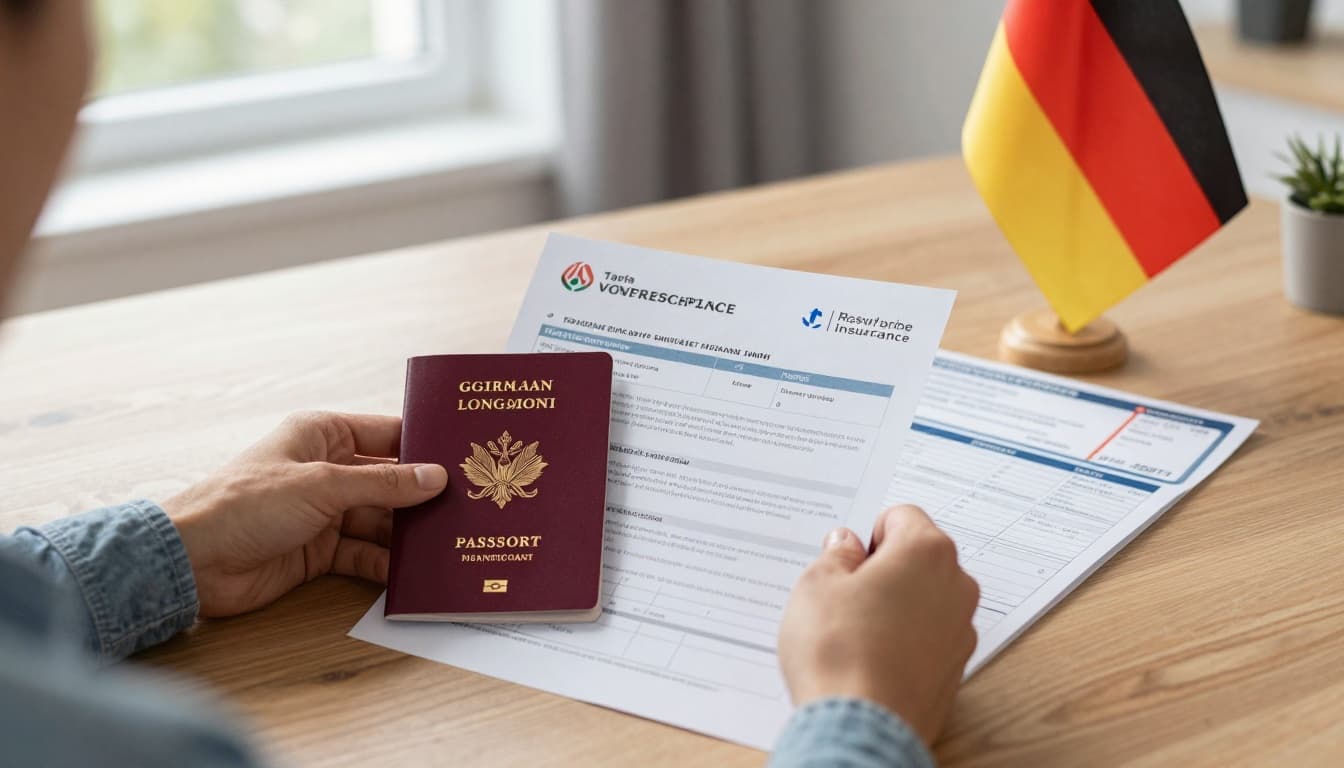
A traveler sorts visa papers on a desk with German flag backdrop
Step-by-Step: How to Use Long-Term Tourist Visa Germany
- Check eligibility: Use official tools to see if you need D-visa over Schengen.
- Pick purpose: Language study? Job hunt? It must justify long stay.
- Gather docs: Passport, photos, form, itinerary, insurance, funds proof.
- Book embassy slot: Via VFS or mission site; waits hit months in 2026.
- Submit in person: Pay fee, give biometrics.
Before you pay:
- Verify passport valid 3+ months post-trip.
- Get travel insurance covering Schengen area.
- Print accommodation proofs.
- Confirm no bans via Schengen database.
- Track online: Get status updates.
- Travel post-approval: Enter Germany, register residence within 2 weeks.
- Extend locally: At Ausländerbehörde office if needed.
Pricing, Fees, and What “Cheap” Really Means
Long-term tourist visa Germany costs €75 for adults on D-visa. Kids 6-12 pay €40; under 6 free. Schengen C is €80. Add service fees at VFS: €20-40. ETIAS? Just €7 online.
Hidden adds: Translation (€50/page), insurance (€100+), courier (€30). Example: Indian applicant for D-visa pays €75 fee + €200 VFS + €150 docs = €425 total. Funds proof? €4,000+ bank balance.
Fees stay fixed per Federal Foreign Office. No refunds on denial.
Pros and Cons
| Aspect | Pros | Cons |
|---|---|---|
| Stay length | Up to years with extensions | Strict 90/180 for pure tourism |
| Process | Online pre-checks speed it | Embassy waits 1-3 months |
| Cost | Affordable base fee | Extra docs/services add up |
| Flexibility | Converts to residence | No job on tourist intent |
| Access | Full Schengen travel | Purpose scrutiny high |
Common Mistakes (and How to Avoid Them)
- Wrong visa type: Pick D, not C. Fix: Use embassy wizard tool.
- Weak funds proof: Vague statements fail. Fix: Show 3-month bank extracts.
- No insurance: Instant reject. Fix: Buy Schengen-wide policy first.
- Late booking: Slots fill. Fix: Apply 3 months ahead.
- Fake invites: Caught easy. Fix: Use real bookings.
- Ignore ETIAS: 2026 must-have. Fix: Apply weeks before flight.
- Skip registration: Fines on arrival. Fix: Note address within 14 days.
Is Long-Term Tourist Visa Germany Legit and Safe?
Yes, through official channels. German missions issue them; scams fake offers. Check germany-visa.org for fees. Real apps go via embassies or VFS.
Verify issuer: State “Auswärtiges Amt”. Test support: Email embassy. Refunds rare, but policy clear. User stories praise transparency at VFS centers.
Tips to Get Better Deals
- Apply early 2026 for ETIAS slots.
- Bundle insurance with apps for discounts.
- Use affiliates like VisaHQ for tracking.
- Show strong ties home to boost approval.
- Opt language courses for D-visa edge.
- Book VFS premium lounge to skip lines.
- Gather docs digital first.
- Join expat forums for updates.
- Prove return ticket always.
- Sponsor letters from family work well.
FAQs
Can I get a long-term tourist visa Germany for vacation only?
No. Prove study, work search, or similar.
How long does long-term tourist visa Germany take?
1-3 months; plan ahead.
What’s ETIAS for 2026?
Online entry okay for shorts, €7 fee.
D-visa fees?
€75 adult; see diplo.de.
Need bank balance?
€45/day minimum.
Where apply?
Home country embassy.
Can I work on it?
No, unless specified.
Extend inside Germany?
Yes, at local office.
Visa-free countries need D?
Still yes for long stays.
Conclusion
No pure long-term tourist visa Germany, but D-visa opens doors with right purpose. Weigh ETIAS for shorts, full app for longs; costs stay low at €75 base.
Start with embassy check today. Secure your extended German adventure right.


 Enu
Enu