 Enu
Enubiz class flights can turn a long, tiring trip into something you can actually handle, even enjoy. This guide breaks down what business class usually includes, when it’s worth paying for, and how to lower the price with smarter search tactics, timing, and a few simple checks before you book.
Prices and rules change fast, and airlines don’t always match what a third-party site shows. Always confirm prices and policies on the official airline site before booking, especially baggage, seat type, lounge access, and change or cancellation rules.
Quick Answer (Read This First)
- You usually get more space, stronger service, and quieter boarding.
- On many long-haul routes, business class often includes a lie-flat seat, but not always.
- Most tickets come with priority check-in and boarding, and many include lounge access.
- It’s worth paying when sleep, recovery, and time matter (overnights, tight connections, big work weeks).
- It’s often not worth it on short flights where the seat is just a nicer recliner.
- To find better prices, book earlier, stay flexible on dates, and compare one-way vs round-trip.
- Use price tools (date grids, price graphs, alerts) to spot cheaper days without guesswork.
- Compare the total cost, not just the headline fare (bags, seat rules, changes, support).
What Is Business Class and What Does It Do?
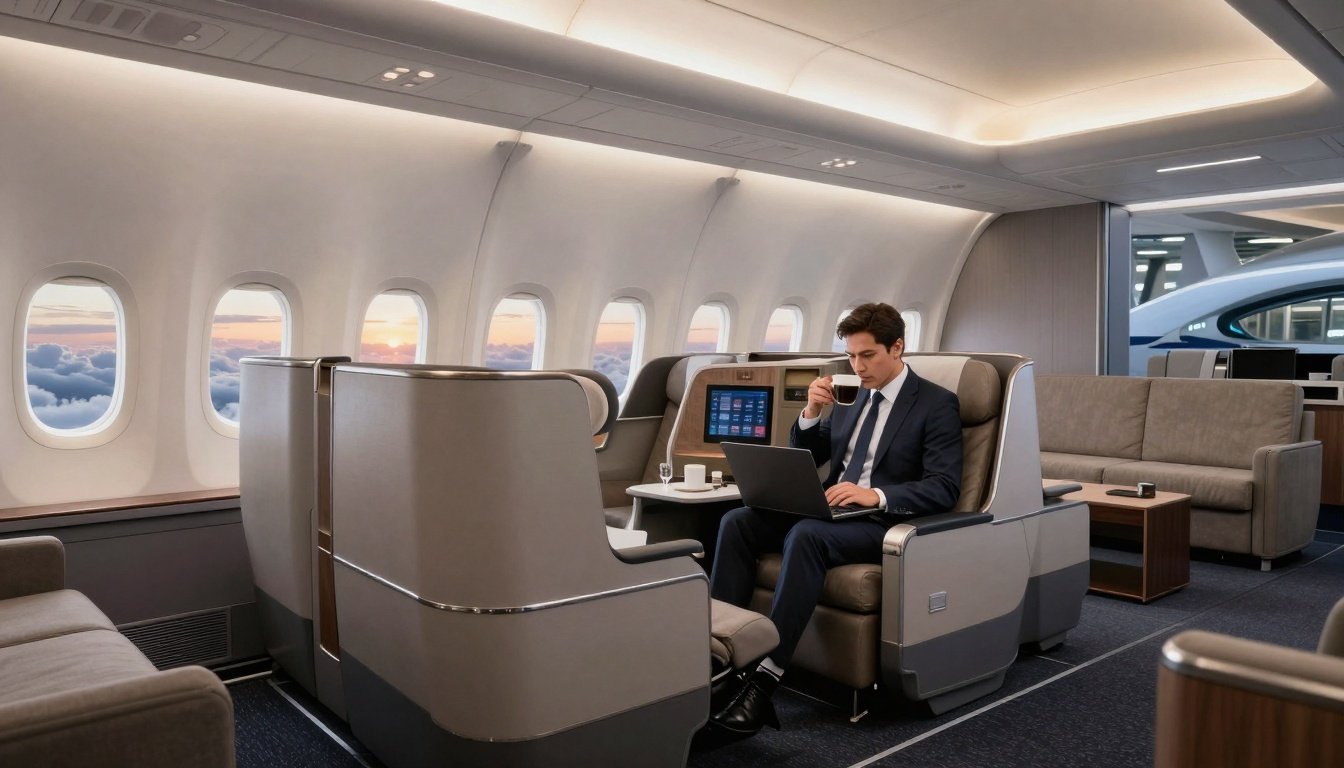
Business class is the cabin between economy and first class. It’s designed for travelers who want comfort, more personal space, and time-saving perks at the airport.
In simple terms, business class buys you fewer compromises. You’re less squeezed, you board earlier, and you’re more likely to arrive rested, or at least not wrecked.
One big confusion comes from domestic routes in the United States. Many airlines call the front cabin “first class,” but the experience often looks more like business class: wider seats, better service, but usually no lie-flat bed.
The biggest truth about business class is that it changes by route, aircraft, and airline. A two-hour flight might mean a roomy recliner. A 12-hour flight might mean a private pod you can sleep in.
For extra context on deal-hunting approaches, this Skyscanner guide on how to find the cheapest business class flights is a helpful cross-check for tactics like flexibility and upgrade timing.
Business class vs premium economy vs first class (simple differences)
Premium economy is the “more comfortable economy” option. You often get more legroom, a wider seat, and a little more service, but you’re still mostly upright for sleeping.
Business class is usually the sleep-focused cabin on long-haul. It often means lie-flat seats, more privacy, stronger meals, and better ground perks like priority lanes and lounges.
First class (on long-haul) is often rarer and more exclusive. Think bigger suites, higher staff-to-guest attention, and sometimes extras like showers or special dining, depending on the airline. For most travelers who want real sleep, business class is the more common target.
Key Features of Biz Class Flights
- A larger seat, and on many long flights, the chance of a lie-flat bed-style seat
- More legroom and width, plus better personal space and storage
- Priority check-in, fast-track lanes (where available), and earlier boarding
- Lounge access on many routes and fare types (but not guaranteed)
- Better meals and drinks, served with more time and less rush
- Extra baggage allowance on many airlines, with rules that vary by fare
- More consistent service, plus a calmer cabin feel on many flights
Step-by-Step: How to Find and Book Biz Class Flights for Less
- Start with your route and dates, then search business class directly.
Don’t assume the fare difference is fixed, it moves a lot by day and season. - Use a date selector that shows price changes by trip length.
Tools like Google Flights let you choose different trip lengths and see which departure and return pairs cost less, without doing dozens of searches. - If your plans are open, use “Explore” with flexible dates.
This is how you find cheaper destinations or better-value weekends when you only know your rough time window. - Check the Date grid and Price graph before you commit.
These views help you spot cheaper days quickly, especially when shifting by one day cuts the price. - Turn on price tracking for routes you’re serious about.
Set an alert for specific dates, or for any dates if you’re flexible, then let the email notifications do the watching. - Compare one-way vs round-trip, and test nearby airports.
Sometimes two one-ways on different airlines beat a round-trip. Nearby airports can also change taxes, availability, and competition. - Verify the seat type before you pay.
The listing might say “business,” but the aircraft could be a recliner seat, not lie-flat. Check the flight number, aircraft type, and seat map where possible.
Before you pay: quick checklist to avoid surprises
- Confirm the exact cabin and seat type (lie-flat or recliner) for your flight number
- Confirm baggage rules and what’s included in the fare you picked
- Check change and cancellation rules, plus any fare difference rules
- Confirm lounge access details (which lounge, which airport, which guest rules)
- Confirm who issues the ticket (airline vs third party) and how customer service and refunds work
Pricing, Fees, and What “Cheap” Really Means
A “cheap” business class fare isn’t just a low base price. The real number is the total trip cost after you account for add-ons and rules.
Start with the fare, then check what’s included. Some business fares include extra bags, lounge access, and seat selection. Others look like business class on the plane but still charge for certain extras, or come with strict cancellation and change limits.
Also consider how much flexibility is worth to you. A lower fare can cost more later if you need to change dates and pay a fare difference. If you add travel insurance, that’s another cost, and it only helps under the policy rules.
Example (illustrative only): You find a business class ticket for 25,000. Add one extra bag (600), pay for a preferred seat (450), and later change dates with a fare difference (2,000). Your total becomes 28,050, before any insurance.
Pros and Cons
| Pro | Con | What it means for you |
|---|---|---|
| Better sleep and space | Higher price | Worth it on long-haul, harder to justify on short hops |
| Faster airport experience | Perks vary by fare | Priority lanes and lounges aren’t always included |
| More comfort for work | Not always lie-flat | You must confirm seat type by aircraft and route |
| Lounge time can add value | Rules can be strict | Some “deal” fares limit changes and refunds |
| Calmer cabin experience | Mixed-cabin routes exist | One segment may be business, another may not |
Common Mistakes (and How to Avoid Them)
- Buying business class on a short route expecting a bed, fix it by checking seat type first.
- Not checking the aircraft or seat map, fix it by searching the flight number and layout.
- Booking a “deal” fare that can’t be changed, fix it by reading the change rules before paying.
- Ignoring total cost with bags and seats, fix it by pricing the full trip, not the headline fare.
- Missing a cheaper date by one day, fix it by using the date grid and price graph views.
- Skipping price alerts, fix it by turning on tracking as soon as you find a route you like.
- Assuming all lounges are included, fix it by confirming which lounge and which airport rules apply.
- Forgetting about support, fix it by checking who provides help if the flight changes.
Is biz class flights Legit and Safe?
“biz class flights” isn’t a single company, it’s just a way people describe business class tickets. The real safety question is where you’re buying from and what protections you have if things go wrong.
Booking direct with the airline is often simpler for changes, refunds, and day-of-travel problems. Third-party sites can still be legitimate, but support can be slower, and you may deal with extra booking fees or stricter rules.
Before you trust a “too good to be true” offer, check three things: who issues the ticket, what the refund and change policy says in plain language, and how you reach support (phone, chat, email). If the seller can’t clearly answer those, skip it.
Tips to Get Better Deals
- Book weeks ahead for many domestic trips, and months ahead for many international trips as a general rule.
- Use flexible dates, moving your trip by a day can change the price a lot.
- Set price tracking alerts so you don’t have to check every day.
- Search one-way combinations, sometimes mixed airlines cost less than round-trip.
- Try mid-week flights, they’re often cheaper than peak weekend days.
- Check nearby airports, even a short drive can open better fares.
- Consider mixed-cabin options if the long segment is lie-flat and the short one isn’t.
- Use miles or a business class upgrade offer when the math makes sense.
- Watch for schedule changes, they can open a chance to rebook to better times.
- Compare the total cost across sites, including bags, seat selection, and change rules.
- Don’t chase the lowest price if it kills flexibility you’ll likely need.
FAQs
Are biz class flights worth it for short trips?
Sometimes, but it depends on the seat and the price gap. On short flights, you’re often paying for space and airport perks, not real sleep.
Do all business class seats lie flat?
No. Many long-haul routes offer lie-flat, but some aircraft and short-haul routes use recliner-style seats.
Do business class tickets include lounge access?
Often yes, but not always. It can vary by airline, route, status, and the exact fare rules.
Can I cancel or change business class tickets?
Many allow changes, but the cheapest deals can be restrictive. Always check change terms, cancellation options, and whether you’ll owe a fare difference.
Is it cheaper to upgrade after booking?
It can be. Sometimes airlines email upgrade offers or show bid options, but there’s no guarantee, and popular flights may sell out.
Is it better to book direct with the airline?
For most people, yes, especially if you care about quick support. Direct booking usually makes changes and same-day issues easier to handle.
How does price tracking work on Google Flights?
You choose a route (and sometimes dates), then turn on tracking. You’ll get alerts when prices move, which helps you time the purchase.
What should I check before booking a ‘deal’?
Confirm the seat type, baggage rules, lounge access, change and refund terms, and who provides support if the schedule changes.
Conclusion
If you’re shopping for biz class flights, use a simple rule: pay for it when sleep, time, and comfort will change the whole trip, skip it when the flight is short and the seat is basically a nicer chair. Business class shines on overnight and long-haul routes, and it can feel wasted on quick hops.
Run a flexible-date search, turn on price tracking, and compare one-way options. Then confirm the final price and rules on the airline’s official site before you book, so the “deal” stays a deal.

 Enu
Enu