 Enu
EnuCarry-On vs Personal Item Rules confuse even frequent flyers because airlines label bags differently, measure them differently, and enforce them differently. This guide breaks down what counts as a carry-on vs personal item in 2026, what “size compliant” really means, and where surprise gate fees usually start.
Policies change, and enforcement varies by route, plane type, and staff. Always confirm prices and policies on the official site.
Quick Answer (Read This First)
- A carry-on usually goes in the overhead bin, a personal item must fit under the seat in front of you.
- Airlines measure the outside of the bag, wheels and handles included, and some use sizers at the gate.
- “Carry-on size” isn’t universal, many U.S. airlines cluster around similar limits, but budget carriers often sell carry-ons as an add-on.
- The safest strategy is buying a bag that fits the strictest airline you fly, not the most generous one.
- The biggest gate-fee triggers are overstuffed soft bags, expanded zippers, and personal items that look like “second carry-ons.”
- Basic Economy rules can remove the carry-on allowance even when the airline normally allows one.
- Regional jets can mean forced gate-checking even for compliant bags because bins are smaller.
- Weight rules matter more outside the U.S., but they can still show up on select routes and partners.
1. Carry-On Luggage Fundamentals (What It Is and What Airlines Mean)
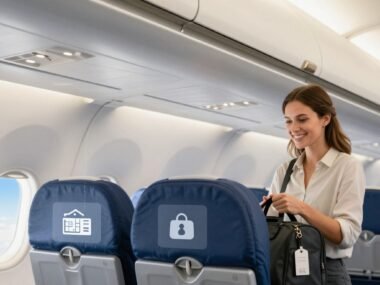
Carry-On vs Personal Item Rules start with where the bag goes. A carry-on is the bigger cabin bag intended for the overhead bin, usually a small roller, structured duffel, or compact travel backpack.
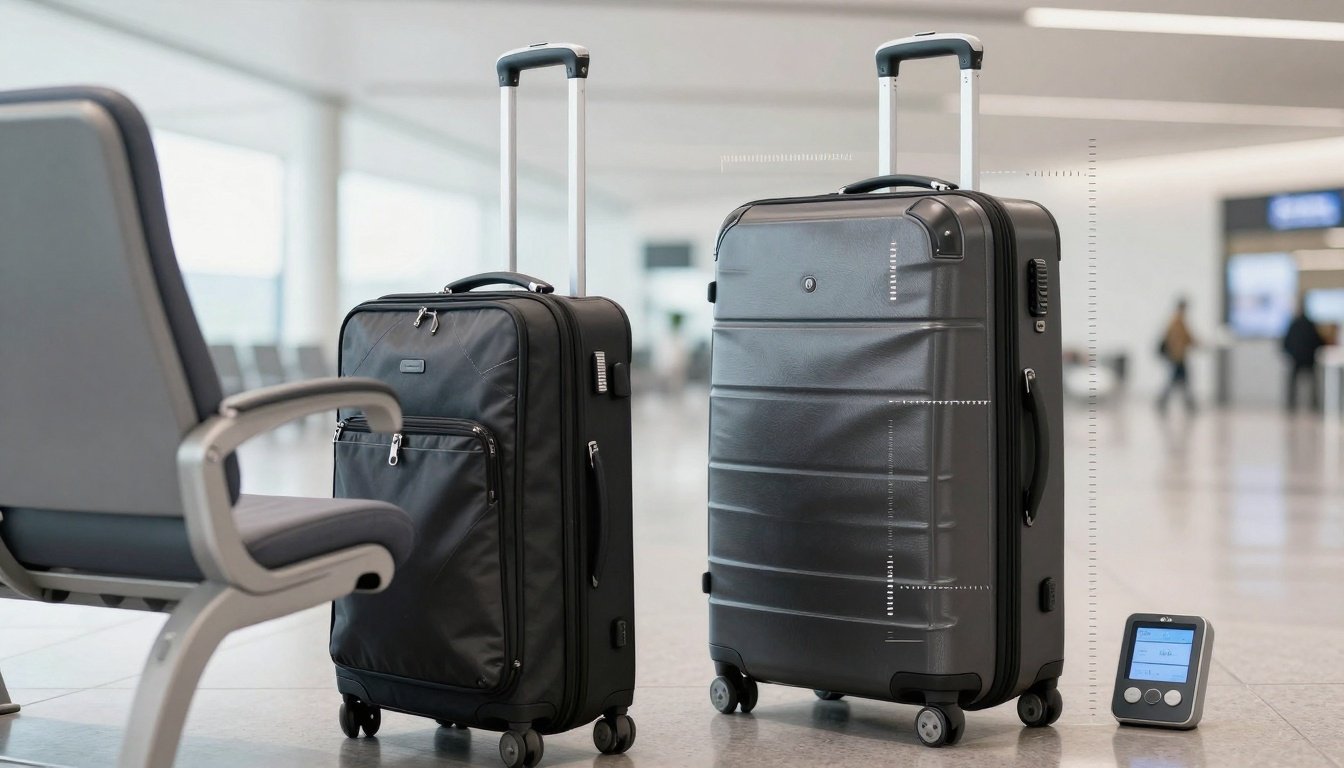
Most airlines measure carry-ons by height, width, and depth, and they count wheels, handles, and external pockets if they stick out. Overstuffing is the silent deal-breaker, a bag that “measures right” when empty can fail a sizer when packed.
Weight limits on carry-ons vary, and many U.S. airlines focus more on size than weight. International carriers, and some U.S. partner itineraries, may enforce weight more often.
Typical carry-on weight expectations often fall into these buckets:
- Light: best for airlines that weigh cabin bags
- Standard: common for most domestic travel
- Heavy: risky if you connect internationally or fly a strict carrier
2. Personal Item Basics (Underseat Reality, Not Marketing)
A personal item is the smaller bag that must fit under the seat in front of you. Think purse, tote, laptop bag, small backpack, camera bag, or compact diaper bag (rules vary for family items).
Personal item sizing is all about footprint and squish. Soft-sided bags can work in your favor because they compress under the seat, but only if you don’t pack them like a brick. Rigid cases, hard lunch coolers, and stuffed tote bags are the ones that get flagged.
Many airlines don’t publish a strict personal item weight limit, but some routes and carriers do. If you’re flying internationally, assume your personal item could be weighed or judged as “too heavy to be safe.”
For a broad airline-by-airline overview of personal item vs carry-on limits, see personal item vs carry-on limits.
3. Key Differences That Actually Matter (Size, Location, Fees)
Carry-On vs Personal Item Rules aren’t just about inches. They’re also about what the airline is trying to control: overhead bin space and boarding speed.
Here’s what separates them in real life:
- Storage location: carry-on overhead, personal item underseat
- Allowed quantity: often one carry-on plus one personal item, but not always on the cheapest fares
- Fee structure: personal items are often the “free bag” on budget airlines, while carry-ons may cost extra
- Enforcement style: carry-ons get sized at boarding, personal items get judged visually when they look bulky
A simple mental image helps: if it needs bin space, it’s competing with everyone else’s bag, and that’s where gate fees and forced checks show up.
4. 2026 Size Guide Overview (Why Enforcement Feels Stricter)
In 2026, more travelers fly carry-on-only to avoid checked bag fees, and that puts pressure on overhead bins. The result is tighter enforcement, more sizer use, and fewer “I’ll let it slide” moments on full flights.
When you measure, don’t measure the fabric shell. Measure the maximum outside dimensions when packed, including wheels, handles, and any bulging pocket. If your bag has an expansion zipper, treat expanded mode as a different bag size.
Tools that make sizing simple:
- Tape measure (flexible is easiest around curves)
- Small luggage scale
- A flat wall and floor corner for consistent measuring
If you want a reference chart covering lots of carriers in one place, use carry-on size chart by airline, then confirm with the airline you’re flying.
5. Major U.S. Airlines, The Patterns to Know (Without the Noise)
Major U.S. airlines tend to allow one carry-on and one personal item on most standard economy tickets. The friction usually comes from fare class rules (especially Basic Economy), plane type, and boarding group.
Common patterns across major U.S. carriers:
- Carry-on is expected to fit overhead without forcing the bin closed.
- Personal item must slide fully under the seat, not halfway out into the foot space.
- If you board late, bin space runs out, and even compliant bags get gate-checked.
U.S. legacy carrier rules are often summarized well in roundups that track changes and fees. One current overview is carry-on sizes and fees by airline, which can help you spot policy differences fast.
6. Budget U.S. Airlines, Where Gate Fees Usually Start
Budget airlines often price the seat low and charge separately for what many travelers assume is included. In this model, the personal item is your “included bag,” and the carry-on is a paid upgrade.
That shifts how you should think about compliance. On a budget airline, a personal item that looks even slightly oversized can be treated as an unpaid carry-on. That’s where gate fees hit hardest because airport pricing is often higher than booking ahead.
The most reliable way to avoid that scenario is choosing a personal item bag designed to fit strict underseat limits, then packing it so it stays compressible. Overstuffed backpacks and thick winter coats stuffed into totes are common reasons a “personal item” becomes a “carry-on at the gate.”
7. International Airlines, Weight Checks and Sizer Culture
International carriers often care more about weight, and they may enforce it at check-in, security, or the gate. Even if your bag is within size, a heavy carry-on can be tagged for check or charged.
Many European low-cost carriers also rely heavily on sizers, and the staff is trained to be consistent because bag fees are a major revenue line. If you’ll fly these airlines, pick a bag that fits their underseat sizer with room to spare, not one that “might fit if I push it.”
When you connect between airlines, the stricter rules usually win. If one segment is on a strict carrier, pack for that segment, not for the more generous one.
8. How to Measure Your Bags Correctly (And the Mistakes That Get You Charged)
Carry-On vs Personal Item Rules come down to measurement discipline. Airlines measure the outside of the bag at its biggest points, not what the product label claims.
A simple measuring routine:
- Pack the bag the way you’ll actually travel.
- Close all zippers, including external pockets.
- Measure height, width, depth at the widest points.
- Include wheels, feet, handles, straps, and bulges.
- If the airline uses linear inches, add the three numbers.
Common measurement mistakes that cause surprise gate fees:
- Measuring an empty bag instead of a packed bag
- Ignoring wheels and handles
- Assuming “22-inch carry-on” is universal
- Using expanded mode and hoping nobody notices
- Letting a front pocket bulge past the frame
- Counting a small crossbody plus a tote as “one personal item”
- Bringing a pillow or shopping bag that becomes a third item
9. Bag Types That Usually Work Best (Compliance First, Not Looks)
The right bag type reduces stress because it stays within limits even when packed. The “best” bag isn’t the biggest one you can squeeze into a sizer once, it’s the one that fits on your worst-case airline and worst-case flight.
Common bag types and what they’re good at:
- Roller carry-ons: easy through airports, but wheels steal interior space and add to measured height
- Travel backpacks: flexible sizing, strong for mixed airlines, but can look bulky and draw attention if overpacked
- Soft duffels: good squish factor, but easy to overfill, especially with end pockets
Personal items that behave well under seats tend to be compact backpacks, laptop bags with soft corners, and slim totes. Personal items that cause problems tend to be tall hiking packs, boxy camera bags, and rigid briefcases that can’t compress.
10. Packing Strategies That Keep You Within Size (Without Feeling Deprived)
Packing is where most “size compliant” plans fail. The bag might be fine, but the loadout turns it into a bulky shape that fails the sizer or won’t slide under a seat.
Tactics that help keep shape under control:
- Use packing cubes to prevent outward bulging
- Keep shoes near the bottom corners so the bag stays rectangular
- Put heavy items in the personal item only if it stays underseat compliant
- Skip “just in case” outfits, build around re-wear and simple color matching
- Plan for laundry on longer trips instead of packing extra bulk
Sustainable packing also helps with compliance because it nudges you toward fewer, reusable items. Refillable toiletry bottles and a small, reusable water bottle (empty through security) reduce one-time purchases and keep your kit consistent trip to trip.
11. How to Avoid Gate Fees (The Situations That Trigger Them)
Avoiding gate fees is mostly about not triggering a bag check moment. Gate agents don’t have time to negotiate with every passenger on a full flight, so they focus on bags that look big, rigid, or like an extra item.
Common gate-fee trigger situations:
- Boarding late when bins are already full
- Carry-on that looks overweight or can’t be lifted easily
- Personal item that’s taller than the underseat space
- Visible expansion zipper in expanded mode
- A second “small bag” that looks like a third item (shopping bag, food bag, large neck pillow)
What also matters is timing. If you know your route is busy, price-checking and planning ahead helps you avoid last-minute changes that lead to higher fees. For flight planning features like flexible date search and price tracking, see Google Flights price tracking.
Conclusion
Carry-On vs Personal Item Rules are simple on paper, but they get expensive in the real world when your bag is overstuffed, your fare class restricts carry-ons, or your plane has limited bin space. In 2026, the safest approach is treating size limits as a packed-and-expanded reality check, not a label on a product page.
To keep control of costs, anchor your plan on one compliant carry-on setup and one truly underseat personal item, then pack to keep both bags in their intended shape. Always confirm prices and policies on the official site.


 Enu
Enu