 Enu
EnuKuwait’s economy keeps growing in 2026, fueled by oil, finance, and construction booms. Expats flock here for high-paying jobs that promise stability and tax-free income. But landing one starts with picking the right Kuwait work visa type. Choose wrong, and you face delays or rejection.
This guide breaks down the main Kuwait work visa types, eligibility rules, documents, application steps, costs, and tips. You’ll learn how the kafala system ties you to a sponsor. Always check the official Kuwait Ministry of Interior site or your local embassy for updates, as rules shift.
Whether you’re eyeing private sector roles or domestic work, get ready to secure your spot in this thriving market.
Main Kuwait Work Visa Types in 2026
Kuwait offers four primary Kuwait work visa types for foreigners. Each fits specific jobs under the kafala system, where your employer acts as sponsor. They handle most paperwork and control your stay. Private sector visas lead the pack.
Article 18 covers full-time private jobs. Article 17 suits government roles. Domestic visas target household help. Temporary ones handle short government contracts.

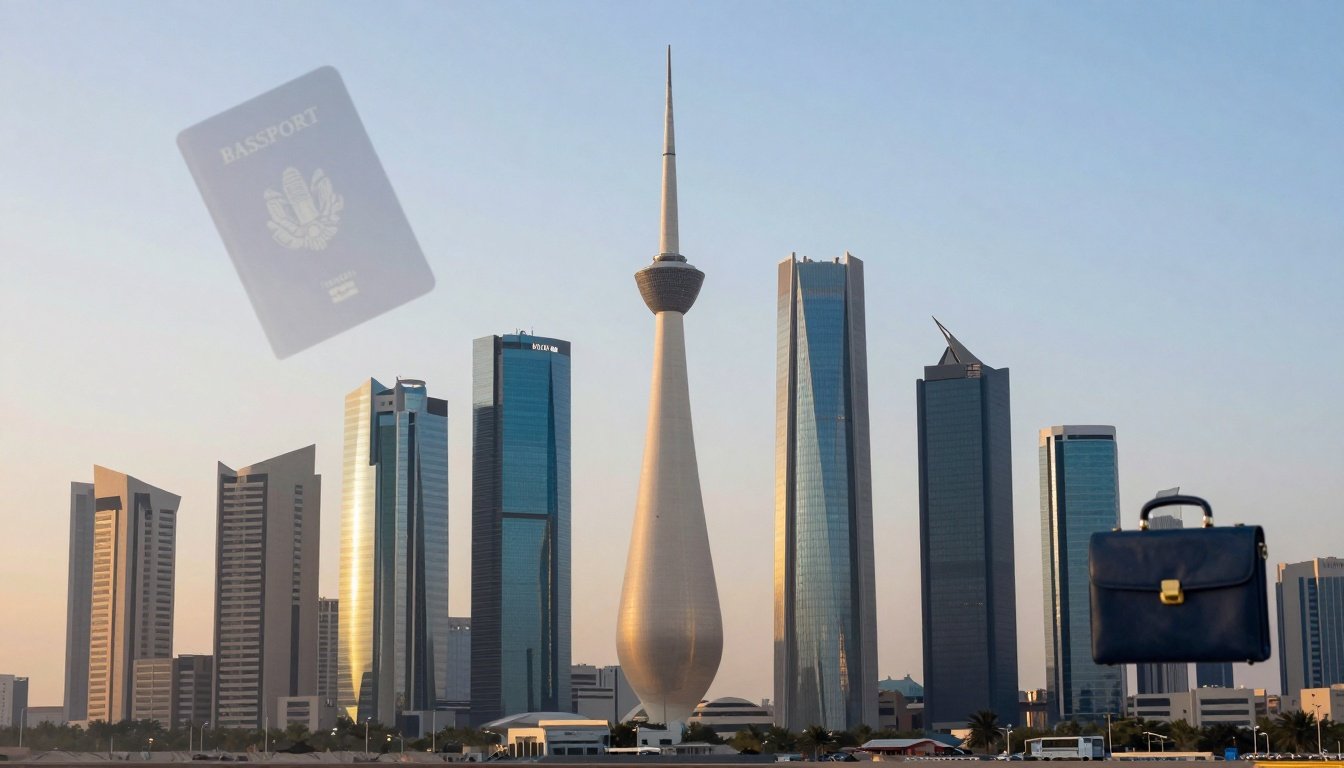
Modern office scene in Kuwait City with expat workers
Private Sector Work Visa (Article 18)
This standard visa fits long-term private company jobs like engineering, IT, or sales. Your employer first secures a work permit from the Ministry of Social Affairs and Labor.
It lasts 1-3 years, renewable, but ties you to that sponsor. No extra docs beyond basics stand out. Most expats use this for steady careers. Expect quotas on hires to favor locals.
Government Sector Work Visa (Article 17)
Aim here for government offices or civil projects. Sponsors submit with official approvals from state bodies.
Processing speeds up for these roles. It includes entrance visas for officials. Sponsors manage everything, keeping it simple for hires.
Domestic Worker Visa
Households sponsor maids, drivers, or nannies under this type. It allows single or multiple entries.
Health checks prove crucial, as sponsors demand fitness proofs. Ties tightly to the family sponsor via kafala.
Temporary Government Contract Work Visa
Short-term government gigs get this visa. Processes mirror Article 17 but cap at project length, often months.
Ideal for consultants or specialists on fixed deals. Sponsors file promptly for quick starts.
Eligibility and Documents Needed for Kuwait Work Visas
All Kuwait work visa types share core rules. You need a passport valid six months with two blank pages. Age limits hover at 21-50, with expert exceptions.
Gather these universals:
- Completed application form.
- Employer letter and work permit.
- Medical certificate from approved clinics (no HIV, TB, or contagions; repeat in Kuwait).
- Police clearance showing no record.
- Four passport photos.
- Fingerprints and proof of job contract.
- Health insurance proof.
Extras vary: skills docs for Article 18, contracts for Article 17. Domestic needs training proof. Clean records matter most; felons get barred. Visit Playroll’s Kuwait guide for sponsor details.

Step-by-Step Guide to Apply for a Kuwait Work Visa
Sponsors drive the process. You can’t start alone or convert visit visas.
- Land a job offer; employer gets work permit from Ministry of Social Affairs and Labor.
- Collect docs, including home medical exam.
- Sponsor books online via Meta Portal or MOI site (kuwaitvisa.moi.gov.kw), submits entry visa/NOC.
- Pay fees; get approval to travel.
- Enter Kuwait within 90 days; finish residency (Iqama) and Civil ID at PACI within 30 days.
- Undergo Kuwait medical and fingerprints.
Use agents for speed. Track status online. Full process takes 1-4 weeks.
Costs, Processing Time, and Validity of Kuwait Work Visas
Employers cover most fees, but know them.
| Item | Cost (KWD) |
|---|---|
| Single Entry Visa | 3 |
| Multiple Entry (per month) | 1 |
| Work Permit | 150 (waived sometimes) |
| Medical/Police | 30-40 |
| Residence Permit | 50 |
| Total Estimate | 100+ |
One KWD equals about 3.25 USD. Processing runs 1-4 weeks. Validity hits up to 5 years renewable; some get 10-year greens. Renew before expiry or face fines. See recent residency fee updates.
Key Rules, Transfers, and 2026 Updates for Kuwait Workers
Kafala binds you to sponsors. Transfers need their nod after three years or a 300 KWD fee.
2024 changes linger into 2026: higher fees since June, online bookings mandatory, stricter health rules. Book appointments via app; miss docs, and rejections follow.
Common pitfalls: outdated passports, skipped medicals. Pros include tax-free pay; cons tie you down.
| Aspect | Pros | Cons |
|---|---|---|
| Kafala | Job security | Limited mobility |
| Costs | Employer pays | Fines for breaches |
FAQs About Kuwait Work Visa Types
How long does processing take?
1-4 weeks, faster for government.
Can I change jobs easily?
No, need sponsor approval or fee after three years.
What’s the medical test?
Checks for HIV, TB; do it twice.
Who pays fees?
Sponsors usually.
How to renew?
Submit early with sponsor.
Article 18 vs. domestic differences?
Article 18 for companies, longer stay; domestic for homes, health-focused.
GCC citizens need visas?
No, they skip most.
2026 changes?
Online focus, no big shifts.
Conclusion
Kuwait’s work visa types like Article 18, 17, domestic, and temporary open doors to strong jobs. Master requirements, steps, and kafala to succeed.
Contact your sponsor early. Verify on official sites. Prep docs now for 2026 opportunities. Kuwait awaits your skills.

 Enu
Enu