 Enu
EnuImagine landing a master’s degree in the UK that boosts your career worldwide. Many students dream of this path because UK programs pack prestige into just one year. This guide covers the benefits, top universities, application steps, costs, visas, scholarships, and pro tips to make it real.
You’ll learn why short programs save time and money, with average tuition at £15,000 to £20,000 and living expenses around £12,000 to £16,000 per year. Partners like StudyIn ease the process with free counseling, application support, and visa help, as shared by students who secured spots at UCL and Aston University. Expect intense but rewarding study in cities like London or Manchester.
Always check official university sites for the latest details.

Vibrant campus scene with students heading to class on a crisp autumn day
Quick Answer: Is Studying a Master’s Degree in the UK Right for You?
- Most taught master’s last 1 year full-time, letting you finish fast.
- Top spots include Oxford, Cambridge, UCL, and Imperial per QS 2026 rankings.
- Tuition averages £17,000 to £32,900 for internationals.
- Living costs hit £12,000 to £16,000 yearly, more in London.
- Visa needs a CAS letter, English test like IELTS 6.5, and fund proof.
- Apply 6 to 12 months early for September 2026 intake.
- Scholarships like Chevening cover full costs for eligible students.
- Stay 2 years post-graduation on a work visa, no job required.
Why Study a Master’s Degree in the UK? Key Benefits
UK degrees carry global weight. Employers respect them for quality teaching and research. You gain skills that stand out on resumes.
Short duration means less debt and quicker job entry. Unlike two-year US programs, UK’s focus sharpens your expertise fast. Students often land roles in tech, finance, or health right after.
Diverse options span business, STEM, and arts. Strong industry ties offer placements. One student picked Aston University with counselor help and grabbed a £5,000 scholarship, as shared in reviews.
World-Class Universities and Rankings
QS World University Rankings 2026 rank Oxford (3rd globally), Imperial (4th), Cambridge (6th), UCL (9th), and Edinburgh (22nd) tops for master’s. Check subject strengths on sites like TopUniversities. UCL leads in sustainability, per recent news.
Popular Courses for International Students
Business and MBA draw crowds for career boosts. Computer science, AI, engineering, data science, finance, LLM law, and public health shine too. STEM fields promise strong job links. See guides like MastersPortal’s UK overview for options.
Key Features of a UK Master’s Program
- 1-year taught master’s standard, full-time.
- Research MRes or MPhil options stretch to 2 years.
- English requires IELTS 6.5 to 7.0 overall.
- Merit-based scholarships reward strong applicants.
- Many include industry placements or projects.
- Campuses in lively cities like London, Edinburgh, Manchester.
- Build global networks with diverse peers.
Step-by-Step: How to Study Master’s Degree in UK
- Research unis and courses via QS rankings or UCAS.
- Check entry needs: bachelor’s degree (2:1 equivalent), English scores.
- Gather transcripts, personal statement, references.
- Apply direct on uni portals (no central system for postgrad).
- Secure conditional/unconditional offer and CAS.
- Apply for student visa online.
- Prove funds, book accommodation.
- Fly in, attend orientation.
Before applying checklist:
- English test passed?
- Funds ready (£12,000+ tuition)?
- Deadlines tracked?
StudyIn counselors help craft statements and handle apps, per student stories.
Application Deadlines and Tips
Top courses close December to January 2026; others roll till June. Start 9 to 12 months ahead for September 2026.
Documents You Need
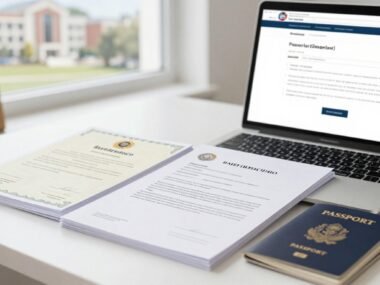
Transcripts, degree certificate, IELTS/TOEFL, passport copy, personal statement (1-2 pages), CV, two references. Arts need portfolios.
Tuition Fees, Living Costs, and Funding Options
Fees vary: humanities £10,000 to £20,000, STEM/business £18,000 to £35,000. Living: £12,000 to £16,000 outside London (£1,200+ rent there). Example: £25,000 tuition + £14,000 living = £39,000 total.
Fund via Chevening (leadership focus), Commonwealth, or uni awards. StudyIn aids scholarship hunts.
UK Student Visa and Post-Study Work Visa
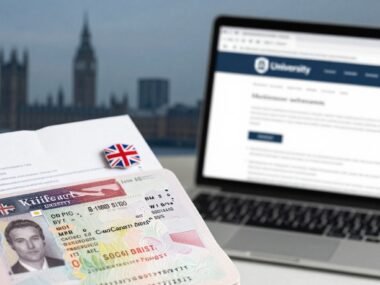
Student visa requires CAS, £1,334/month funds proof (9 months), English test, £880 fee + £1,035 health surcharge. Apply 6 months early; TB test for some. See British Council Study UK for details.
Graduate visa lets you work 2 years post-master’s, full-time, no sponsor needed.
Pros and Cons of Studying Master’s in UK
| Pros | Cons |
|---|---|
| Short 1-year timeline | High costs for internationals |
| Top-ranked unis | Intense study pace |
| 2-year work visa | Competitive applications |
| Global degree value | London living expensive |
| Diverse courses/jobs | Visa fund proof strict |
Common Mistakes and How to Avoid Them
- Miss deadlines: Plan 9 months early.
- Weak personal statement: Get StudyIn review.
- Underbudget costs: Save full £30,000+.
- Skip English prep: Book IELTS soon.
- Ignore scholarships: Apply by November.
- Forget ATAS: Check for science courses.
- Poor refs: Choose academic contacts.
- No CAS follow-up: Track uni emails.
Tips from Successful Students and Experts
- Book free StudyIn counseling for apps and visas.
- Attend uni webinars or fairs.
- Tailor personal statements to courses.
- Ishwar got £5,000 at Aston via team guidance.
- Compare cities: Manchester cheaper than London.
- Prep funds proof early (bank statements).
- Network with alumni on LinkedIn.
- Practice interviews for competitive spots.
- Saumya reached Birmingham MBA with full support.
- Explore rolling admissions for flexibility.
FAQs About Studying Master’s Degree in UK
What’s the minimum IELTS?
Usually 6.5 overall, no band below 6.0.
Average fees?
£17,000 to £32,900 for internationals.
Visa processing time?
3 weeks standard; priority 5 days.
Can I work?
20 hours/week term-time; full-time holidays.
Post-study stay?
2 years on Graduate visa.
Scholarships for Indians?
Chevening, GREAT, uni-specific.
Deadlines?
Jan-June 2026 mostly.
Best cities?
London for jobs, Edinburgh for culture.
Students choose to study a master’s degree in the UK for quick gains and open doors. Follow these steps on costs and visas to succeed.
Book free StudyIn counseling today, like those who entered UCL or Birmingham. Your UK adventure awaits global opportunities.


 Enu
Enu