 Enu
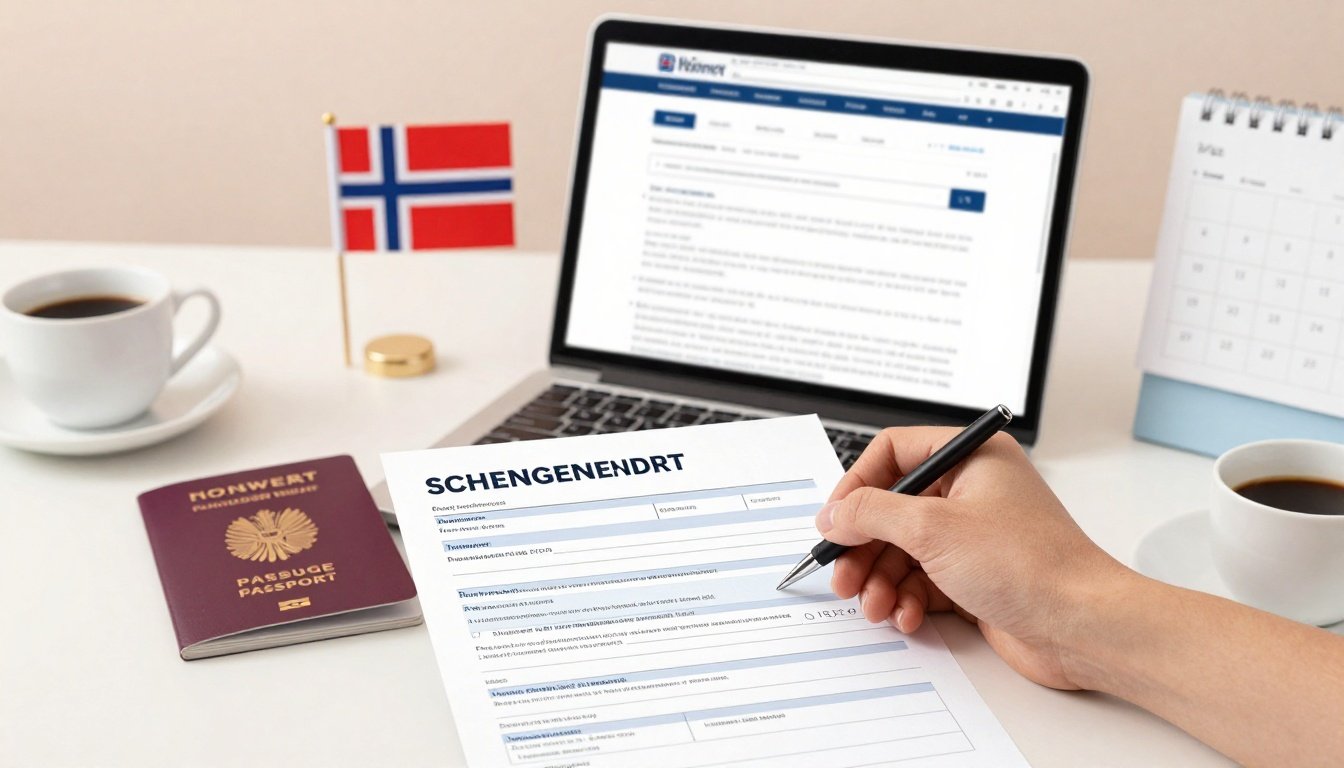
EnuThe schengen visa application form for norway is the same harmonised Schengen form used across the Schengen Area, but Norway’s process often starts online before you print and submit it at an appointment. This guide breaks down what the form is, where people usually get it wrong, and what to check so your application looks consistent and credible.
Always confirm prices and policies on the official site.
Quick Answer (Read This First)
- The schengen visa application form for norway is the harmonised Schengen short-stay form (up to 90 days in any 180-day period).
- Norway commonly expects you to complete the application online first (then print the generated PDF for your appointment).
- Use only the newest form version available through official channels, older PDFs can cause delays.
- Your form must match your passport details exactly (names, document number, issue and expiry dates).
- Travel dates on the form should match your flight and hotel (or invitation) documents.
- If someone sponsors your trip, the form and supporting papers must show the same story (who pays, how, and why).
- You’ll still need printed paperwork for your appointment, even if you filled it online.
- Optional add-ons (SMS, courier, premium lounge) don’t fix weak documents, they just add convenience.
What Is UDI’s Online Application Portal and What Does It Do?
UDI’s online application portal is the main starting point many applicants use to create the Norway Schengen visa application, pay the fee, and generate the printable form. Instead of typing into a random PDF, you enter your details online and then print the final application that’s produced from your answers.
This matters because it reduces common errors like missing fields, messy handwriting, or dates written in the wrong format. It also creates a clear application record tied to your payment and appointment flow.
Think of it as the “source of truth” for your schengen visa application form for norway, then the printed copy becomes the document you physically submit with your file.
Key Features of schengen visa application form for norway
- Harmonised structure used across Schengen countries, so fields and logic stay consistent.
- Clear identity section (names, birth details, nationality, marital status).
- Travel plan section (purpose, entry date, exit date, destinations).
- Funding section (who pays, and what means of support you’ll use).
- Past travel and biometrics section (previous visas and fingerprints, when applicable).
- Signature and declaration section that must be completed correctly, including for minors.
Step-by-Step: How to Use UDI’s Online Application Portal
- Choose the correct visa type for a short stay (tourism, business, visit, cultural event).
- Enter your identity details exactly as shown in your passport’s data page.
- Add your travel plan, including intended dates and where you’ll stay most nights.
- Complete funding details (self-funded vs sponsor), then align it with your bank documents.
- Review each section for spelling and date format consistency before finalising.
- Pay the fee through the portal if payment is part of the flow in your country.
- Download and print the final application PDF, then sign where required.
- Bring the printed schengen visa application form for norway to your appointment with all supporting documents.
Before you pay, check this:
- Your passport expiry date covers the full trip and buffer period.
- Your main destination is correctly listed as Norway if it’s where you’ll spend the most time.
- Your name order matches your passport (including middle names).
- Your email and phone number are active, appointment updates often rely on them.
Pricing, Fees, and What “Cheap” Really Means
The cost of applying isn’t just one number. There’s the visa application fee, and sometimes a separate service fee if you submit through a visa application centre. On top of that, optional extras can increase the total.
“Cheap” often means you skip optional services and bring a clean file the first time, so you don’t pay twice due to re-submission or missed appointments. It also means printing correctly and arriving with every required document, so nothing triggers a second visit.
Example calculation (illustrative only): visa fee + application centre service fee + two passport photos + printing and copies. The total can rise quickly if you add courier return, SMS alerts, or premium appointment slots.
Pros and Cons
| Factor | Pros | Cons |
|---|---|---|
| Harmonised form | Familiar layout across Schengen | Easy to assume “any PDF is fine” |
| Online completion | Fewer missing fields | Still requires printing and signing |
| Clear funding fields | Makes sponsorship transparent | Mismatched sponsor papers cause refusals |
| Appointment submission | Staff can check basics | Availability varies by location/season |
| Optional services | Convenience and updates | Adds cost, doesn’t strengthen eligibility |
Common Mistakes (and How to Avoid Them)
- Writing names differently than your passport, fix it by copying character for character.
- Using inconsistent dates across the form, itinerary, and bookings, fix it by setting one final travel plan and matching every document to it.
- Selecting “multiple entries” without a reason supported by your itinerary, fix it by choosing the entry type that fits your trip.
- Stating “self-funded” but submitting a thin bank statement, fix it by aligning your funding story with actual proof.
- Listing a host address that doesn’t match the invitation letter, fix it by using the exact same wording and contact details.
- Leaving blanks in key sections, fix it by using “N/A” only when allowed and never guessing.
- Signing too early or signing the wrong place, fix it by signing exactly where instructed, with the correct date.
1) The “passport mismatch” problem
This is the most common reason the schengen visa application form for norway looks unreliable. One wrong digit in your passport number can force manual checks and slow processing.
2) The “money story doesn’t add up” problem
If you say someone else pays, your documents must show who they are and how they’ll cover costs. The form is where that story starts, and the papers must back it up.
Is schengen visa application form for norway Legit and Safe?
The form itself is legitimate when it comes from official government sources or official Schengen documentation. A reliable reference is the EU’s official PDF of the harmonised form, shown here as EU harmonised form PDF.
Safety also depends on where you type your details. Entering sensitive data into random “download sites” can expose your passport and contact information. For peace of mind, use official portals for completion when available, and treat third-party downloads with caution.
If you’re comparing guidance pages, cross-check the basics with a reputable overview like Norway Schengen visa overview and then confirm the exact steps for your country through official channels.
Tips to Get Better Deals
- Apply early to avoid last-minute appointment rescheduling costs.
- Print at home if you can, local printing near centres often costs more.
- Bring the right number of copies, so you don’t pay for urgent copying.
- Skip premium lounges unless you truly need the comfort or time savings.
- Avoid paid “form filling” services if you can complete the online form yourself.
- Keep your itinerary simple, complex multi-country plans can require more documents.
- Use one consistent email address and phone number across every document.
- Choose refundable bookings when possible, it reduces financial risk if plans change.
- Don’t pay for SMS alerts if you already check email often.
- Keep a scanned backup of your final signed schengen visa application form for norway for your records.
FAQs
Is the schengen visa application form for norway different from other Schengen countries?
It’s the harmonised Schengen form. Norway uses the same core fields, even if the submission flow starts online.
Can I fill the schengen visa application form for norway by hand?
Some applicants do, but typed forms usually look cleaner. If Norway’s online flow generates a PDF, that’s the safest route.
Do I need to print the form if I completed it online?
In most cases, yes. You typically bring the printed application to the appointment.
What happens if I make a mistake on the form?
Small errors can trigger delays or requests for clarification. Bigger inconsistencies can lead to refusal if the file looks unreliable.
Is there a refund if I cancel my appointment?
Refund rules depend on where you apply and which fees were paid (government vs service provider). Confirm the policy before payment.
Does “cheap” mean lower visa fees?
Visa fees are usually fixed. “Cheap” is more about avoiding optional services, repeat trips, and paid corrections.
Do I need customer service to apply?
Not always. If your case is simple, you can often complete the schengen visa application form for norway without extra support. Customer service helps mainly when appointments, document questions, or tracking issues come up.
Should I book direct or use an intermediary?
Direct official portals reduce risk. Intermediaries can add convenience but may add booking fees or unclear refund rules.
Conclusion
The schengen visa application form for norway is straightforward when you treat it like a consistency test. Your passport data, dates, funding plan, and stay details must match across the form and every supporting document.
Choose the official completion path, print clean copies, and keep your file simple and consistent. That approach saves time, cuts avoidable costs, and gives your application the best chance to move smoothly.


 Enu
Enu