 Enu
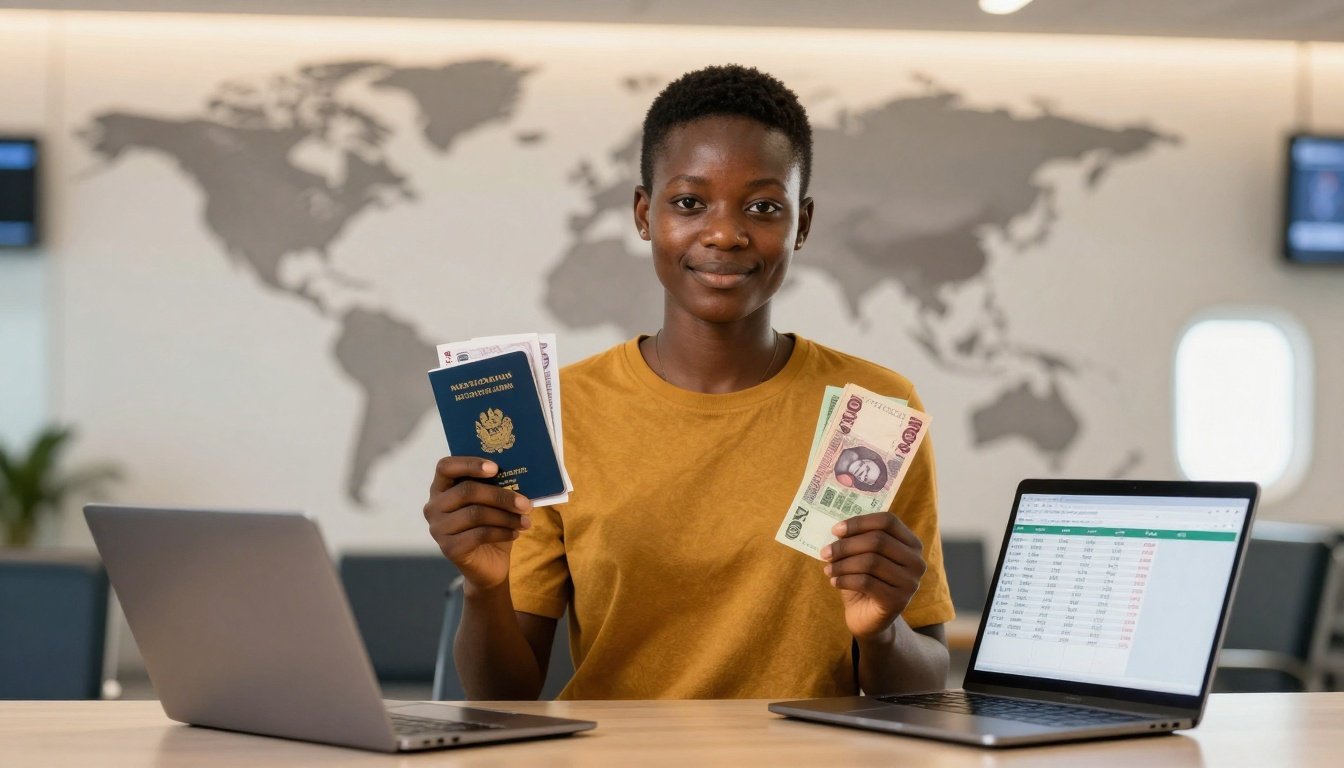
EnuIf you’re searching study abroad visa nigeria cost, you’re probably trying to answer one simple question: “How much will this really take from my pocket?” This guide breaks it down in a Nigeria-friendly way, with realistic fee ranges, the common hidden costs (TB tests, biometrics, SEVIS, health cover), and a clean budgeting method that protects you from exchange-rate surprises.
Always confirm prices and policies on the official site.
Quick Answer (Read This First)
- The government visa fee is only one piece, your total cost often includes health fees, biometrics, and medical tests.
- Your naira total can jump overnight because you pay in foreign currency, and card or bank rates vary.
- UK applicants often forget the TB test (required for many long stays) and the Immigration Health Surcharge (IHS).
- Canada applicants often forget biometrics and medical exam costs (paid to approved clinics).
- US applicants often forget the SEVIS fee (separate from the visa application fee).
- Australia applicants often forget OSHC health cover and possible medical checks.
- Tuition and proof of funds are separate from visa fees, don’t mix them up in your budget.
- “Cheap” usually means “low visa fee,” not “low total cost.”
What most people mean by “visa cost” (and what it really includes)
When Nigerians say “visa cost,” they often mean the amount shown on an immigration website for the application. That’s the visa application fee, paid to the government.
But your real study abroad visa nigeria cost usually includes required add-ons. These can be health surcharges or health insurance, plus biometrics (fingerprints and photo) collected at a visa center.
Then come the supporting costs that quietly drain budgets: medical tests (like TB screening), document printing, certified translations (if needed), courier returns, and sometimes paid “priority” processing you didn’t plan for.
What Is Study Abroad Visa Processing and What Does It Do?
Study abroad visa processing is the full path from “I got admission” to “I can travel.” For Nigerians, it starts with your school issuing a key document. That might be a CAS (UK), I-20 (US), LOA (Canada), or CoE (Australia).
Next is the online application on the official government portal, payment of required fees, and booking biometrics. For the US, there’s also a consular interview stage after you complete the DS-160 and pay the visa fee.
After submission, you track the application, respond fast if they request more documents, and then plan travel when a decision is made. Many students say this process feels stressful because one missing detail can cause delays. That’s why some people use counselling support or application platforms for clarity and fewer mistakes, but you should still keep control of your logins and payments.
For several destinations, VFS Global operates visa application centers that typically handle appointments, biometrics collection, and passport submission or return logistics. They don’t decide approvals, they manage parts of the process.
Key Features of study abroad visa nigeria cost
- Destination rules drive the biggest swings, especially health fees and required steps.
- Course length matters because some health charges (like the UK IHS) scale by year.
- Biometrics requirements add cost and appointment planning, common for Canada and the UK.
- Medical tests (TB, chest X-ray, panel physician exams) can be mandatory and time-sensitive.
- Required health cover can be a major line item (Australia OSHC, UK IHS).
- Proof-of-funds rules can force you to keep larger balances, even though it’s not a “fee.”
- Exchange-rate timing changes your naira total, even when fees stay the same.
Step-by-Step: How Nigerians Can Plan and Pay for a Study Visa
- Pick your destination and confirm your course length and start date.
- Get the school document you need (CAS, LOA, I-20, CoE).
- Check the official immigration fee page for your visa type.
- Build a naira budget with a buffer for FX and card charges.
- Pay required government fees only on the official portal.
- Book biometrics (and medical or TB test if required) early.
- Prepare proof of funds and supporting documents in the right format.
- Submit, track, and keep every receipt and confirmation email.
Before you pay: quick checklist to avoid costly mistakes
- Confirm the official government site URL (scammers copy pages).
- Confirm the currency you’ll be charged in and your bank’s FX rate.
- Confirm what’s refundable vs non-refundable before you click pay.
- Confirm your passport validity (don’t cut it close).
- Confirm medical or insurance timing so results don’t expire before submission.
Pricing, Fees, and What “Cheap” Really Means
Here’s the practical truth: a destination can look “cheap” on the visa fee, then become expensive once you add the mandatory extras. For Nigerians, the best way to compare is to separate costs into three layers:
Layer 1: Government visa fee
This is the official application fee paid to immigration.
Layer 2: Compulsory add-ons
These are required to apply or to live legally as a student, such as health surcharges, biometrics, SEVIS, or OSHC.
Layer 3: Supporting costs
These include IELTS or other accepted tests, medicals, TB tests, document printing, courier, translations, notarization, and optional priority services.
Based on the current early-2026 fee notes used in this guide:
- UK Student visa fee is commonly listed around £524 (outside the UK), and IHS is about £776 per year for students.
- US visa fee (MRV/DS-160 fee) has been $160 in older schedules, and is often shown around $185 in more recent schedules, so you must confirm before budgeting. SEVIS I-901 is commonly $350 for F-1 students.
- Canada study permit is CAD 150 plus CAD 85 biometrics.
- Australia Student visa (Subclass 500) is shown as AUD 710 in some recent guides, while older pricing may show AUD 650, so confirm the current official fee. OSHC is extra.
For added context on how UK fees and requirements are often explained for applicants in Nigeria, see this guide: UK student visa fee in Nigeria.
Example (clearly an example): UK 1-year master’s from Nigeria
- Visa application fee: £524
- IHS (1 year): £776
- TB test: often charged separately at an approved clinic
Your naira total depends on the exchange rate and card charges on payment day, so the same fees can cost very different amounts in naira.
Country quick comparison: UK vs Canada vs US vs Australia (fees you can’t skip)
Amounts can change, always verify on official government pages before payment.
Pros and Cons
| Country | Up-front mandatory health cost | Interview requirement | Biometrics and medical steps | Predictability of total cost |
|---|---|---|---|---|
| UK | Often high (IHS paid at application) | No interview for most | Biometrics plus TB test for many | Medium to high once you know course length |
| Canada | Medium (medical varies by clinic) | Usually no | Biometrics and medical common | Medium (extra VAC services vary) |
| US | Lower health cost in visa stage | Yes | Interview plus SEVIS fee | Medium (appointment timing matters) |
| Australia | Medium to high (OSHC required) | Usually no | Medical checks possible | Medium (health cover and medicals add up) |
Common Mistakes (and How to Avoid Them)
- Budgeting only for the visa fee: Price the add-ons first (health, biometrics, medicals).
- Paying on unofficial sites: Use only official portals, and keep receipts.
- Missing UK TB test timing: Book early so results are valid when you submit.
- Weak proof-of-funds paperwork: Use clear bank statements and explain large sudden deposits.
- Last-minute exchange-rate shock: Add a buffer (many students use 3% to 7%).
- Confusing tuition deposit with visa fees: Treat deposits as school payments, separate from immigration fees.
- Ignoring appointment wait times in Nigeria: Check early, and plan around peak months.
- Overpaying for “premium” add-ons: Skip extras that don’t improve your decision outcome.
Is study abroad visa nigeria cost Legit and Safe?
In this context, “legit and safe” means you’re paying the right fees to the right channels, and you can prove it later. The safest route is simple: pay government fees on the official immigration portal, and use verified visa application centers for biometrics where required.
Use this safety checklist:
- Confirm the payment receiver is the official government portal (not an agent link).
- Use known appointment partners (for many countries, visa centers like VFS Global handle biometrics and appointments).
- Save receipts, reference numbers, and emails in two places.
- Read the refund rules before you submit, many fees are non-refundable after processing starts.
- If you use an agent or consultant, keep your own login access and avoid letting anyone “hold” your passport.
Tips to Get Better Deals (Without Risking Your Visa)
- Apply early so you don’t feel pushed into priority processing.
- Build your budget in naira with a clear FX buffer, don’t guess.
- Time big payments when your funding is ready, not on a stressful deadline day.
- Avoid unnecessary paid add-ons at visa centers unless you truly need them.
- Keep documents clean and complete to avoid reprints, rush courier, and resubmissions.
- Confirm if your school accepts alternatives to IELTS (where allowed), tests cost money.
- Track scholarships and fee waivers early, don’t wait for admission week.
- Keep your proof-of-funds story simple and traceable.
- If you want help, use reputable counselling support for clarity, but stay in control of payments and passwords.
- Treat every fee as a line item. If you can’t name it, you can’t manage it.
FAQs
How much is the UK student visa from Nigeria?
The student visa application fee is commonly listed around £524 for applications outside the UK. Confirm the current fee on the official UK government site.
Do I pay IHS every year?
You usually pay the IHS upfront for the full length of the visa granted, which often tracks your course length.
How much is Canada biometrics?
Canada biometrics is commonly CAD 85, paid alongside the application fee.
What is the SEVIS fee for the US?
For many F-1 students, the SEVIS I-901 fee is commonly $350, paid after you receive your I-20.
Is the Australia student visa really AUD 650?
Older figures may show AUD 650, but some recent guides show AUD 710. Always confirm the current Subclass 500 fee on the official Australian site.
Do visa fees get refunded if I’m refused?
Often no. Many government visa fees are non-refundable once processing begins, confirm the policy before paying.
How much money must I show in my bank account?
It depends on the country and school rules. Proof of funds is separate from the study abroad visa nigeria cost, and you must verify the required amount on official sources.
Do I need an agent?
No, many students apply on their own. If you use one, verify claims and keep control of logins and payments.
How long do appointments take in Nigeria?
It varies by season and city. Check appointment availability early and plan around peak travel months.
Conclusion
The real study abroad visa nigeria cost is never just one number. It’s a bundle of government fees, required add-ons (health, biometrics, SEVIS), and Nigeria-specific supporting costs like medical tests and FX charges.
Use a simple decision rule: pick the destination, list every required fee, add compliance costs, add a buffer for naira swings, then pay only on official channels. Your next step is to build a one-page budget and check the official immigration fee page before you pay anything.

 Enu
Enu