 Enu
EnuImagine you need to visit family in Canada for a wedding, but a past DUI conviction bars you from entry. Or maybe work demands a quick business trip despite an old overstay issue. These situations trap many travelers. A temporary resident permit Canada offers a way in when standard rules block you.
This guide covers everything for 2026: who qualifies, full application steps, fees, processing times, pros and cons, common pitfalls, and approval tips. You’ll get clear facts from official sources. Always check the latest on IRCC or CBSA sites, as rules shift with policy changes like temp resident caps.
Quick Answer: Read This First on Temporary Resident Permit Canada
- Definition: Official document from IRCC or CBSA lets inadmissible people enter or stay temporarily if benefits outweigh risks.
- Who needs it: Those inadmissible due to crimes (like DUI), medical issues, or past immigration violations.
- Where to apply: Outside Canada at a visa office; inside or at border via CBSA.
- Fees: Starts at CAD 246.25; add-ons like biometrics push it to about CAD 331.
- Processing: 3-6 months at visa offices; same-day possible at ports of entry.
- Validity: Days to 3 years, based on your case; no path to permanent residence.
- 2026 note: Tighter temp resident caps apply, but TRPs remain for compelling needs.
What Is a Temporary Resident Permit Canada?
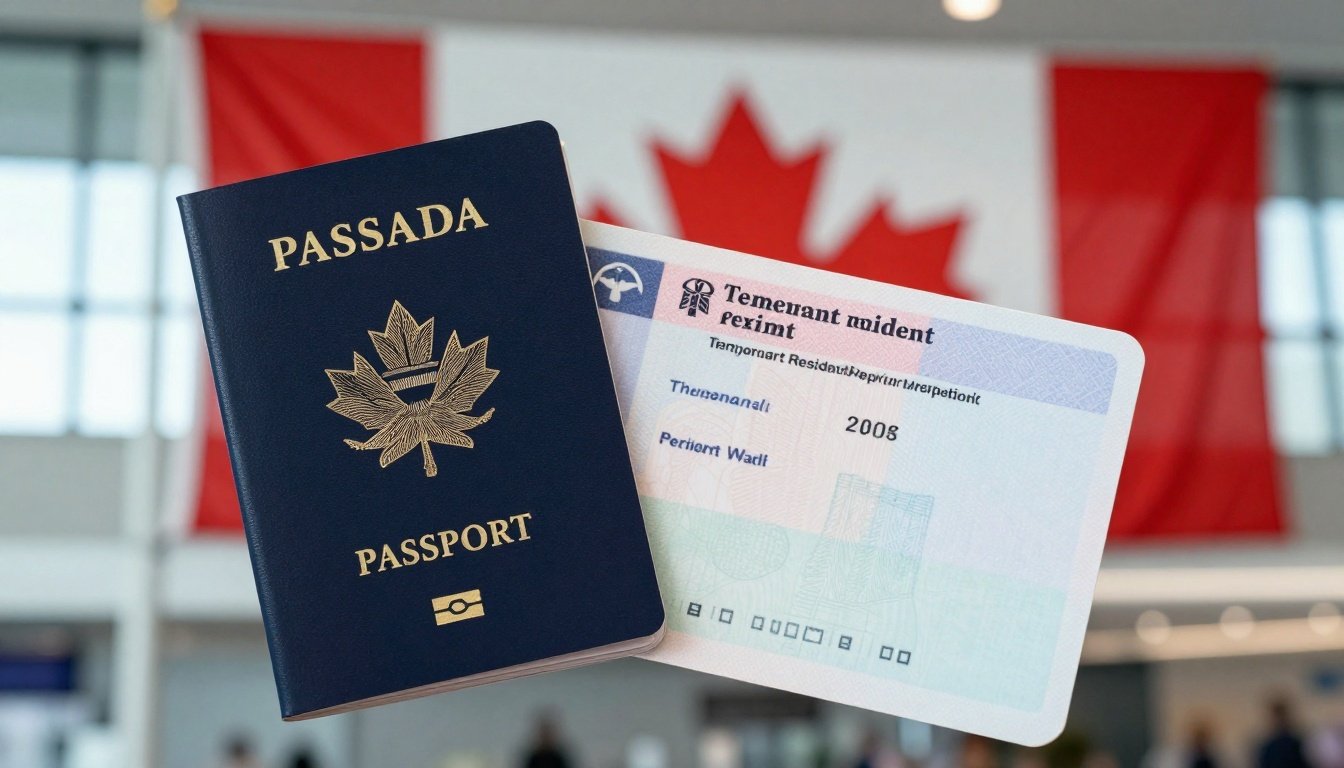
A temporary resident permit (TRP) acts as an exception for foreign nationals Canada deems inadmissible. IRCC or CBSA issues it when your reason to enter or stay temporarily beats the risks you pose. It overrides inadmissibility for that time but does not erase the underlying issue.
Think of it like a hall pass. You still carry the baggage of your record, but officials grant short-term access for strong purposes, such as family emergencies or key business deals. TRPs come as single-entry (one trip) or multiple-entry (several visits).
In 2026, expect scrutiny amid temp resident caps. Canada limits new students and workers, signaling caution on all temporary stays. Yet TRPs persist for cases where need trumps risk.
TRP vs. Visitor Visa (TRV): Key Differences
| Aspect | TRP | Visitor Visa (TRV) |
|---|---|---|
| Purpose | Overrides inadmissibility | For admissible visitors |
| Who qualifies | Inadmissible people with compelling need | Those without bars |
| Apply where | Visa office or border | Visa office or online |
| Risks | High refusal chance, discretionary | Standard processing |
Who Needs a Temporary Resident Permit Canada and Eligibility Rules
You need a TRP if inadmissible under Canada’s Immigration and Refugee Protection Act. Common triggers include criminality (DUI, theft), medical conditions posing public costs, or financial issues. Past overstays or failed refugee claims also count.
IRCC sets strict criteria. You must be a foreign national, currently inadmissible, lack valid temporary status, and show a compelling temporary purpose. Officers weigh if your need exceeds risks to Canadians. Examples: attend a funeral, close a business deal, or visit a dying relative.
No automatic approval. Decisions rest on discretion. Build a case proving low risk and high urgency.
Eligibility in 2026: Recent Policy Updates
Temp resident caps hit 2026 hard, targeting fewer students and workers overall. IRCC plans ranges for new arrivals, making approvals tougher. Yet TRPs stay open for inadmissibles with strong cases.
A new TR-to-PR pathway offers 33,000 spots for rooted workers, but TRPs do not lead there. Focus on proving your short stay fits tighter rules.
Step-by-Step: How to Apply for Temporary Resident Permit Canada
- Confirm inadmissibility: Review your record via police certificates or past IRCC letters.
- Assess your purpose: Pinpoint a compelling, time-limited reason like a family event.
- Gather documents: Collect proof (see below); write a clear explanation letter.
- Fill forms: Use IMM 5708 or online tools; answer honestly.
- Pay fees: Submit CAD 246.25 plus any extras.
- Biometrics if needed: Book and attend for fingerprints/photos.
- Submit: Mail to visa office (outside Canada) or present at port of entry.
- Wait and follow up: Track status; respond to requests fast.
Before you submit checklist:
- Double-check honesty in all answers.
- Prove home ties, funds, and exit plans.
- Include rehab evidence if criminal.
Ports of entry suit urgencies but risk refusal and return flight costs. Apply ahead at visa offices for better odds.
Documents Needed for Your TRP Application
- Valid passport.
- Police certificates and court docs for crimes.
- Medical exam results if required.
- Proof of purpose (invites, itineraries).
- Ties to home (job letter, property).
- Financial proof (bank statements).
- Two photos meeting specs. Tailor to your case; weak docs kill chances.
Fees and Processing Times for Temporary Resident Permit Canada
TRP base fee sits at CAD 246.25 per IRCC guidelines. Add biometrics (CAD 85), medical exams (CAD 200+), or TRV (CAD 100). Victims of trafficking or abuse skip most fees.
Processing varies: visa offices take 3-6 months; border decisions happen same-day. Delays stem from backlogs, complex cases, or 2026 caps. Example: Single applicant pays CAD 246.25 + CAD 85 biometrics = CAD 331.25 total.
Check IRCC tools weekly for your office’s times.
Pros and Cons of a Temporary Resident Permit Canada
| Pros | Cons |
|---|---|
| Grants entry despite bans | Strictly temporary |
| Flexible length (days-years) | Can cancel anytime |
| Multiple entry options | No fix for inadmissibility |
| Work/study possible after 6mo | High refusal risk |
| Handles urgent needs | Fees non-refundable |
Common Mistakes When Applying for TRP Canada and How to Fix Them
- Weak purpose: Vague travel plans fail. Fix: Detail specific event with proof.
- Incomplete docs: Missing police certs doom apps. Fix: Use checklists; scan everything.
- Hiding history: Lies lead to bans. Fix: Disclose fully with context.
- Border without prep: Officers refuse unprepared. Fix: Apply visa office first.
- No ties proof: Looks like you won’t leave. Fix: Show job, family, assets.
- Ignore rehab: Old crimes need evidence. Fix: Add completion letters.
- Miss biometrics: Delays application. Fix: Book early.
- Poor letter: Generic excuses flop. Fix: Personalize with facts.
Is Temporary Resident Permit Canada Safe and Legit?
Yes, TRPs come straight from IRCC or CBSA, Canada’s official agencies. No scams involved if you use gov sites like this eligibility page.
Stick to canada.ca portals. Avoid random agents promising guarantees. Verify any letter’s issuer matches official formats.
Tips to Boost Your Temporary Resident Permit Canada Approval
Strong cases win. Start with a detailed letter explaining your need, low risk, and exit plan. Back it with fresh docs.
Show rehabilitation: Court completions, clean records since offense. Highlight urgency, like medical proofs.
Prove finances cover your stay. Include return tickets.
Consult a regulated advisor for complex crimes. Apply months ahead, not at border.
Build home ties: Job offers, family duties.
Follow IRCC after-apply steps precisely.
Tailor to 2026 caps: Stress short, essential visits.
FAQs About Temporary Resident Permit Canada
What is a temporary resident permit Canada?
Document for inadmissibles to enter/stay short-term.
How much does it cost?
CAD 246.25 base; more with biometrics.
How long to process?
3-6 months office; same-day border.
Can I get one for DUI?
Yes, if rehabbed and need strong.
Work on TRP?
No auto; apply separately after 6 months.
Apply at border?
Yes, for urgencies, but risky.
Leads to PR?
No, temporary only.
How long valid?
Up to 3 years, case-by-case.
Conclusion
A temporary resident permit Canada unlocks doors for inadmissibles with genuine, short-term needs amid 2026’s tighter caps. You’ve got the steps: confirm eligibility, gather ironclad docs, pay fees, and submit smartly. Weigh pros like access against cons like refusal risks.
Check IRCC updates now. Gather your proofs today or talk to a pro. Bookmark this, share if it helps, and plan your path forward. Safe travels.

 Enu
Enu