 Enu
EnuComparing baggage fees across airlines sounds simple until you hit the fine print. One airline calls a backpack a “personal item,” another calls it a carry-on, and a third charges at the gate because the bag sticks out of the sizer by half an inch.
This listicle shows how to compare baggage fees across airlines in a repeatable way. You’ll learn how to line up carry-on rules, personal item sizes, and the most common “weight traps” that turn a cheap fare into an expensive trip. Always confirm prices and policies on the official site.
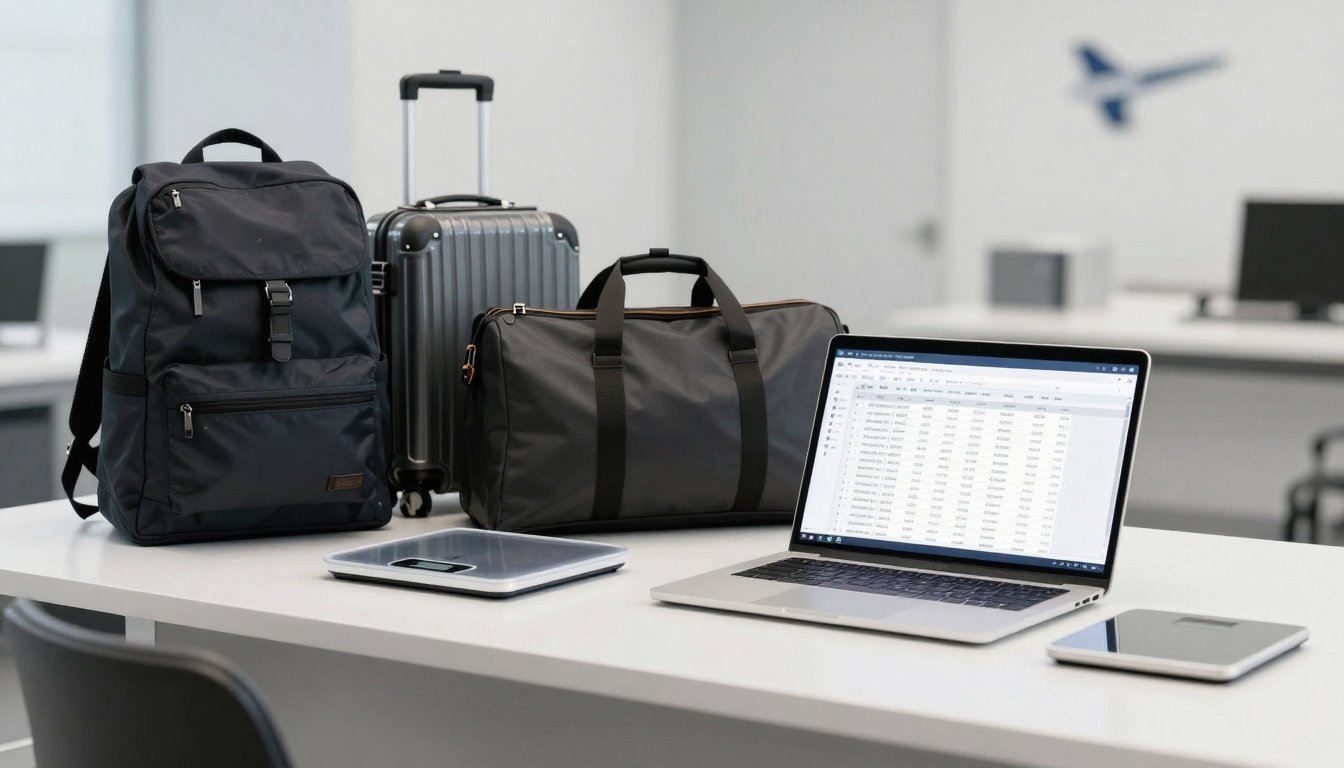
1. Build a baggage-fee comparison spreadsheet (the fastest way to see the real “winner”)
If you want to compare baggage fees across airlines without getting lost, a spreadsheet beats memory every time. The goal is to standardize what you’re comparing, because airlines don’t present baggage rules in the same format. Some focus on dimensions, others on “fit in the sizer,” and many bury fees behind fare types.
Set up columns that match how airlines actually enforce rules at airports: size first (because sizers), then allowance (because fare types), then penalty triggers (because gate fees are often the worst-case outcome). Keep one row per airline and one row per fare family if needed (Basic, Main, Bundle, etc.).
Suggested spreadsheet columns
- Airline name
- Fare type (Basic Economy, Main Cabin, etc.)
- Carry-on allowed (Y/N)
- Carry-on max dimensions (in and cm)
- Personal item max dimensions (in and cm)
- Carry-on weight limit (if published)
- Personal item weight limit (if published)
- Carry-on fee (buy early)
- Carry-on fee (airport or gate)
- Oversize/overweight triggers (what counts as “too big” or “too heavy”)
- “Weight trap” notes (common enforcement moments)
- Notes (exceptions, elite perks, credit cards, regional aircraft)
Spreadsheet features worth adding
- Conditional formatting for any bag fee over $50 (so the pain pops visually)
- A “gate fee” highlight color (because that’s the most avoidable cost)
- A dropdown for fare type (so you don’t mix Basic and Main by accident)
- A column for “Sizer strictness” (high, medium, low, based on your route experience)
When you build it once, every future trip gets easier. This is the backbone of comparing baggage fees across airlines without guesswork.
2. Start with the “default” US size baseline, then mark exceptions
Most big US airlines cluster around a common carry-on maximum size. As a practical baseline, many publish 22 x 14 x 9 inches for a carry-on (including wheels and handles), while personal items often need to fit fully under the seat and can be closer to backpack size.
The catch is that “common” doesn’t mean “universal,” and enforcement can vary by route and aircraft. Southwest is a well-known exception with a larger carry-on allowance, while ultra-low-cost carriers often allow only a smaller personal item for free.
To sanity-check the baseline and spot exceptions quickly, use a third-party overview as your starting map, then verify on airline pages before you pay. One helpful reference for a broad snapshot is carry-on size rules by airline. It’s not a substitute for official policies, but it’s a fast way to identify where you need to pay extra attention.
3. Compare “allowance” first, because fare types change everything
A baggage rule is only useful if it matches the fare you’re actually buying. Many travelers get burned by assuming “the airline allows a carry-on,” then discovering their fare type doesn’t.
Start every comparison with these questions:
- Does this fare include a carry-on, or only a personal item?
- Does the airline sell bundles that change bag rules?
- Does the airline charge more at the airport or at the gate?
This is where comparing baggage fees across airlines gets real. Two airlines can have the same size limits, but one includes the carry-on and the other charges a fee that doubles your total trip cost.
Also watch for “Basic” fares that restrict carry-ons on certain carriers and routes. Even when the bag itself is the same, the fare rules can flip your allowance.
4. Treat personal item sizes as the main battleground (not carry-ons)
Personal item sizing is where airlines quietly enforce the most. Carry-on limits are often standardized, but personal items live in a gray zone because airlines want them to fit under the seat completely. That last detail matters: “fits under the seat” usually means no bulging, no sticking out, and no turning it sideways.
When you compare personal item sizes, don’t just write down the maximum dimensions. Add notes for real-world shapes:
- Structured backpacks can fail even when the numbers look close.
- Overstuffed soft bags can exceed depth and trigger a sizer test.
- Laptop bags with rigid frames can be the sneaky offender.
If you only compare baggage fees across airlines by carry-on size, you’ll miss where the most common gate problems happen.
5. Measure the bag you own (including wheels and handles), then compare to sizers
Airlines typically measure the total outer dimensions. That means wheels, handles, and any hard corners count. This sounds obvious, but it’s the classic reason a “22-inch carry-on” fails a 22 x 14 x 9 rule. Many bags are marketed by height only, not full depth, and spinner wheels add bulk.
Do this once per bag:
- Measure height, width, depth at the widest points.
- Measure again when packed, because soft bags expand.
- Write the measurements on a note in your phone so you stop re-measuring.
In your spreadsheet, add a column for “my bag delta” (how many inches over or under the limit you are). That single column makes comparing baggage fees across airlines feel concrete, not theoretical.
6. Watch the three biggest “weight traps” that trigger surprise charges
Even when airlines don’t publish strict carry-on weight limits, weight still matters because gate agents can deny overhead bags that look too heavy to lift safely. On carriers that do enforce carry-on weight, the trap is more direct: your bag fits the box, but fails the scale.
The most common weight traps look like this:
- Gate enforcement after a full flight: overhead bins fill up, and staff get stricter.
- Regional aircraft: smaller bins turn borderline bags into forced gate checks.
- Dense packing: tech gear, books, and gifts make small bags heavy fast.
If you’re serious about comparing baggage fees across airlines, include “enforcement moments” in your notes. Fees aren’t only about published policies, they’re about when airlines choose to test your bag.
7. Compare “buy ahead” versus “pay at the airport,” because timing is a fee multiplier
Budget carriers often price carry-ons like concert tickets: the earlier you buy, the less you pay. Wait until the airport, and the price can jump sharply. That means you can’t compare baggage fees across airlines using one number. You need at least two: “online in advance” and “airport or gate.”
In your spreadsheet, track:
- Lowest carry-on fee you can realistically buy
- Worst-case fee if you show up unprepared
- Any bundle that includes a carry-on plus seat selection (because that changes the math)
This timing spread is why a cheap base fare can lose to a higher fare that includes a carry-on.
8. Separate “carry-on fee” from “gate-check outcome,” because the traveler experience changes
Not all bag costs feel the same. A planned carry-on fee is annoying but predictable. A forced gate check is a different problem because it can slow you down, separate you from essentials, and add risk during connections.
When you compare baggage fees across airlines, add a note for what happens when you fail:
- Does the airline gate-check for free on full flights (common on some major carriers)?
- Does it convert into a paid checked bag at the gate (common fear on stricter fee-driven models)?
- Do you lose access to items you need (meds, chargers, documents)?
This isn’t just money. It’s convenience and control.
9. Use a “10-airline comparison set” so you don’t miss the common choices
A good comparison set covers full-service, hybrid, and ultra-low-cost options. Even if you won’t fly all of them, the set gives you a consistent frame for comparing baggage fees across airlines.
Here’s a practical US-focused set to track in your spreadsheet:
- Delta Air Lines
- American Airlines
- United Airlines
- Southwest Airlines
- JetBlue
- Alaska Airlines
- Hawaiian Airlines
- Spirit Airlines
- Frontier Airlines
- Allegiant Air
For at least one official policy example, Southwest publishes details on its baggage rules here: Southwest baggage restrictions. Use that style of page as your “source of truth” model when you pull policies for the rest.
If you want a single page that organizes fee categories across multiple carriers (bags, seats, other add-ons), a consumer advocacy overview can help you compare structure quickly, then verify on airline sites. See airline fee categories by carrier.
10. Compare Basic Economy rules separately, because they can flip the “best deal”
Basic Economy is where travelers mis-compare the most. Two fares can look close, but one includes a carry-on and the other doesn’t. Or both allow a personal item, but one has a smaller definition of “personal item” that turns your normal backpack into a paid carry-on.
When you compare baggage fees across airlines for Basic Economy, keep a separate row per airline and mark:
- Carry-on included or not
- Any boarding-group restrictions that raise gate-check odds
- Seat assignment rules that affect under-seat storage (middle seats can be tighter)
This is also where you should be strict about “always confirm on the official site.” Basic rules change more often than main cabin rules.
11. Add “route and aircraft reality” to your comparison, because overhead bins aren’t equal
A carry-on that works on a big Boeing or Airbus may fail on a regional jet, even when the policy is the same. Overhead bin geometry changes, under-seat clearance changes, and staff expectations change. That’s why “it fit last time” is not a reliable plan.
To make your comparison realistic, add two columns:
- Typical aircraft on your route (mainline, regional, mixed)
- Connection risk (tight connection increases the cost of a forced check)
If your trip includes small aircraft segments, treat personal item compliance as the priority. A bag that fits under the seat reduces the chance of last-minute surprises, even when you’re comparing baggage fees across airlines with similar published limits.
12. Include “total trip cost” math, not just baggage fees
Baggage fees don’t live alone. The real cost of a flight often looks like: base fare + carry-on + checked bag + seat selection + support or change costs. A “cheap” ticket can turn expensive once you add the bags you actually need.
Example total-cost calculation (example only)
- Airline A: $160 fare + $0 carry-on + $0 personal item = $160
- Airline B: $120 fare + $65 carry-on (paid later) + $0 personal item = $185
In that example, Airline A is cheaper in practice. This is the entire point of comparing baggage fees across airlines: you’re buying the full trip, not the headline fare.
If you’re still shopping for flights and watching prices move, it helps to track fare swings while you compare bag costs. Tools that let you set price tracking alerts can reduce the chance you buy on a bad day, then feel pressured into the wrong baggage choice later.
Conclusion
Comparing baggage fees across airlines works best when you treat it like a checklist: allowance by fare type, size rules (including wheels and handles), personal item limits, and the real penalty points like gate enforcement and timing-based fee jumps. Put it in a spreadsheet once, then reuse it for every trip.
If you want the cleanest result, compare baggage fees across airlines using total trip cost, not the base fare. Confirm the final baggage policy on the official airline site before you pay, then pack to the strictest segment on your route.

 Enu
Enu