 Enu
EnuIf you’re searching for how to obtain norwegian residence permit, this guide breaks it into clear steps so you don’t waste time or money. You’ll learn who actually needs a permit (and who doesn’t), how to choose the right permit type for work, study, or family, how the application process works with UDI (the Norwegian Directorate of Immigration), and what to do right after approval, like biometrics, your residence card, and registration basics. UDI is the main authority, and rules can change, so planning with the latest checklist matters.
“Always confirm prices and policies on the official site.” Fees and document rules can shift between intakes, and UDI updates requirements when policies change, so treat any cost examples as guidance, not a guarantee.
Quick Answer (Read This First)
If you want how to obtain norwegian residence permit in 2026 without getting stuck in loops, think of it like a short relay race. You pass the baton from eligibility, to online application, to biometrics, to registration after approval. Miss one handoff and everything slows down.
Here are the key takeaways you should know before you start:
- Most non-EU/EEA citizens need a residence permit to stay in Norway longer than 90 days (within a 180-day period) or to work. EU/EEA citizens usually register instead of applying for a permit.
- Pick the correct permit category first (work, study, family immigration, self-employed). The requirements are different, so “almost right” can still mean a rejection.
- Use UDI checklists as your source of truth, then build your document bundle to match that checklist exactly. Start at UDI application overview.
- Apply online, then attend an in-person appointment (police in Norway or an embassy/VFS-style application center abroad, depending on where you apply). This is where you show originals and give biometrics (photo and fingerprints).
- Budget beyond the UDI fee. The fee is only one piece. Translation, legalization/attestation, travel to appointments, document copies, and passport photos can add up fast (these extras vary a lot by country).
- Processing times can take weeks or months, so apply as early as you can. If your plan depends on a specific start date (job or studies), treat deadlines as non-negotiable.
- After approval, you still have tasks: you may need to collect your residence card, follow any work limits tied to your permit, and get an ID number (often a D-number first, then personnummer if you qualify).
- Permanent residence has newer language and social studies rules for many applicants (UDI ties this to the date of your police appointment for certain applications). If long-term stay matters to you, skim UDI permanent residence rules early so you don’t get surprised later.
The fastest “right path” for most applicants
Most successful applications follow the same pattern: match your situation to the right permit, follow the UDI checklist, then show up prepared for biometrics with the correct originals.
If you’re applying for work, it often comes down to having a valid job offer and the correct contract details. If you’re applying to study, your school admission and proof of funds become the backbone. For family immigration, relationship documentation and living arrangements matter more than people expect.
If you want a second perspective on the work-permit flow (useful when planning timelines with employers), compare your notes with Deel’s 2026 work permit guide, then verify everything against UDI before you pay.
What usually delays applications (so you can avoid it)
Delays often come from simple problems that are painful to fix later:
- You uploaded the wrong document type (example: bank statements instead of the required funding proof format).
- Your translations are incomplete, or not done by an accepted translator.
- Your passport is close to expiry.
- You submitted online but waited too long to book the appointment, or arrived without originals.
- Your documents don’t match each other (example: name spelling differences across passport, contract, and certificates).
Treat your application like airport security. The faster you want to get through, the more you should pack correctly before you arrive.
What the Norwegian Residence Permit Process Is and What It Does for You
The Norwegian residence permit process is the system Norway uses to decide whether you can live in the country for more than a short visit. If you’re a non-EU/EEA citizen planning to work, study, or join family in Norway, this process is the gate you pass through before life can properly begin (think of it like getting the key, not just standing outside the door).
In practical terms, the permit is both a legal right to stay and a set of rules tied to your purpose. That means your permit is not just “permission to be in Norway”, it also defines what you can do here and what you must do next.
What a Norwegian residence permit actually is (in plain language)
A residence permit is a formal approval that lets you stay in Norway longer than the usual visitor limit. Most people apply because they have a clear reason, such as:
- Work (often based on a job offer and a contract that meets requirements)
- Study (based on admission to an approved school and proof you can support yourself)
- Family immigration (based on your relationship to someone who lives legally in Norway)
If you’re researching how to obtain norwegian residence permit, it helps to see the permit as a “purpose-based pass”. Norway is not just asking, “Do we trust you?” It’s also asking, “What will you do here, and does your paperwork prove it?”
Two details trip people up:
1) Your permit type controls your obligations.
The required documents, fees, and wait times can change a lot depending on whether you are a student, worker, or family member.
2) A residence permit is not the same as registration (EU/EEA).
EU/EEA citizens usually don’t apply for a residence permit in the same way. They typically have the right to live in Norway but must register after a certain period. This guide focuses on the permit route most non-EU/EEA applicants need.
The process, from UDI application to residence card, what happens when
Even though permit types differ, the “spine” of the process is usually the same. It starts online and ends with an in-person identity step. Expect a flow like this:
- Choose the correct permit category and read the checklist for your nationality and situation on UDI.
- Collect documents that prove your purpose (contract, admission letter, relationship proof) plus core identity documents (passport and supporting IDs).
- Apply online and pay the fee, then book an appointment for identity checks and biometrics.
- Attend your appointment (often at a Norwegian embassy/consulate abroad, or the police in Norway), bring originals, and give biometrics (photo and fingerprints).
- Wait for a decision, then follow the instructions in the approval letter.
- Get your residence card (the physical proof you’ll often need for everyday life).
The important mindset: submitting the online form is like placing an order. The appointment is where Norway confirms the order matches the person who placed it. If you miss that appointment step, your timeline can stall.
What it does for you after approval (beyond “you can stay”)
A residence permit is valuable because it unlocks real life tasks that visitors often can’t do easily. After approval, the permit typically helps you:
Prove legal status for work or study.
Employers and schools need clarity. A residence permit creates that clarity and sets the boundaries, like work hours for some student permits or job conditions for work permits.
Start building your administrative life.
In Norway, many essentials depend on being in the system correctly: getting an ID number (often starting with a D-number), dealing with taxes, and accessing services. Your permit approval is often the first domino.
Bring family (in many cases).
Family immigration rules are strict, but approval in one category can make it possible for close family members to apply, depending on your status and income rules.
Work toward permanent residence over time.
If Norway is a long-term plan, your residence permit period is often the foundation for permanent residence later (with extra requirements). UDI’s terminology can be confusing at first, so it helps to read an official definition like the UDI definition of a permanent residence permit to understand how “temporary” and “permanent” status differ.
The bottom line: a Norwegian residence permit is not just paperwork. It’s the tool that turns your plan into something you can actually execute, legally, predictably, and with fewer surprises once you arrive.
Key Features of How to Obtain Norwegian Residence Permit (What You Must Prove)
When people get stuck on how to obtain norwegian residence permit, it’s rarely because the online form is hard. It’s because Norway wants proof, not plans. You must show, with documents that match UDI’s checklist, that your reason for living in Norway is real, funded, and allowed under the permit you’re applying for.
Think of your application like a locked door with a specific key. The “key” is your permit category (work, study, family), and the “teeth” on that key are the exact documents UDI asks for. Close isn’t close enough.
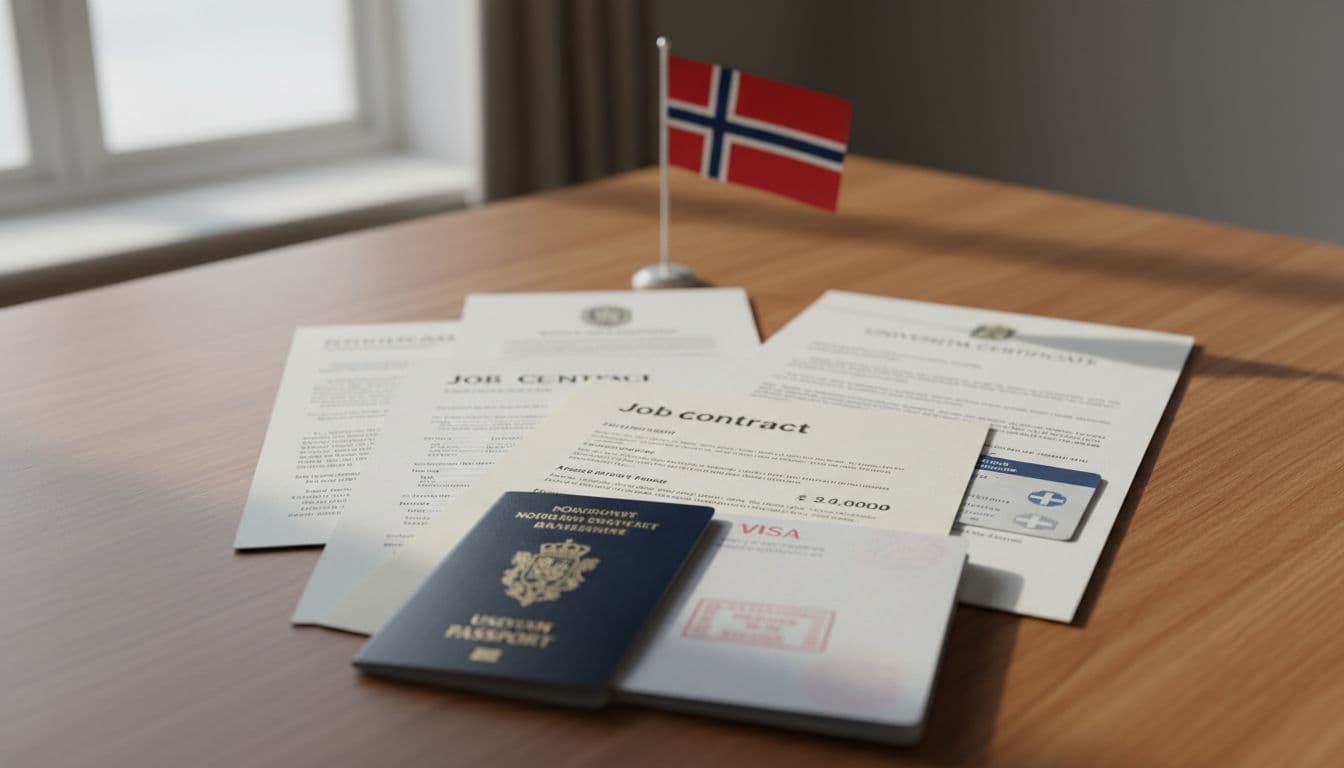
You must prove identity and lawful entry (your passport does the heavy lifting)
UDI can’t approve anything until they trust who you are. Your passport is the anchor document, and most problems in real applications trace back to weak identity proof.
In practice, this means your passport should be valid, readable, and consistent with the rest of your paperwork (name order, spelling, date of birth). If your documents show different spellings or different “versions” of your name, fix that before you upload. A small mismatch can cause big delays when you later show originals at your appointment.
You should also expect an in-person identity check as part of the process. That appointment is where the system moves from “uploaded files” to “verified person.” If you arrive without the right originals, your timeline can stall.
When you’re building your document pack, follow UDI’s checklist wording exactly. If you want the simplest way to avoid missing something, start with UDI’s own explanation of required documentation checklists. It keeps you from guessing.
You must prove the purpose of stay (work, study, or family)
Norway doesn’t give “general” residence permits for long stays. Your permit is tied to a purpose, so your proof must show that purpose clearly.
Here’s what that usually looks like:
- Work: A real job offer or contract that spells out role, hours, pay, and employer details. UDI also expects your background to match the job, so education and experience evidence matters.
- Study: Proof of admission to an approved full-time program, not just “I plan to apply.” The acceptance letter is your core document.
- Family immigration: Proof the relationship is genuine and legally documented, like marriage certificates, birth certificates, and other supporting evidence that ties you to the sponsor in Norway.
A good self-check is this: if a stranger read your documents for 60 seconds, would they know why you’re moving to Norway? If the answer is “not really”, UDI may feel the same.
You must prove you can support yourself (money, income, or a sponsor)
This is where many applications quietly fail. It’s not enough to say you have money. You must show it in the form UDI accepts.
For students, UDI normally expects proof you can cover living costs for the study period (often shown via bank statements or a formal funding arrangement). The exact amount can change, so treat any number you see online as a planning estimate until you confirm it on UDI.
For work permits, your contract income usually does the job, as long as it meets the relevant requirements and is clearly documented. For family immigration, the sponsor’s income and ability to support the applicant is often central, and missing sponsor paperwork can sink an otherwise strong case.
If you’re optimizing for speed and fewer back-and-forth messages, use one rule: your money proof should be boring. Clear source, clear ownership, clear amount, and documents that match each other.
You must prove you meet the permit conditions (and you’ll keep meeting them)
UDI doesn’t just decide based on today. They also look at whether you can realistically follow the rules after you arrive.
Examples of “conditions” that often matter:
- Work permits are tied to the job and terms in your contract.
- Study permits are tied to full-time studies, and any work rights are limited and conditional.
- Family permits often assume you will live with (or have an established connection to) the sponsor, plus meet any ongoing requirements.
This is why vague paperwork hurts you. If your contract is missing hours, or your admission letter is unclear about program length, UDI may not be able to confirm you qualify.
A simple mindset helps: your documents must tell the same story. Dates, addresses, names, and timelines should line up across your contract, bank papers, admission letters, and civil documents.
Image suggestion: A simple “proof checklist” graphic with icons for passport, purpose (work/study/family), funds, housing, and appointment/biometrics.
You must prove your paperwork is authentic (and properly translated if needed)
UDI expects documents they can trust. If a document is in a language they don’t accept, you may need a translation that meets their rules. If a document is considered high-risk for fraud, you may also need legalization or other formal verification, depending on your country and the document type.
Treat this as a quality control step, not busywork. One incomplete translation or missing page can trigger delays because UDI has to pause and request more.
If you’re applying from abroad, you may also deal with third-party appointment systems depending on location. Companies like VFS Global often support appointment handling for many countries and visa types (the exact setup depends on where you apply), which is why it’s smart to read the instructions for your application location carefully.
You must prove you’re planning beyond approval (especially if permanent residence is a goal)
Even if you’re applying for a temporary permit now, many people choose Norway with long-term plans in mind. If that’s you, start acting like future-you will thank you.
UDI has updated requirements for permanent residence in recent years, including language and social studies elements for many applicants. If you want to understand the direction of travel before you commit years to the process, read UDI’s notice about changes to permanent residence requirements.
The practical takeaway is simple: keep records from day one. Save contracts, pay slips, tax documents, study confirmations, and address proof. Later, when you’re again figuring out how to obtain norwegian residence permit renewals or permanent status, clean documentation can be the difference between an easy “yes” and months of waiting.
Step-by-Step: How to Apply Through UDI (From Choosing a Permit to Biometrics)
Once you understand how to obtain norwegian residence permit, the UDI process is mostly a controlled sequence: choose the correct permit, build documents that match UDI’s checklist, apply and pay online, then prove your identity in person through biometrics. Think of it like booking a flight, paying online is not enough, you still have to show up with the right passport at the airport.
The biggest time-saver is getting the permit type right from the start. UDI’s portal asks questions and points you to the correct path, which helps you avoid “almost right” applications that still fail. Start with the official UDI “Want to apply” overview and follow the permit category that matches your real reason for staying.
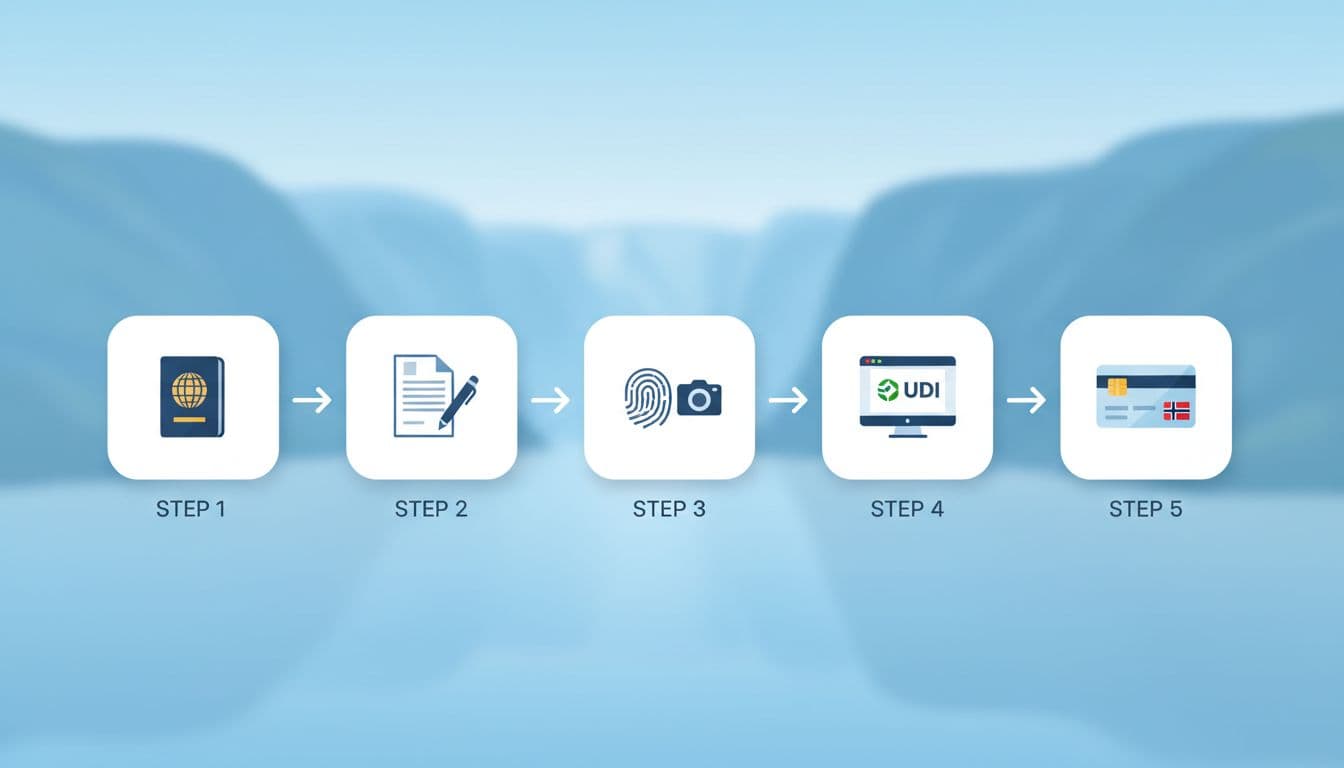
Here’s the practical step-by-step that works for most applicants:
- Choose the permit type in UDI (work, study, family, other), then read the checklist for your citizenship and situation.
- Gather documents before you touch the form: passport, required proof for your purpose (contract, admission, family documents), and any funding or housing evidence UDI requires.
- Prepare clean scans and translations (when needed). Aim for clarity and consistency across names, dates, and addresses.
- Apply in UDI’s online portal and pay the fee, then save your confirmation. This confirmation matters at the appointment.
- Book your in-person appointment (police in Norway, or an embassy/authorized application center abroad, depending on where you apply).
- Attend the appointment with originals. This is where you usually submit originals for inspection and give biometrics (photo and fingerprints).
- Wait for a decision, and follow the instructions in your decision letter. If approved, you’ll also get guidance on collecting your residence card.
One mindset that helps: treat your application like a “quality-checked” submission. Strong applications are boring and consistent, with documents that match the checklist line by line. Student platforms like ApplyBoard talk about built-in quality checks to reduce errors, and that logic applies here too, the fewer mismatches and missing items, the fewer delays.
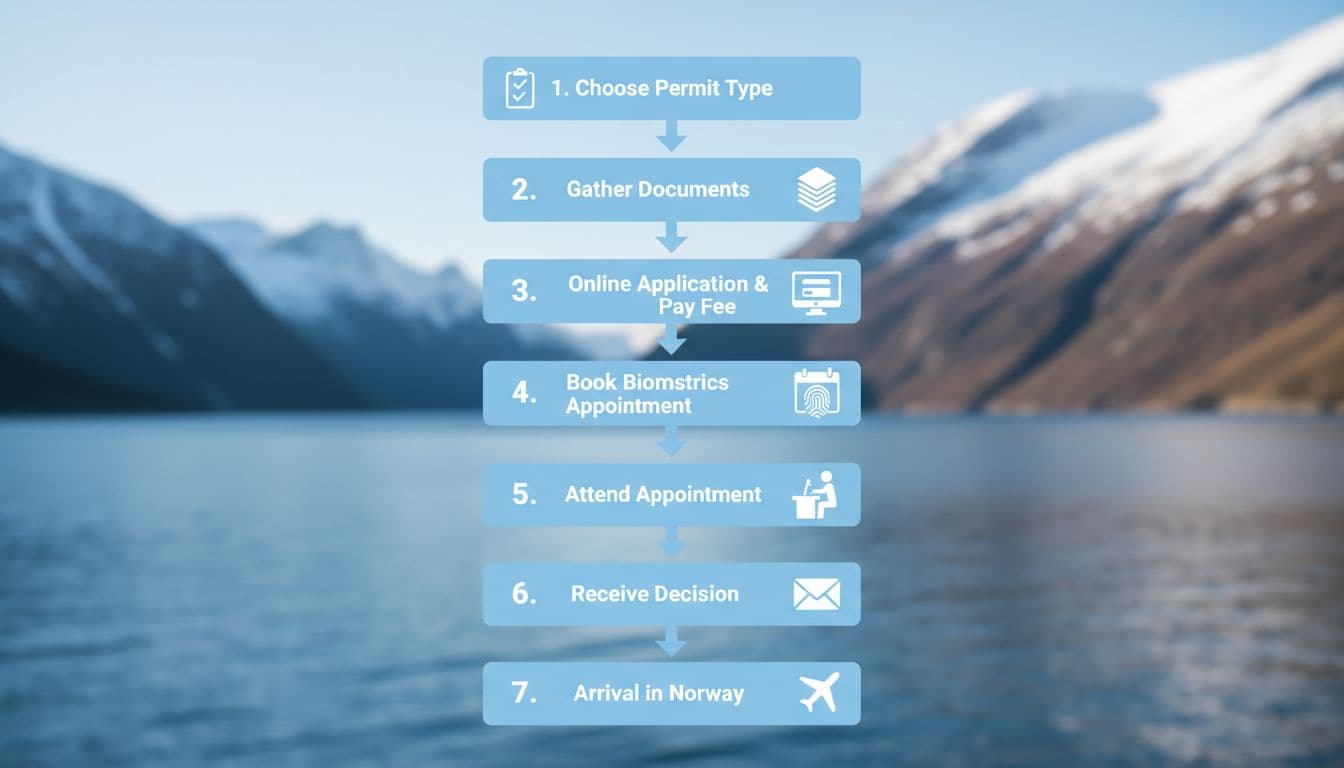
flowchart showing the main steps from choosing a permit to biometrics and arrival.
Costs, Processing Times, and Planning Your Move Without Guessing
If you’re serious about how to obtain norwegian residence permit, treat costs and timing like parts of the application, not “details to figure out later”. Most people don’t fail because they’re unqualified. They fail because their budget is too tight, their timeline is too optimistic, or they plan their move around a date that UDI never promised.
Below is a practical way to plan your Norway move with fewer surprises, using official fee levels and the reality that processing time is usually tied to your appointment date and case load.
What it really costs (UDI fee vs. the costs nobody budgets for)
Start with the easy part: the UDI application fee. Based on current official fee levels used going into 2026, typical examples are:
- Work permit: NOK 6,300 (applicant over 18)
- Study permit: NOK 5,400 (applicant over 18)
- Family immigration: NOK 11,900 (adult)
A notable 2026 change is that children under 18 in family immigration pay half the adult family fee (so NOK 5,950) from 1 January 2026.
The fee is only the entry ticket. The full cost of how to obtain norwegian residence permit usually includes “side costs” that can sting if you didn’t plan for them:
- Translations (often needed if your documents are not in accepted languages)
- Legalisation or verification (varies by document and issuing country)
- Travel to biometrics (embassy, consulate, police, or application center)
- Passport photos, printing, scanning
- Courier costs if documents must be shipped
- Extra housing nights if your appointment is in another city
A simple rule that keeps you safe: budget so you can pay the UDI fee, and still afford to fix mistakes quickly (new translation, reissued certificate, a second appointment trip). That cushion is what separates “annoying” from “derailing”.
Processing times: what’s fast, what’s slow, and what affects your case
Processing times are not one number. They depend on permit type, where you apply, whether you’re first-time or renewing, and how quickly you get an appointment.
From recent UDI time guidance and late-2025 to early-2026 estimates, many applicants see timelines like these after the in-person appointment:
| Permit type (common cases) | Realistic waiting time range (example) | What usually makes it longer |
|---|---|---|
| Work (some SUA cases) | Around 3 weeks | Appointment backlog, missing documents |
| Work (other first-time work permits) | Up to 4 months | Complex cases, checks, unclear contract terms |
| Study (some police districts) | Up to 8 weeks | Funding proof questions, late appointment |
| Family (some police districts) | Up to 9 weeks | Relationship documentation gaps, extra checks |
Here’s the part many people miss: your “real” waiting time can start earlier than you think, because appointment availability can add weeks before the case is even properly in motion. So if you’re planning a move based on a job start date or semester start, the appointment calendar matters almost as much as UDI’s estimate.
For the most accurate time estimate for your exact work category, use UDI’s own tool and guidance, starting with UDI waiting-time guidance for work immigration.
Planning your move: build a timeline that survives real life
Planning your move to Norway is like packing for a winter hike. If you pack only for perfect weather, you’ll regret it fast. A strong plan assumes small delays and protects your start date.
Use this planning approach to keep control:
- Pick your target arrival window, not a single day. Give yourself at least a 2 to 4-week buffer if you can.
- Work backwards from your “must be in Norway” date (job start, orientation week, family relocation date).
- Book the appointment as early as possible after you submit online, because that calendar can become the hidden bottleneck.
- Pre-check your documents for consistency (names, dates, passport number, addresses). One mismatch can trigger a request that pauses your case.
- Don’t resign, sell, or cancel housing too early. Wait until you have written approval and know the next steps (like residence card and entry rules).
Two practical tips that save stress:
- Treat UDI’s estimate as “best case”, not a promise. Your plan should still work if it takes longer.
- Keep a “Plan B” start date ready with your employer or school, so you’re not renegotiating under pressure.
If you want a plain-language reminder of the difference between a visa-free entry and permission to stay past 90 days (especially for US citizens and other visa-free nationals), this overview is clear: Fulbright Norway residence permit basics.
Pros and Cons of Applying on Your Own vs Using Help (VFS, Agents, or a Lawyer)
When you’re figuring out how to obtain norwegian residence permit, you’ll hit a practical fork in the road: do everything yourself, or pay for help. There’s no “best” option for everyone. The right choice depends on how complex your case is, how tight your timeline feels, and how comfortable you are following detailed checklists without missing small details.
Think of it like assembling furniture. If it’s a simple chair and you’ve done it before, DIY is fine. If it’s a full kitchen with custom parts, you may want a pro so you don’t discover one missing screw after everything’s mounted.
Applying on your own (DIY): when it’s the smartest move
DIY works well when your case is straightforward and your documents are clean. You rely on UDI’s official checklists, you upload what they ask for, and you show up prepared for biometrics.
The big upsides are clear:
- Lower total cost: you mainly pay the official fee and your document expenses (translations, travel, copies).
- More control: you know exactly what’s submitted and when.
- Less “telephone game” risk: you don’t lose nuance through a middle person.
DIY tends to fit people with stable work contracts, clear study admission, or simple family situations where the documentation is standard and easy to prove.
It also builds confidence. If you plan to renew later, learning the system once can pay off.
DIY downsides: the common traps that cost time (and sometimes approvals)
The catch is that Norway’s process rewards accuracy, not effort. You can spend weeks preparing and still get delayed if one detail doesn’t match the checklist.
DIY can hurt you when:
- You don’t spot a country-specific document rule (translation, legalization, format).
- Your documents don’t match each other (names, dates, addresses).
- You misread what UDI means by “must submit” versus “if applicable.”
- You miss an appointment window and lose weeks waiting for a new slot.
If you’re watching deadlines (job start date, semester start, family move), DIY mistakes can feel expensive even if you saved money on professional fees.
Using VFS Global: what they actually do (and what they don’t)
VFS Global is often part of the logistics side of applying from abroad. Depending on where you apply, they can be the place where you book an appointment, submit documents, and give biometrics. VFS also promotes add-on services like SMS updates and courier options on their site, which can be convenient when you want fewer trips and clearer tracking (see VFS Global services overview).
What VFS can be good for:
- Smoother appointment handling: one place for intake and biometrics, depending on your location.
- Basic completeness checks: staff may confirm you brought the types of documents requested (not whether your case is strong).
- Status updates: useful if you get anxious waiting.
What VFS is not:
- They are not UDI.
- They usually don’t give legal advice.
- They typically won’t fix weak evidence or tell you if a document is “convincing.”
So VFS can reduce friction, but it doesn’t remove responsibility. You still own the outcome.
Image suggestion: A split-screen desk scene showing a DIY applicant with a checklist and scanned documents on one side, and a supported applicant at a professional intake counter on the other.
Using an immigration agent or relocation consultant: where the value is
A good agent sits in the middle. They don’t just take your documents. They help you package them so your story is clear and consistent, and they help you avoid common errors that lead to requests for more information.
This route can be a strong fit if:
- Your situation has moving parts (family members joining, mixed income sources, multiple countries of residence).
- You need help organizing proof and explaining gaps.
- You want someone to sanity-check everything before you pay and submit.
The upside is often less stress and fewer mistakes. The downside is quality varies, and costs can climb quickly.
Before you hire anyone, confirm exactly what you’re paying for (document review, form filling, appointment booking, follow-up support). If the service is vague, you’re buying promises.
Using an immigration lawyer: best for complex cases, refusals, and appeals
Lawyers make the most sense when the stakes are high or the case is complicated. For example, if you’re dealing with a prior refusal, uncertainty about eligibility, or you expect you may need to appeal, legal support can be worth the cost.
A lawyer can help you:
- Build a strong written explanation that matches the law and UDI practice.
- Reduce risk in tricky cases (missing docs, unusual family situations, past overstays).
- Handle appeals and formal communication.
If you decide to go legal, look for someone qualified and transparent. In the US, for example, AILA provides a directory tool for finding immigration attorneys (see AILA immigration lawyer search).
For many straightforward first-time applications, though, a lawyer is often more than you need.
Quick comparison table (cost, effort, and risk)
Use this table as a decision shortcut. It’s not about guarantees, it’s about what you’re trading off.
| Option | Best for | Typical extra cost (beyond UDI fee) | Your effort level | Main risk |
|---|---|---|---|---|
| Apply on your own | Simple, clear cases | Low | High | You miss a requirement |
| VFS Global (where available) | Appointment and submission logistics | Low to medium | Medium | You assume they “review” your case |
| Agent/consultant | Moderate complexity, time pressure | Medium to high | Low to medium | Paying for weak expertise |
| Lawyer | Complex cases, refusals, appeals | High | Low | Overpaying for a simple case |
A simple rule to decide (without overthinking it)
If you’re still unsure, use this decision test:
- Choose DIY if your case is simple, you can follow checklists, and you have time buffers.
- Choose VFS (if it’s part of your process) if your main pain is logistics, not eligibility.
- Choose an agent if you want document and process support, but you don’t expect legal disputes.
- Choose a lawyer if you’re managing risk (complex facts, refusal history, appeal potential).
No matter which route you pick, keep one mindset: the checklist is the contract. Whether you pay for help or not, your success still depends on matching UDI’s requirements with clear, consistent documents.
Common Mistakes That Get Norwegian Residence Permits Delayed or Refused (and How to Avoid Them)
Even when you understand how to obtain norwegian residence permit, delays and refusals often come down to small, avoidable errors. Think of your application like a chain. One weak link (a missing page, a wrong document, a name mismatch) can hold the whole case back.
The goal here is simple: help you spot the issues UDI commonly reacts to, and fix them before you submit. For official guidance on what happens after a refusal and what your options are, see UDI guidance on rejected residence permits.
Image suggestion: A desk scene showing a neat UDI-style checklist beside messy paperwork, with a passport and document folders to represent “prepared vs delayed”.
Submitting the wrong permit type (the “almost right” application)
One of the most expensive mistakes is choosing a permit category that feels close enough. UDI does not approve “close enough.” If you apply under the wrong rules, the best outcome is a long request for more information. The worst outcome is a rejection.
This happens a lot when people mix up:
- Work permit subtypes (different rules for skilled workers, seasonal roles, job seekers after study, etc.)
- Study permits vs short courses
- Family immigration vs other family-based routes
How to avoid it:
- Decide your purpose first, then build your documents around that purpose.
- If your case is unusual, write a short, clear cover note that explains why you chose that permit type and how your documents support it.
If you are planning long-term, remember that today’s “temporary” choice can affect what’s possible later, including permanent residence pathways.
Missing documents or uploading incomplete files (most common delay trigger)
UDI often cannot move forward without every required document. A single missing item can stop the clock because the caseworker must request more information and wait for your response. This is one of the most common reasons applications get delayed.
Typical examples:
- You uploaded a bank statement but not the required funding proof format
- You forgot a page of a contract, a passport copy, or a stamped certificate
- You uploaded photos instead of clear scans, and details are unreadable
How to avoid it:
- Treat the checklist like a packing list for a flight. If one item is missing, you do not board.
- Before you submit, open every file and confirm it is readable, complete, and the right document type.
- Name your files clearly (passport, contract, bank proof), so it is easier to review.
Name, date, and identity mismatches across documents
This one sounds minor, but it causes major slowdowns. If your name spelling, date of birth, or passport number does not match across documents, UDI may need extra checks.
Common causes:
- Different name order (given name vs family name)
- Missing middle name on some documents
- Spelling differences after translation or transliteration
- Old passport number used on newer forms
How to avoid it:
- Use your passport as the “master record,” everything should match it.
- If a document cannot be changed (like an older certificate), add a short explanation and include supporting proof that links the identities.
Weak proof for the purpose of stay (work, study, or family)
This is where good applications separate from “hopeful” applications. UDI wants proof that your reason for staying is real and meets the rules, not a plan you intend to follow.
What “weak proof” looks like:
- Work contract missing hours, pay, or start date
- Study admission unclear about full-time status or program length
- Family documentation that proves the relationship exists, but not that it is genuine and consistent over time
How to avoid it:
- Make your documents tell one clear story: who you are, why you are coming, and how you qualify.
- If anything is unclear, add one short page explaining the facts and pointing to the evidence.
Proof of funds that does not meet requirements (or looks risky)
Money issues can delay a case or lead to refusal if UDI cannot confirm you meet the financial requirement for your permit type. This is common for students, but it can also hit family immigration and some work cases.
Red flags that cause questions:
- Large last-minute deposits with no explanation
- Accounts not clearly in your name (or sponsor proof missing)
- Screenshots instead of official statements
- Statements without account holder details or transaction history
How to avoid it:
- Make your finances boring and easy to verify.
- Use official statements that show your name, account number, and transaction history.
- If you have a big deposit, explain the source and add supporting proof (sale agreement, payslips, gift letter if relevant).
Translation, legalization, and document format mistakes
UDI and the receiving office need documents they can read and trust. If your documents are in a language not accepted, or if key pages are not translated, you risk delays. In some cases, lack of proper authentication can also become a problem.
How to avoid it:
- Translate the full document, including stamps and back pages if they contain information.
- Keep originals ready for your appointment, not just copies.
- Do not assume “close enough” translations are fine, unclear translations create questions.
Booking the biometrics appointment too late (or showing up unprepared)
A lot of people focus on submitting online, then get stuck because the next step is slow. Appointment availability can be the hidden bottleneck. Showing up without originals can mean rebooking, which can add weeks.
How to avoid it:
- Book the appointment as soon as the system allows after you submit.
- Bring originals and required copies, plus your confirmation of submission and payment.
- Arrive early and assume the staff will not bend rules for missing items.
If you apply from abroad, appointment handling may involve third-party service providers in some locations, but the responsibility still stays with you.
Not replying fast to requests for more information
UDI can pause your case while waiting for your response. If you reply late, or reply with partial documents, you often extend the delay.
How to avoid it:
- Check your email and UDI portal regularly after submission.
- Reply with exactly what they ask for, in one message, with clear file names.
- If you cannot provide something, explain why and offer alternatives.
Confusing residence permit rules with visa rules (and overstaying)
Some applicants assume that visa-free entry or a visitor visa can “buy time” while a residence permit is processed. That misunderstanding can cause legal problems and weaken future applications.
How to avoid it:
- Separate “entry rules” from “right to live and work.”
- Follow the decision letter and UDI instructions closely.
- If you are unsure about your situation, confirm directly with UDI before acting.
Quick “pre-submit” checklist to reduce delays
Before you hit submit, run this quick self-audit. It catches most of the issues above:
- All required documents included, complete and readable
- Names and dates match your passport across every file
- Purpose proof is strong, clear, and specific
- Funding proof is verifiable, not vague or last-minute
- Translations are complete and match the originals
- Appointment plan is ready, including originals for biometrics
Is “How to Obtain Norwegian Residence Permit” Info Online Legit and Safe to Follow?
When you search how to obtain norwegian residence permit, you’ll find hundreds of “step-by-step” pages, YouTube videos, and agencies offering help. Some are honestly trying to simplify a confusing process. Others are selling you something you don’t need. A few exist to trick you into paying fees or handing over sensitive data.
The safest way to use online info is to treat it like a map drawn by strangers. It might point you in the right direction, but you still confirm the route using official signs. In Norway immigration terms, those “signs” are UDI pages and the instructions you get for your specific application location.
The short answer: what’s safe, what’s risky
Online guides can be useful, but only if you keep them in their lane. They’re best for understanding the big picture, like what documents are usually needed, or what the timeline often looks like. They’re risky when they tell you exactly what to submit, what to pay, or where to apply without pointing you back to UDI.
Here’s a simple way to separate safe from risky info:
- Safer: General explanations, checklists that match UDI wording, and links that go to UDI for final confirmation.
- Riskier: “Guaranteed approval,” “skip the queue,” “special connections,” or any site that asks for payment to “start your application” outside UDI.
- Most dangerous: Fake pages that look official and ask for passport scans, bank details, or payment.
If you only remember one rule, make it this: your final checklist should come from UDI, not from a blog, a forum, or a paid service.
Start with the official source, then use third-party guides as backup
For anything that affects eligibility, fees, or required documents, go straight to UDI first, then cross-check with other sources only if you want extra clarity.
UDI’s main entry point is their “want to apply” flow, which routes you to the correct permit type and the right document checklist for your situation. Use UDI’s application overview as your baseline.
If you’re comparing routes (work vs family vs permanent later), keep UDI open in another tab. For example, permanent residence rules are explained here: UDI permanent residence guidance. That matters because online writers often mix up “temporary permit steps” with “permanent residence requirements,” and that mix-up wastes months.
A good way to think about it: third-party guides can help you understand, but UDI tells you what you must prove.
Red flags that the “how to obtain Norwegian residence permit” info is not safe
Bad advice often sounds confident. It uses simple promises, then hides the fine print. Watch for these red flags before you trust a page or a person.
The biggest warning signs:
- They don’t link to UDI, or they link vaguely without matching your permit category.
- They quote fees as fixed facts without telling you to confirm on UDI.
- They push urgency (“apply today or lose your chance”) when your case has normal deadlines.
- They ask for money to book appointments or to “access the real form.” The real application path is via UDI.
- They tell you to submit different documents than UDI’s checklist, or they say “this works for everyone.”
Also pay attention to tone. Immigration rules change. Any guide that sounds like nothing changes is usually outdated.
Safe ways to use online checklists without getting burned
If you like checklists (most people do), you can still use online ones. You just need a verification habit.
Use this simple process:
- Pick your permit type on UDI first (work, study, family, etc.).
- Open UDI’s checklist and copy the headings into your own notes.
- Compare any online checklist to UDI line-by-line.
- If there’s a mismatch, UDI wins, every time.
- Save screenshots or PDFs of key UDI pages for your records, then date them.
This is one of the most practical ways to use the internet without letting it steer your application. It keeps you focused on how to obtain norwegian residence permit the way Norway actually processes cases.
Paid services (agents, “visa companies,” and appointment handlers): when they help and when they don’t
Some private services are real businesses, not scams. The problem is that “real business” doesn’t always equal “good for you.”
There are three common categories:
1) Content sites and relocation platforms
These can explain steps clearly, but they may also funnel you into paid services. Treat their advice as secondary and verify everything.
2) Appointment and document intake partners
Depending on where you apply from, you may be directed to a third-party center for biometrics and document intake. VFS Global is a well-known example of a company that supports application logistics in many countries. Their role is usually operational (appointments, intake, optional courier/SMS services), not decision-making (see VFS Global services overview).
3) Legal or professional advice
This can be worth it for refusals, complicated family situations, or messy histories. For standard first-time applications, many people don’t need it.
A simple test: if someone is charging you mainly to “fill forms,” that’s usually not where the real risk is. The real risk is missing or weak documents.
Image suggestion: A person comparing an official UDI checklist on a laptop with a printed third-party “guide,” highlighting mismatched items.

Privacy and payment safety: protect your passport and your wallet
Residence permits require sensitive documents. That makes applicants a target.
Use these safety habits:
- Only pay fees through the official UDI flow or through the official payment process you are instructed to use for your application location.
- Don’t email passport scans to random “agents” or people from social media groups.
- Watch for lookalike domains. The official authority is UDI on udi.no, and impostors can look convincing.
- Use a dedicated folder (digital and physical) for immigration documents, so you don’t upload the wrong files under pressure.
If a site asks for more personal data than UDI requires at that stage, stop and re-check the official process.
What “legit” online help looks like (a quick checklist)
Legit help doesn’t need to promise miracles. It should help you reduce errors and act earlier.
Signs the guidance is likely legit:
- It starts with UDI, not with a sales pitch.
- It tells you rules change, and pushes you to confirm current requirements.
- It explains trade-offs (timelines, document risks), not just “easy steps.”
- It’s clear about what it is (blog, agency, intake center), and doesn’t pretend to be the government.
If you want a trustworthy starting point for work routes specifically, use UDI work immigration guidance, then compare any outside advice against it.
Bottom line: make the internet work for you, not against you
Online info can save you time, but only if you keep control of verification. Use guides to understand the process, learn common mistakes, and plan your timeline. Then let UDI decide what counts as “required,” “accepted,” and “complete.”
That approach keeps you safe, and it keeps your how to obtain norwegian residence permit plan anchored to the one source that actually matters when a caseworker opens your file.
FAQs About Getting a Norwegian Residence Permit
You can do everything “right” and still feel unsure, because the details depend on your permit type, where you apply from, and what UDI asks you to prove. This FAQ section answers the questions people keep circling back to when learning how to obtain norwegian residence permit, especially around timelines, biometrics, travel, and what happens after approval.
Who actually needs a Norwegian residence permit?
In simple terms, most non-EU/EEA citizens need a residence permit if they plan to stay in Norway longer than the normal visitor period or if they want to work. EU/EEA citizens usually follow a registration path instead of applying for a residence permit.
If you’re not sure where you fall, use UDI’s “want to apply” flow and pick the option that matches your real purpose (work, study, family). This matters because the checklist is built around your purpose, not your plans.
A helpful mindset: a residence permit is permission to live in Norway for a specific reason, while a visit is permission to be in Norway temporarily.
What’s the difference between a residence permit and a visa?
A visa is mainly about entry. A residence permit is about staying legally for work, study, or family life.
This is where people get tripped up. You might be able to enter Norway visa-free or on a visitor visa, but that doesn’t automatically give you the right to work or live there long-term. If your goal is to settle in, focus on how to obtain norwegian residence permit first, then follow the entry rules that apply to your passport and decision letter.
Can I apply from inside Norway, or do I have to apply from abroad?
It depends on your situation and your permit type. Some people can apply from Norway, while others must apply from abroad and wait for approval before moving.
The safest rule is: follow the instructions UDI gives for your nationality and permit category. Don’t rely on what worked for a friend, because “where you can apply from” changes based on personal factors (citizenship, current status, and the type of permit).
How long does it take to get a decision?
There isn’t one standard timeline. Processing time changes based on permit type, workload, and whether your documents are complete. The most accurate approach is to check UDI’s current guidance and plan with buffers.
As a planning reference only, many applicants see weeks to a few months for common work or study cases, and longer waits are possible for family immigration and complex cases. The biggest hidden delay is often the gap between submitting online and getting an appointment.
If you want official framing for longer-term status too, UDI keeps a dedicated set of pages for permanent residence, including UDI permanent residence information.
What happens at the biometrics appointment, and what should I bring?
The appointment is the moment your online application becomes “real life.” You typically confirm identity, show originals, and provide biometrics (photo and fingerprints).
Bring what you’d bring to a strict check-in desk:
- Your passport (and any required copies)
- Originals of key documents you uploaded (contract, admission letter, family documents)
- Proof of payment/submission confirmation, if required
- Any extra documents listed on your checklist or booking confirmation
If you show up without originals, you can lose weeks rebooking. Treat the appointment like an exam date, you don’t want to arrive missing the one thing they won’t accept later.
Image suggestion: A bright desk scene with a passport, appointment confirmation, document checklist, and a simple Norway map, laid out neatly before a biometrics visit.
Do I need translations, legalization, or attestation for my documents?
Sometimes, yes. If documents are not in an accepted language, you may need translations, and in some cases you may need formal verification steps depending on the document and where it was issued.
The practical takeaway: don’t guess. UDI checklists often spell out what’s accepted. If you’re applying from abroad, you may also interact with application centers that handle intake logistics. Providers like VFS Global focus on operational services (appointments, document intake, optional courier or SMS updates) rather than deciding your case (see the VFS Global services overview).
Can I travel while my application is being processed?
This depends on your current status and where you are in the process. Travel can be risky if it affects your ability to attend appointments, provide biometrics, or remain legally present where you applied.
A safe approach:
- Don’t book non-refundable travel until you understand your appointment and decision timeline.
- If your case requires you to be in a specific country for the appointment, stay put until that step is done.
- Follow the instructions in any UDI messages you receive, not forum advice.
If travel documents and long-term status are part of your plan, UDI also maintains Q&A pages that cover practical issues people face, including UDI FAQs on permanent residence and travel documents.
If I’m approved, what are the first things I must do after arrival?
Approval is a green light, not the finish line. Most people still need to complete a few time-sensitive steps after arriving, depending on their permit type and where they applied.
Common “first week” priorities include:
- Follow the instructions for collecting your residence card
- Attend any required registration steps with the police
- Start the process for an ID number (often a D-number first, then a personnummer if you qualify)
If you’re planning permanent residence later, begin acting like it now. Save contracts, address proof, travel dates, and tax records. Future-you will thank you.
What if my situation changes after I apply (new job, new address, marriage, break-up)?
Changes can affect eligibility. The safest move is to update UDI if the change is relevant to the basis of your permit.
Examples that usually matter:
- A work contract changes substantially
- You stop studying or switch to a different program setup
- Relationship status changes in family immigration cases
- Your passport is renewed and you get a new number
Think of your application as a story you’re proving with documents. If the story changes, you may need to explain it clearly and back it up with updated evidence.
Conclusion
Getting this right is mostly about discipline, not luck. Choose the correct permit type for your real purpose, then follow the UDI checklist line by line. Submit a complete, readable document set, show up prepared for biometrics with the right originals, and plan for processing times that can vary by case type and appointment availability. Accuracy is what keeps your timeline from slipping.
If you came here searching for how to obtain norwegian residence permit, take the next step now: go to UDI’s “Want to apply” flow and start your checklist today, then book your appointment as soon as you can after you submit. Keep your documents consistent, keep copies of everything, and always verify fees and requirements on the official UDI site before you pay or make travel plans.


 Enu
Enu