 Enu
EnuJ1 visa renewal Philippines can feel confusing because “renewal” can mean two different things: extending your J-1 program status (DS-2019 and SEVIS) and getting a new visa stamp in your passport to re-enter the US.
This guide lays out what most applicants actually need to prepare in the Philippines, what usually triggers delays, and what to expect at the US Embassy in Manila. Always confirm prices and policies on the official site.
Quick Answer (Read This First)
- A J-1 “renewal” is usually a new visa stamp after your previous one expired, not a “visa extension” in the Philippines.
- Your program sponsor controls your DS-2019, including extensions, updates, and “active” status in SEVIS.
- The Manila process typically involves an online application, a fee payment, biometrics at a Visa Application Center, and an embassy interview.
- Many renewals don’t require paying SEVIS again because it’s commonly a one-time fee for the program, but confirm based on your record and sponsor instructions.
- Bring proof your J-1 stay is temporary, plus clear proof of your funded program and role.
- Plan for timing risks, interview slot availability, and possible 221(g) administrative processing.
- Don’t rely on “fixers”. If you use a third-party service, choose one that’s transparent on fees, privacy, and support channels.
What Is J1 visa renewal Philippines and What Does It Do?
In the context of j1 visa renewal Philippines, the “product” people interact with is the official US visa application system and the US Embassy in Manila’s nonimmigrant visa process. It’s where you submit DS-160 details, pay the visa fee, schedule appointments, and complete biometrics and the interview.
Separate from the embassy process is your J-1 sponsor. Sponsors manage your program eligibility and issue your DS-2019, which is the backbone document for J-1 status.
A third layer is optional help: agencies and service providers that assist with forms, document organization, or appointment support. The best ones act like a real service business, with responsive customer support (call center or chat), clear privacy practices, and no surprise fees.
If you want the official starting point for Manila-specific requirements, use the Manila nonimmigrant visa guide.
Key Features of J1 visa renewal Philippines
- Sponsor-issued DS-2019 is the central “proof of program” document.
- DS-160 confirmation page is the standard entry ticket to the interview workflow.
- Biometrics appointment (photo and fingerprints) is part of the Manila process.
- Interview focuses on program fit, intent to return, and credibility of documents.
- Processing can be quick after approval, or longer if placed in 221(g).
- Strong organization matters more than thick paperwork.
Step-by-Step: How to Use J1 visa renewal Philippines
1. Confirm you’re renewing the visa stamp (not just extending status)
A DS-2019 extension and a visa renewal are not the same. You can be “in status” in the US with an active DS-2019, while your visa stamp is expired. The stamp matters for re-entry after travel.
This distinction is the first make-or-break detail in j1 visa renewal Philippines because it shapes your timeline and risk. It’s also where confusion about J1 visa renewal Philippines often starts.
2. Get sponsor action first, then lock your DS-160 details
Before you touch appointments, make sure your sponsor confirms your program details and DS-2019 status. If your DS-2019 needs an update, waiting too long can force you to redo forms and re-check your answers for consistency.
Many sponsors provide checklists and can request additional proof (training plan, host letter, academic standing, funding plan). Keep everything aligned: dates, site of activity, and category.
3. Complete DS-160, pay the fee, then schedule biometrics + interview
Complete DS-160 carefully and keep a clean copy of what you submitted. After payment, you’ll schedule your biometrics appointment and the embassy interview.
Use the US Embassy’s official visa page as your policy reference point for requirements and updates, not social media summaries. The US Embassy Philippines visa page is the safest baseline to confirm what’s currently required.
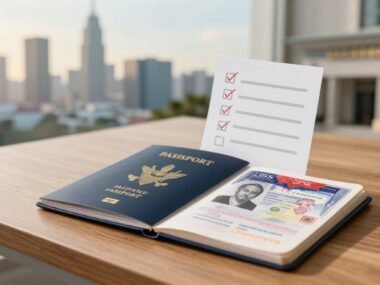
Before you pay (mini checklist):
- Your DS-2019 details match your sponsor’s latest version.
- Your passport validity is sufficient for your planned return.
- Your funding and placement documents are ready and consistent.
- Your travel plans are realistic for current appointment availability.
4. Prepare your Manila interview package like a “one-story” file
A good interview file reads like one story: who you are, what your J-1 role is, who funds it, and why you’ll return. Put your newest documents on top.
Expect tight security rules. Don’t bring prohibited items. Keep printouts clean, legible, and easy to scan.
5. Plan for outcomes: approval, 221(g), or denial
Even a strong case can go into administrative processing if something needs verification. If that happens, you’ll typically be told what’s missing or what must be checked.
Also plan for the practical side: passport delivery or pickup and timing around flights. This is where J1 visa renewal Philippines comes up for many applicants because delays can trigger rebooking costs.
Pricing, Fees, and What “Cheap” Really Means
People search “cheap” options for j1 visa renewal Philippines, but “cheap” can be misleading. The real total cost is the official visa fee plus the costs around it: photos, printing, transport, time off work or school, and possible rebooking if dates move.
For official visa policies and reminders that affect cost planning, review the embassy’s important visa information.
Example total cost calculation (example only):
- Visa application fee: PHP amount varies by posted rate (check official portal)
- Document printing and photos: small local costs
- Roundtrip Manila transport and meals: depends on your location
- Possible flight change fee if delayed: depends on airline rules
If you use third-party support, price shouldn’t be your only filter. Look for transparency, clear refunds or cancellation rules, and real customer service channels. That’s where J1 visa renewal Philippines becomes a real risk if you pick the wrong provider.
Pros and Cons
| Factor | Pros | Cons |
|---|---|---|
| Sponsor-led DS-2019 | Clear authority on your program | Delays if sponsor timelines slip |
| Manila process structure | Predictable steps (DS-160, biometrics, interview) | Appointment availability can be tight |
| Strong documents | Reduces confusion in interview | Takes time to organize and verify |
| Third-party assistance | Helpful for form discipline and reminders | Risks if fees or policies aren’t transparent |
| Applying in PH | Home-country context can help ties | Travel and scheduling costs |
Common Mistakes (and How to Avoid Them)
- Mixing up “DS-2019 extension” with “visa renewal”, fix by writing your goal in one sentence before you apply.
- DS-160 answers that don’t match DS-2019 dates, fix by using the newest DS-2019 while completing DS-160.
- Weak explanation of your role, fix by bringing a short sponsor or host letter stating duties and dates.
- Funding proof that looks incomplete, fix by showing who pays and how it covers the full period.
- Overloading the file with irrelevant papers, fix by prioritizing identity, program, funding, and ties.
- Buying flights before you have realistic timelines, fix by planning for normal delays and contingency time.
- Relying on unofficial advice, fix by checking official Manila pages before acting.
Is J1 visa renewal Philippines Legit and Safe?
j1 visa renewal Philippines is “legit” when it means applying through the official US Embassy process with valid sponsor documents. The biggest safety factor is verifying who you’re dealing with and what you’re paying for.
Check the basics: the ticket issuer of any service you use, the support channel you can reach if something breaks, and the refund or cancellation policy in writing. If you use assistance, choose providers that act like real service operations, with strong privacy practices and clear “no hidden fee” pricing.
For Philippine exchange visitor compliance info that’s often part of J-1 preparation, see the CFO EVP J-1 registration guidance.
Tips to Get Better Deals
- Bundle your Manila trip tasks in one run to reduce repeat transport costs.
- Print only what’s needed, keep one clean master set.
- Use a folder system so you don’t pay for reprints.
- Avoid last-minute bookings that trigger higher hotel rates.
- If you must reschedule, do it early to reduce rebooking penalties.
- Keep your sponsor emails and confirmations in one thread for quick proof.
- Don’t pay extra for “priority” claims that can’t be verified officially.
- Use one paid helper at most, not multiple overlapping services.
- Track all receipts and reference numbers in a single note.
- Keep your public-facing profile consistent with your application details if asked.
FAQs
Can I renew a J-1 visa in the Philippines if my program is still active?
Yes, if you have a valid reason to apply for a new visa stamp and your sponsor documents support your current program details.
Do I need a new DS-2019 for a visa renewal?
Most applicants need a DS-2019 that reflects the current program period and site of activity. Your sponsor controls this.
Is SEVIS payment required again for renewal?
Often it’s treated as a one-time payment tied to your program record, but confirm with your sponsor and your specific case.
What documents prove ties to the Philippines?
Common examples include family responsibilities, school enrollment, a job path after the program, or property and financial ties, as long as they’re real and consistent.
What is 221(g) administrative processing?
It’s a temporary refusal while additional checks or documents are required. Timing varies and can affect flights and program start dates.
Can I use an agency for help?
Some people do, mainly for form discipline and document organization. Only use one that’s transparent on fees, privacy, and support.
Is an interview always required?
Many applicants still attend an interview in Manila for J visas, but requirements can change. Confirm on official Manila pages.
How long does it take to get the passport back after approval?
Some cases move in a few business days, but delays can happen due to checks, workload, or courier timelines.
Conclusion
j1 visa renewal Philippines goes smoothly when your sponsor documents are current, your DS-160 is consistent, and your interview file tells one clear story. The process is structured, but timing and document credibility decide the outcome.
Use the official Manila guidance to verify steps and policy changes, then choose your support level based on transparency, service quality, and real-world costs. Always treat the timeline as flexible, and plan around that reality.


 Enu
Enu