 Enu
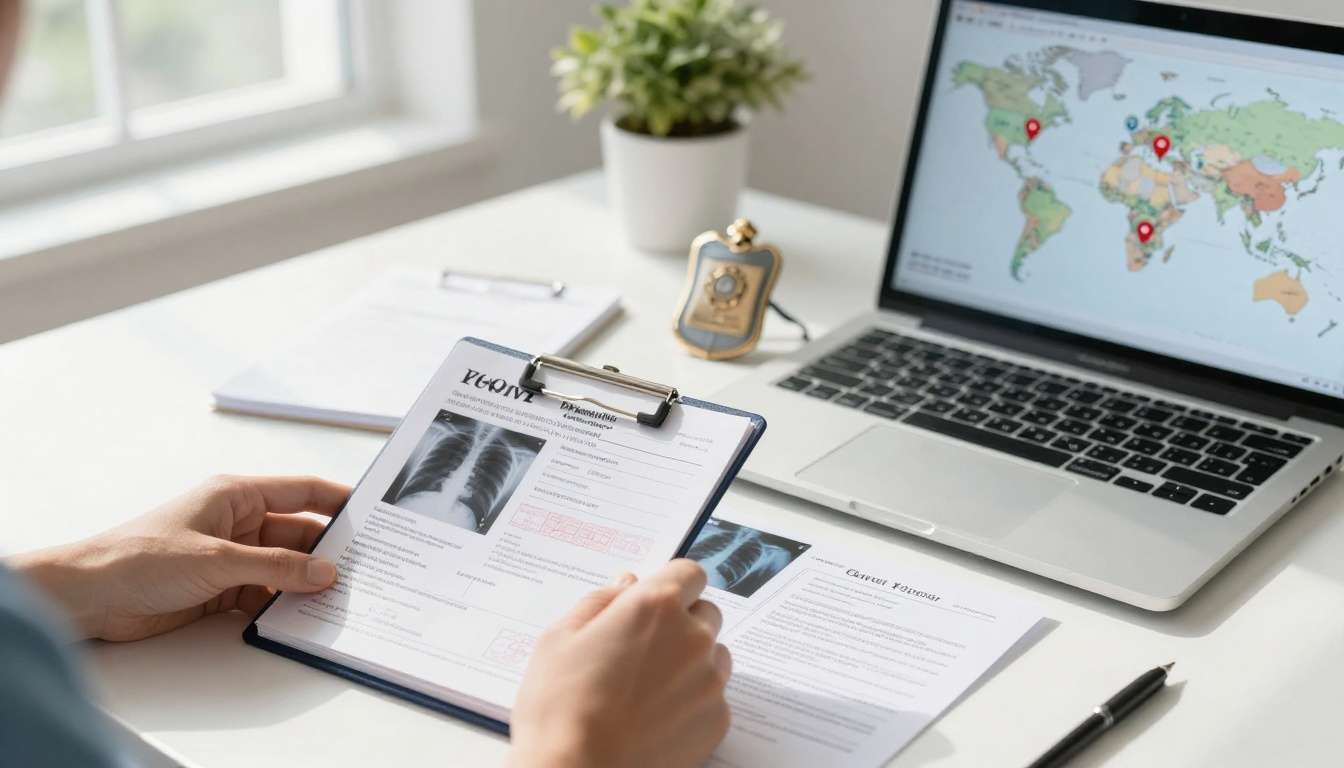
EnuMedical exam and police clearance for student visas can feel like two extra hurdles, but they’re predictable once you know which countries ask and how the process works. This guide breaks down medical checks (including TB screening), police clearance certificates (PCCs), how booking usually works, typical validity windows, and the problems that cause delays.
Always confirm prices and policies on the official site.
Quick Answer (Read This First)
- A student visa medical exam is usually done only with approved doctors (often called panel physicians).
- Many countries focus on TB screening (often a chest X-ray) for long stays or certain nationalities.
- A police clearance certificate (PCC) is a character document, often required if you’re 16 to 18+ and have lived abroad.
- Australia is one of the clearest systems: apply online, receive a reference number, then book with an approved clinic.
- Validity often works like this (as a common pattern): medical results about 12 months, TB certificates about 6 months, PCCs about 6 to 12 months (rules vary).
- Name mismatches (passport vs PCC) are a top rejection trigger for documents.
- Extra tests and clinic backlogs are the most common reasons medical results get delayed.
- If you’re applying from Luxembourg (LU), you may still need tests based on your nationality and travel history.
1) Medical Exam Basics: What It Is and Why It’s Requested
A medical exam for a student visa isn’t a “fitness check” for school. It’s a screening step tied to public health rules and long-stay residence policies.
Most programs look for communicable disease risks, and TB is the most common focus. Depending on the country and your profile, the clinic may also check your medical history, do a basic physical exam, and order lab tests.
For medical exam and police clearance for student visas, a key rule repeats across countries: results must come from approved providers, and the format must match the immigration authority’s system.
2) Police Clearance Basics: What a PCC Proves (and What It Doesn’t)
A PCC is a document from police or a national authority showing whether you have a criminal record, based on that country’s database. It’s not a character reference, and it doesn’t guarantee visa approval.
Many countries ask for PCCs from every country where you lived for a set period (often 6 or 12 months) after a certain age (often 16 to 18). That means one PCC might not be enough if you studied, worked, or lived abroad before.
In medical exam and police clearance for student visas, PCC timing matters because it can take weeks, and some authorities treat older PCCs as stale even if they were valid when issued.
3) Australia: Usually Requires Both (Clear Booking System)
Australia is one of the most structured examples of medical exam and police clearance for student visas. For the Student visa (Subclass 500), health checks are commonly required, and the steps are tied to your online application.
After you apply through the online portal, you typically receive a referral (often a HAP ID or similar reference). You then book with an approved panel clinic and bring your passport and any relevant medical records.
Health tests depend on factors like age and stay length. A common pattern includes a physical exam and TB checks, and for older applicants, additional items like urine tests and a chest X-ray. Recent public guidance has pointed to updates around early 2026 that standardize testing logic based on visa type and travel or health factors, so your required test set can change from one applicant to another.
Australia is also known for asking for police certificates to show good character, often uploaded as part of the application.
4) Canada: Often Conditional (Medical and PCC Triggered by History)
Canada’s student pathway can require a medical exam, but it’s often conditional, tied to where you’ve lived and your personal health risk factors. When required, it’s completed with designated doctors on an approved list.
Police certificates are commonly requested for applicants who have lived in other countries for extended periods. The usual pattern is to provide certificates from countries of residence after a certain age, but the exact threshold can differ by case.
If you want a plain-language overview of Canada’s student visa process and common extra requirements that appear during review, see Canadian student visa process overview.
5) United Kingdom: TB Test Is the Big One, Full Medical Is Less Common
For the UK, the most common health requirement linked to student routes is TB screening for specific nationalities and longer stays. In practice, this often means a chest X-ray at an approved clinic, then a certificate used during the application.
A full medical exam is not a standard step for many UK student applicants, but immigration can still request additional information if something in your file raises a health concern.
Police clearance is also not a routine UK student requirement in many cases, but character and security checks still happen in the background. If a visa officer asks for extra documents, you need the exact format they specify.
6) New Zealand and the Netherlands: TB Screening and “Approved Provider” Rules
New Zealand often uses TB screening and medical checks based on intended stay length and personal circumstances. When required, approved clinics submit results through a connected medical system, and that can reduce paper handling but increase dependency on clinic timelines.
The Netherlands is well-known for TB testing rules for some nationalities on longer stays. The test can be pre-arrival or post-arrival depending on the route and nationality, and exemptions can apply.
Medical exam and police clearance for student visas in these countries tends to follow one shared theme: you don’t “pick” a doctor. You use an approved doctor, or the test may be rejected.
7) Germany, France, Ireland, and the United States: Often About Insurance, Not Exams (With Exceptions)
Germany often emphasizes proof of health insurance for students. Medical exams are less commonly a front-end visa step for many applicants, but authorities can still ask for health documentation in specific situations.
France is also commonly associated with insurance and residence formalities. Some health steps can happen after arrival depending on the pathway, so “no exam at visa stage” doesn’t always mean “no health step at all.”
Ireland frequently focuses on documents like finances and health insurance for student permissions. A routine visa medical exam is not always a standard requirement, but exceptions exist based on case facts.
The United States generally does not require a full visa medical exam for the F-1 visa application itself, but schools often require vaccination records or health forms for enrollment. That still impacts your planning, even if it’s not a consular requirement.
8) South Africa: Commonly Requires Medical Reports and PCCs
South Africa is frequently associated with upfront documentation for long-stay visas, including medical reports and police clearance. Requirements can include general medical forms and proof tied to communicable diseases, plus additional items depending on travel history (for example, yellow fever rules in certain cases).
PCCs can take time, and delays are common when fingerprints are required or when the certificate must be legalized for use abroad.
For medical exam and police clearance for student visas in South Africa, the practical risk is timing, because both documents can be slow to obtain during peak seasons.
9) How to Book, Validity Periods, and Common Problems (The Real-World Part)
Booking medical exams: Many countries only allow approved panel clinics. You usually book after you receive a case reference number, and the clinic either uploads results directly or gives you a sealed result package.
Booking police clearance: PCCs may be requested online, in person, or through consulates, depending on the issuing country. If you lived in multiple countries, you may need multiple PCCs, each with its own processing timeline.
Validity patterns (examples, not universal rules):
- Medical exam validity is often treated as about 12 months.
- TB certificates are often treated as about 6 months.
- PCC validity is often treated as about 6 to 12 months.
Common problems that slow approvals:
- Wrong provider: using a non-approved clinic, even if the test is “the same.”
- Name mismatches: missing middle names, different spelling, or different order than the passport.
- Document format issues: missing stamps, missing signatures, or not using the required template.
- Extra testing: abnormal chest X-ray findings can trigger repeat imaging or lab tests.
- Timing gaps: PCC issued too early, then treated as outdated by the time the visa is assessed.
This is where medical exam and police clearance for student visas becomes less about difficulty and more about avoiding preventable admin errors.
Conclusion
Medical exam and police clearance for student visas is a country-by-country system, but the pattern is consistent. Approved clinics handle health checks, police authorities issue PCCs, and validity windows often push applicants to plan around processing times.
Use a simple decision frame: confirm whether your destination requires a medical exam, TB test, PCC, or all three, then book only through approved channels, and keep every name and date consistent across documents.

 Enu
Enu