 Enu
EnuImagine arriving at a Canadian border for a family wedding, only to face denial due to a decade-old DUI conviction. You feel stuck, but a temporary resident permit holder status offers a way forward. This means Immigration, Refugees and Citizenship Canada (IRCC) grants you special permission to enter or remain in Canada despite being inadmissible under the Immigration and Refugee Protection Act (IRPA) section 24(1).
A temporary resident permit (TRP) holder gets this relief when the need to be in Canada outweighs the risks you pose. This post breaks down the temporary resident permit holder meaning in Canada, eligibility rules, application steps, rights, comparisons to other statuses, permanent residence paths, and pitfalls to avoid. You’ll learn why this status acts as a bridge, not a cure, for inadmissibility like criminal records or medical issues.
Always check the official IRCC site for updates as of January 2026, since rules and fees can shift.
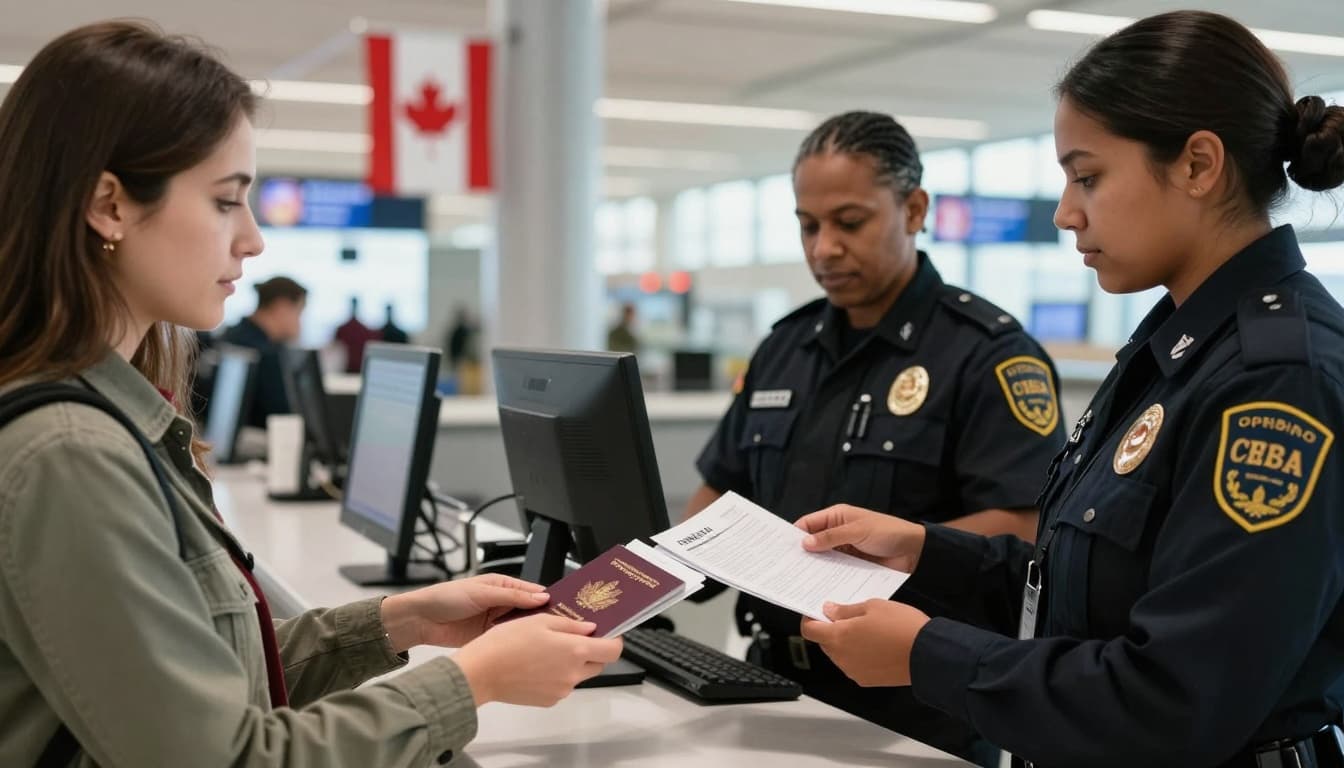
This image shows a traveler at Canadian border control presenting documents to an officer, highlighting the TRP application moment
What Is a Temporary Resident Permit Holder in Canada?
A temporary resident permit holder in Canada refers to a foreign national who receives a TRP. This document lets you enter or stay despite inadmissibility, such as criminal history, serious medical conditions, or past immigration violations. IRCC issues it when your purpose in Canada provides enough benefit to offset potential risks.
The TRP does not remove your inadmissibility. Officers decide case by case, often for compelling needs like business trips or family ties. For instance, someone with a past DUI might get a TRP for a one-week tech conference in Toronto.
TRPs last from one day up to three years, but rarely exceed two years. You apply before travel or at a port of entry in emergencies. Unlike regular visas, a TRP focuses solely on overriding bans; it pairs with work or study permits if needed.
Fees start at about $246 CAD as of early 2026, with no charge for victims of human trafficking or family violence. Check IRCC’s eligibility page for details.
Key Features of TRP Holder Status
- Temporary nature: Valid for a set period; no path to automatic renewal or permanence.
- Discretionary approval: Officers weigh your case; no guarantees exist.
- Entry options: Single-entry (one trip) or multiple-entry (repeated visits).
- Short to long stays: From 1 day for events to 3 years maximum.
- No built-in work rights: Apply separately for work or study permits.
- Cancelable anytime: IRCC can revoke if risks increase or conditions break.
- Location-based: Apply online, at visa offices, or borders (risky at borders).
Who Qualifies as a Temporary Resident Permit Holder?
Qualification hinges on being inadmissible yet having a strong, temporary reason to enter Canada. You must prove low risk through rehabilitation, time passed since issues, and stable life ties. Officers balance your benefits, like economic contributions or family support, against public safety threats.
Key criteria include:
- Clear inadmissibility (e.g., criminal conviction equivalent to Canadian crime).
- Compelling purpose (job offer, medical treatment, conference).
- Low ongoing risk (no recent offenses, proof of change).
- Ability to leave at end (funds, home ties).
- Full disclosure in application.
No fixed list guarantees approval. A U.S. citizen with a marijuana possession charge from 2015 might qualify for a family visit if they show clean records since and employer letters. Health cases need proof costs won’t burden public services.
Common Reasons for Inadmissibility
- Criminal records: DUIs, drug offenses, theft (even minor or old).
- Medical issues: Conditions demanding excessive healthcare resources.
- Immigration violations: Past overstays, deportation orders, misrepresentation.
- Security risks: Rare, but includes organized crime links.
Temporary Resident Permit Holder vs Other Canadian Statuses
TRP holders differ from standard temporary residents. A temporary resident visa (TRV) suits admissible visitors meeting basic rules. Work or study permits require clean backgrounds first. TRPs fix inadmissibility temporarily; others assume admissibility.
| Status | Purpose | For Whom | Duration | Inadmissibility Handling |
|---|---|---|---|---|
| TRP Holder | Override bans for entry/stay | Inadmissible foreigners with strong reasons | 1 day–3 years | Directly addresses risks case-by-case |
| TRV (Visitor Visa) | Tourism, visits | Admissible visitors | Up to 6 months/entry | None; denies inadmissible |
| Work Permit | Employment | Job-offered foreigners | Job length (1–4 years) | Requires admissibility first |
| Study Permit | Full-time study | Accepted students | Program length | Same; no overrides built-in |
| Regular Temp Resident | General stay | Compliant entrants | Varies | Assumes no issues |
TRPs bridge gaps but demand separate applications for activities.
TRP Holder Rights and Obligations
- Rights: Legal presence; apply for work/study permits; multiple entries if granted.
- Obligations: Follow all conditions; report changes; obey Canadian laws; depart on expiry.
- Limits: No voting, welfare access, or PR shortcuts without extra steps.
How to Apply as a Temporary Resident Permit Holder in Canada
Start by confirming inadmissibility via IRCC tools. Gather strong evidence upfront.
Steps:
- Assess your case: Use IRCC inadmissibility self-check; note reasons.
- Collect documents: Passport, police certificates, court records, purpose proof (invites, job letters), funds evidence, rehab letters.
- Choose method: Online via IRCC portal, visa office abroad, or port of entry (last resort, high denial risk). See IRCC apply guide.
- Complete forms: IMM 5708 or relevant; write detailed explanation letter.
- Pay and submit: $246 fee; biometrics if needed ($85 extra).
- Wait and follow up: Processing takes weeks to months; track online.
Pre-submit checklist:
- All docs translated to English/French.
- Honest disclosure.
- Ties to home country proven.
Border applications suit true urgencies only.
TRP Duration and Extensions
Durations match your need: days for events, years for work. Single-entry voids on exit; multiple allows returns. Extend via Guide 5554 before expiry, but approval stays discretionary. Overstay risks cancellation.
Can TRP Holders Get Permanent Residence?
TRP holders may qualify for permanent residence via the permit holder class after continuous stay: 3 years for medical inadmissibility, 5 years for others. Strict bars apply for serious criminals. It demands language skills, funds, and no ongoing risks. TRP time counts if conditions met, but it’s not automatic; apply separately through Express Entry or PNP. Success needs clean compliance.
Common Mistakes and Misconceptions for TRP Holders
- Assuming TRP erases records: It overrides temporarily; bans return post-expiry.
- Confusing with TRV: TRVs deny inadmissible; TRPs allow them.
- Border reliance: High refusal rates; apply ahead.
- Weak evidence: Skip rehab proof; get denied.
- Ignoring fees/biometrics: Miss payments; application stalls.
- Overstaying casually: Triggers removal, future bans.
- No work illusion: TRP alone bars employment.
FAQs:
- Processing time? 2–6 months online; same-day possible at border.
- Can I work? Apply for separate permit.
Prepare thoroughly; consult pros for complex cases.
Conclusion
A temporary resident permit holder in Canada means IRCC-approved temporary access despite inadmissibility, balancing your needs against risks. You’ve seen eligibility, steps from docs to submission, comparisons, rights, extensions, PR paths, and traps.
This status opens doors for work, visits, or family without permanent fixes. Check your fit on IRCC sites today, gather proofs, and apply early. Strong cases win; weak ones fail. What’s your inadmissibility reason? Start verifying eligibility now for 2026 plans.


 Enu
Enu