 Enu
EnuIf you’re searching for visa extension Philippines Cebu, you’re usually trying to do two things: stay longer without problems, and get it done with less stress. This guide lays out the main extension options (online and in-person), what to prepare, how the process typically flows in Cebu, and where people lose time or money.
Always confirm prices and policies on the official site, since fees, windows, and eligibility can change without much notice.
Quick Answer (Read This First)
- Cebu extensions are handled by the Bureau of Immigration (BI), either online for some cases or in-person at the Cebu BI office for others.
- The first extension is commonly 29 days, then extensions often come in 1, 2, or 6 months depending on eligibility and timing.
- Many travelers use BI’s online portal for convenience, but not everyone qualifies, and some cases still require an office visit.
- For Cebu, the BI office is widely listed at J Centre Mall, A.S. Fortuna Street, Mandaue City (confirm floor and entry rules before going).
- Overstay penalties can apply fast, so people usually file before the current stay expires.
- Total allowed stay can reach up to 36 months for many tourist situations (rules vary by nationality and category), then departure is required.
- Expect costs to depend on extension length, nationality category, and how long you’ve already stayed.
- Keep official receipts and check the stamp dates before leaving the counter.
What Is BI eServices and What Does It Do?
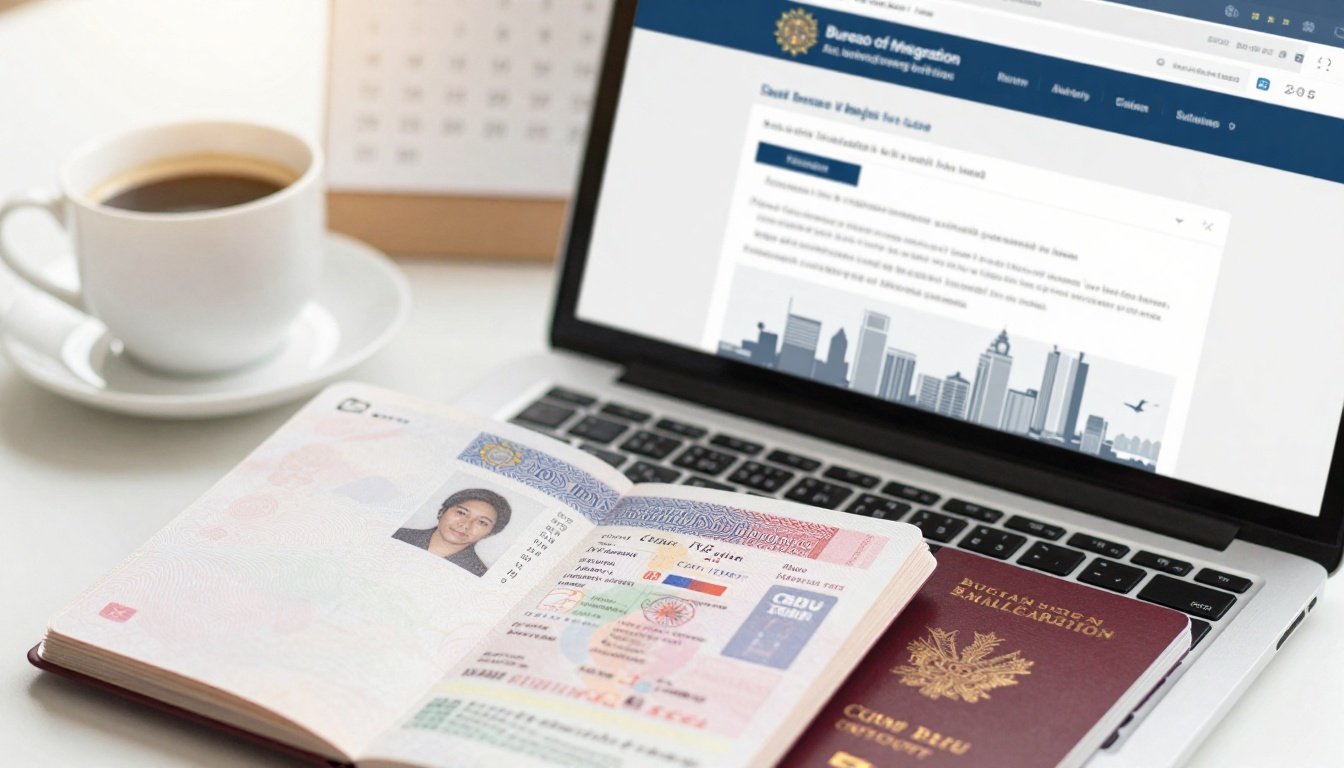
BI eServices is the Bureau of Immigration’s online platform that lets eligible foreign nationals handle certain immigration transactions without lining up at a field office. For tourist extensions, it’s often used to submit details, upload passport scans, and pay online, then receive confirmation.
For people comparing options around visa extension Philippines Cebu, the main value of BI eServices is time and predictability. You’re not guessing the queue length, and you can complete parts of the process from your phone or laptop.
It also creates a clearer record trail since payments and confirmations are captured digitally. When a physical step is required (like collecting an ACR I-Card in some longer-stay cases), the online process still reduces the number of in-person trips.
Reference: BI eServices portal access
Key Features of Visa Extension Philippines Cebu
- Two common channels: online filing (when eligible) or in-person filing at BI Cebu.
- Short and longer options: the first extension is often shorter, with later 1, 2, or 6-month extensions.
- Receipt-based proof: official receipts are central for tracking and resolving issues later.
- Biometrics trigger points: longer stays often lead to ACR I-Card steps, photos, or biometrics.
- Penalty exposure: overstays can add extra fees, so timing matters.
- Maximum stay concept: tourist stays are extendable only up to a limit (commonly cited up to 36 months in many cases).
- Nationality-specific limits: “visa-required” vs “non-visa-required” categories can change the exact path and price.
Step-by-Step: How to Use BI eServices for a Cebu Tourist Extension
- Create an account on the BI eServices site using accurate personal details that match the passport.
- Choose the visa extension service and enter arrival and passport information carefully (small date errors can cause delays).
- Upload required scans (usually passport bio page and entry stamp pages), following the site’s format rules.
- Review the computed fees shown on-screen before moving to payment, since the totals can reflect stay length and category.
- Pay through the portal using the available payment methods displayed at checkout.
- Wait for confirmation through the portal status updates or email notifications, then follow the instructions provided.
- Complete any required in-person step if your transaction triggers biometrics or ACR I-Card processes, which sometimes need a pickup visit at BI Cebu.
- Keep digital and printed copies of the confirmation and official receipt for travel and compliance records.
Before you pay
- Passport details match the entry stamp (name, number, and dates).
- Extension dates align with the current authorized stay.
- Uploaded scans are readable, complete, and not cropped.
- Payment method is ready and accepted by the portal.
- You understand whether an office visit is still required after approval.
Pricing, Fees, and What “Cheap” Really Means
When people compare visa extension Philippines Cebu options, “cheap” often means the smallest posted extension fee. In real life, the total is usually the extension fee plus other line items that can appear depending on situation, length, and category.
Costs can rise when any of these apply:
- Longer requested extension periods (for example, 6 months).
- Visa-required nationality category versus non-visa-required.
- ACR I-Card-related charges for longer stays.
- Overstay penalties if filing happens after expiry.
Example calculation (illustrative only):
A traveler extending for a longer period might see a total that includes an extension charge plus card-related charges, resulting in a five-figure PHP total for a 6-month request in some cases. Official amounts vary, so figures are best confirmed directly at BI.
For a practical overview of how BI describes the online option and ongoing availability, see BI notice on online visa extensions.
Pros and Cons
| Factor | Pros | Cons | Best fit |
|---|---|---|---|
| BI eServices | Less time in queues, payment and status tracking | Not every case is eligible, may still require pickup | People who qualify and want fewer office visits |
| In-person at BI Cebu | Staff can confirm details, good for complex cases | Queues, travel time, limited office hours | Longer stays, special cases, or portal-ineligible cases |
| Short extensions | Lower immediate outlay, smaller commitment | More frequent renewals and trips | Unsure travel dates or short stays |
| 6-month extensions | Fewer renewals, fewer repeat trips | Higher one-time total, more checks | Long stays with stable plans |
| Late filing | None | Penalties and delays, higher total | Only when unavoidable |
| Using third parties | Less personal time spent | Risk of misinformation or overcharging | People who verify credentials and receipts carefully |
Common Mistakes (and How to Avoid Them)
- Waiting until the last day, then getting stuck in queues or payment issues; many people aim to file before expiry to avoid penalties.
- Mismatched dates between the entry stamp and the form fields, which can trigger rework.
- Unreadable passport scans (cropped corners, glare, missing stamps), which slows online approvals.
- Forgetting the official receipt, then having no proof of payment or transaction history.
- Requesting the wrong extension length based on current eligibility, leading to a second visit or re-filing.
- Assuming all nationalities follow the same flow, when “visa-required” and “non-visa-required” categories can differ.
- Not checking the stamp (authorized stay until date) before leaving the counter.
- Confusing Cebu office location details, since malls can have multiple entrances and floor changes over time.
Is Visa Extension Philippines Cebu Legit and Safe?
A visa extension Philippines Cebu process is legitimate when it’s done through the Bureau of Immigration, either via BI eServices or through the BI field office. The “safe” part mostly comes down to verifying three things: the issuer, the support channel, and the paper trail.
Legit indicators usually include:
- The transaction is completed on an official BI platform or at a BI office.
- Fees are supported by an official receipt.
- Status is trackable (portal status or BI reference details).
For core definitions around the tourist visa waiver and the first extension concept, BI explains the waiver framework on its official page: BI 9A visa waiver details.
Tips to Get Better Deals
- Filing before expiry often avoids penalty add-ons that inflate the total.
- Many travelers choose longer extensions when their plans are stable, reducing repeat trips and repeat service costs.
- Some prefer online processing to reduce transport and lost work time (especially during peak season).
- Printing scans at a reliable shop can prevent re-filing caused by unreadable copies.
- Consolidating document prep (photocopies, photos, scans) before filing reduces “extra trip” costs.
- Tracking your authorized stay date in a calendar reduces last-minute rush fees.
- Paying attention to BI office hours and holiday closures reduces wasted travel days.
- Keeping receipts and prior extension copies can speed future transactions, since details are consistent.
- If using assistance, people often compare transparency first: clear fee breakdown, official receipts, and privacy handling.
- Choosing the right channel (online vs in-person) can be a cost decision, not just a comfort decision.
FAQs
1) Can a tourist extend a stay in Cebu without going to Manila?
Yes, many travelers process visa extension Philippines Cebu transactions through BI’s Cebu office or the online portal, depending on eligibility and case type.
2) Is the first tourist extension always 29 days?
It’s commonly described that way for many visa waiver entries, but it can vary by status and category. BI’s own visa waiver guidance is the best reference point for the exact rule set.
3) Do I need onward travel proof for every extension?
Some travelers are asked for proof at different points depending on category and timing. Requirements can change, so confirming with BI for your exact case is the cleanest approach.
4) What happens if I overstay in Cebu?
Overstays can add penalties and can complicate later extensions. The total cost and steps depend on how long the overstay is and the traveler’s category.
5) Are online extensions faster than in-person?
Many people find online filing faster because it reduces waiting time. Processing time still varies, and some cases require an in-person step later.
6) Will I always get an ACR I-Card when extending?
Not always. ACR I-Card steps are more common after longer stays or after crossing certain stay thresholds, depending on the current BI rules.
7) Should I book through an agent or apply myself?
Both exist. The key difference is control and transparency. Direct filing usually gives clearer visibility over fees and receipts, while third-party handling depends heavily on the provider’s integrity and documentation.
8) What’s the most common reason for delays?
Small errors add up: wrong dates, incomplete scans, missing stamps, or unclear copies. In-person, delays often come from queue volume and incomplete paperwork.
Conclusion
For most travelers, visa extension Philippines Cebu comes down to choosing the right channel (BI eServices or BI Cebu office), preparing clean documents, and keeping a complete receipt trail. The best outcomes usually look simple: correct dates, clear scans, paid fees with official receipts, and a passport stamp that matches the approved stay.
Always confirm prices and current policies on the official BI sources before filing, then pick the path that matches your stay length, eligibility, and how much time you want to spend in queues.


 Enu
Enu