 Enu
EnuApplying for a student visa application from Nigeria is mostly about proof, proof of admission, proof of funds, proof you’ll follow the rules, and proof your documents match across every form.
This listicle breaks the process into clear steps, so you can compare countries, understand the paperwork, and avoid the usual traps. Always confirm prices and policies on the official site.
1. Start by picking the right visa type for your destination
A student visa application from Nigeria looks different depending on the country, even when the goal is the same: full-time study. Before you pay any fee, confirm the visa category that matches your course level and your program length.
Common options Nigerians apply for include the US F-1 visa, the UK Student visa, Canada’s study permit, and Australia’s Student visa (Subclass 500). Each has its own proof rules, health checks, and processing steps.
2. Compare work rights and “how long you can stay” early
Many refusals start with a poor plan. You chose a country for work, but your documents look like you’re not focused on study. Put the study plan first, then check work rules.
Here’s a simple comparison you can use while planning (always verify details on official portals):
- United Kingdom: student work limits depend on course level and sponsor, plus strict financial evidence timing.
- Canada: study permit ties to a designated school, financial proof is detailed, and you must meet entry rules.
- United States: F-1 is strongly study-first, with structured work options after you arrive.
- Australia: Subclass 500 checks health cover and your temporary entrant intent.
3. Lock in admission evidence (CAS, I-20, LOA) before anything else
Your visa case is only as strong as your admission document. Most countries won’t treat a casual offer as enough. They want official proof tied to a school and course.
Examples of what’s commonly required:
- UK: Confirmation of Acceptance for Studies (CAS) from a licensed sponsor, tied to a course level.
- US: Form I-20 issued by the school after you meet their conditions.
- Canada: Letter of Acceptance from a Designated Learning Institution (DLI). For official guidance, use Canada study permit application steps.
- Australia: Confirmation of Enrolment (CoE) plus extra checks around intent.
4. Get your Nigerian academic records “visa-ready”
A clean transcript story helps the case, especially if your academic path has gaps. Undergraduate applicants commonly use WAEC or NECO results, and many schools ask for JAMB details for context, even if the visa office doesn’t.
Typical baseline for undergrad screening (examples only, schools vary):
- Credits in at least 5 relevant subjects
- English Language credit is often expected
- Course-related subjects (science for STEM, economics for business) matter
Your student visa application from Nigeria becomes easier when your school documents and your visa forms show the same dates, same names, and the same program level.
5. For postgraduate applicants, match your degree level to the course
Postgraduate refusals often happen when the course looks like a step down, or the reason for the course is unclear. Your documents should show progression, even if you’re switching fields.
Prepare:
- Final certificate (or official provisional letter if allowed)
- Full transcripts, ideally official and verifiable
- A short, clear academic timeline that explains any gap years
If you’re using a GPA, be consistent with your school’s grading system. Don’t “convert” grades unless the school asks.
6. Treat English tests like a core document, not an add-on
Language scores affect admission, but they also support credibility. Some countries accept different tests depending on the school and the visa route.
Commonly accepted options include IELTS, TOEFL iBT, and PTE Academic. The key is not the test brand, it’s whether the exact score report is valid for your school and still within accepted dates.
7. Build financial proof like a file, not a screenshot
For a student visa application from Nigeria, money evidence usually has three parts: tuition plan, living cost plan, and source of funds. Visa officers look for stability, timing, and clear ownership.
A simple way to structure the financial section:
- Show total tuition due (and what you’ve paid already, if any).
- Show living cost funds available for the required period.
- Explain who pays (self, parent, sponsor, scholarship, loan) and prove it.
UK routes can be strict about how long money must sit in the account. Some people fail because the balance is high, but the timing doesn’t meet the rules.
8. Prepare sponsor documents that can stand on their own
If someone sponsors you, your file must explain the relationship and the sponsor’s ability to pay. “Sponsor letter only” usually isn’t enough.
Common sponsor proof set:
- Sponsor letter or affidavit stating what they will cover
- Sponsor bank statements that meet the required period
- Proof of relationship (birth certificate, family documents, or credible alternatives)
- Sponsor employment or business evidence where relevant
This is one of the fastest ways to make your student visa application from Nigeria look organized.
9. Don’t ignore health and character requirements (TB, police checks)
Health and character documents are simple, but timing matters. Some countries require a TB certificate from approved clinics, and it can be valid for a limited period.
If a police certificate is requested, don’t guess what’s acceptable. Use the destination country’s instructions and follow document format rules carefully. A missing stamp, wrong date, or mismatched name can cause delays.
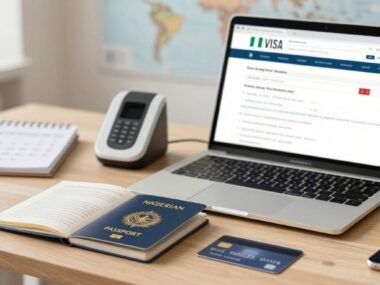
10. Use the official application portal and upload files in a clean order
Each country has its own online portal and form logic. The biggest avoidable issue is inconsistency: different travel dates, different school start dates, or different funding stories across sections.
Basic upload order that usually reads well:
- Passport and photo
- Admission documents (CAS, I-20, LOA, CoE)
- Academic records
- English results
- Financial documents
- Sponsor documents (if any)
- TB or health documents (if required)
If you’re comparing help options, some agencies advertise end-to-end support, but your documents still must be accurate and consistent. A commercial reference point is Canada visa support overview, which shows the kind of checklist many consultants use.
11. Plan biometrics and interviews around Nigeria realities (Lagos and Abuja)
After submission, many applicants must book biometrics at a visa application centre. Appointment availability can tighten during peak seasons, so your timeline should assume delays.
For the US, an interview is standard. For the UK, interviews aren’t routine for every applicant, but they can happen. Your goal is the same: your study plan must sound realistic, and your funding story must match your papers.
12. Track your application, understand decisions, and prepare for next steps
Tracking is part of the process, not an afterthought. Use the portal you applied on, and keep copies of every receipt and upload.
Visa decisions usually fall into:
- Approved, with passport return steps
- Refused, with written reasons
- Request for more information (in some routes)
If refused, the refusal wording matters. It tells you what was missing or unclear in your student visa application from Nigeria, and it shapes whether you reapply or use a formal review route where available.
Conclusion
A strong student visa application from Nigeria is built on a simple formula: correct visa type, credible admission, clean documents, and a funding story that’s easy to verify. When every detail matches, your application reads like a real student plan.
Use this list as a working checklist, then confirm each country’s latest rules on the official portal before you submit.


 Enu
Enu