 Enu
EnuPlanning an ireland visa application nigeria process can feel unclear at first, because Ireland has its own rules and it’s not part of Schengen. This listicle breaks the process into simple, practical sections so you can compare options, spot common pitfalls, and prepare the right paperwork.
You’ll learn what visa type fits your trip, what documents usually matter most, how VFS submission works in Nigeria, and how decisions and refusals are handled. Always confirm prices and policies on the official site.
Quick Answer (Read This First)
- Nigerians generally need a visa to travel to Ireland, whether for a short visit or a long stay.
- Ireland is not in the Schengen Area, a Schengen visa doesn’t grant entry to Ireland.
- The online application is done through AVATS, then documents are submitted at VFS in Nigeria.
- You must match your documents to your stated purpose, vague plans cause refusals.
- Short stays are usually up to 90 days, long stays are for study, work, or joining family.
- VFS collects biometrics and checks files, but doesn’t decide your visa.
- Processing times change by season and volume, apply early and avoid last-minute travel plans.
- Refusals come with reasons, and appeals are possible within set deadlines.
What Is VFS Global and What Does It Do?
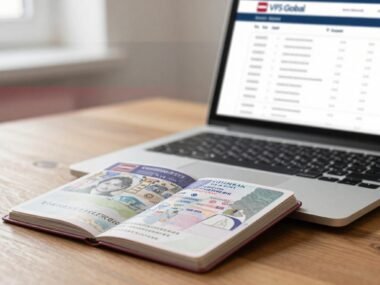
VFS Global is the visa application partner that manages the front end of many visa processes, including Ireland submissions in Nigeria. For most applicants, VFS is where you book, submit your documents, and give biometrics.
VFS doesn’t approve or refuse applications. Its role is administrative: appointment handling, intake checks, biometric capture, and forwarding your application to the decision-making office.
For the ireland visa application nigeria route, a common starting point is the official VFS Ireland portal for Nigeria, which outlines the order of steps and local submission flow.
Key Features of Ireland Visa Application Nigeria
- Online start through AVATS, then print and sign your summary form for submission.
- Clear split between short-stay (C) and long-stay (D) categories based on duration and purpose.
- Purpose-driven document requirements, tourism, business, study, family, medical.
- Biometrics captured at the visa application centre as part of submission.
- Non-refundable fee logic in most cases once submitted and processed.
- Decision letters that explain approval conditions or refusal reasons.
- Tracking options through the application centre process (service updates vary).
1. Start with the Right Visa Type (C vs D)
The first decision in any ireland visa application nigeria plan is whether you need a short-stay ‘C’ visa or a long-stay ‘D’ visa. This is mainly about duration, but it’s also about what you’ll do in Ireland.
A short-stay ‘C’ visa is commonly used for trips up to 90 days, such as tourism, family visits, short business activities, short courses, or short medical treatment. Typical purposes include:
- Tourism and holidays
- Visiting family or friends
- Business meetings and conferences (no paid work)
- Short medical treatment
- Short courses (within the allowed rules)
A long-stay ‘D’ visa is for stays longer than 90 days, such as study programs, joining family, or work routes tied to permissions. If your plan involves working, the correct permit or permission path matters before you submit, because the visa and the permission logic are linked.
For the official overview of what a ‘C’ visit visa covers, use the Immigration Service Delivery guide on short-stay C visa steps.
2. Know Who Needs a Visa (and Who Doesn’t)
For Nigerian passport holders, the expectation is that a visa is required to travel to Ireland for most standard travel purposes. That includes tourism, business visits, and study.
If someone is traveling on special travel documents (for example, certain official or diplomatic categories), rules can differ. That’s why it’s smart to check official country-specific guidance rather than rely on social media threads.
The Embassy of Ireland in Nigeria keeps a practical landing page for applicants that explains the local pathway and reminders for Nigerian residents, see visa guidance from Ireland in Abuja.
3. Avoid Visa Exemption Myths That Cost People Refusals
A big cause of wasted time is acting on assumptions. These myths show up often in Nigeria-focused travel groups and can derail an ireland visa application nigeria file.
Common misconceptions to avoid:
- “A Schengen visa works for Ireland.” It doesn’t, Ireland isn’t part of Schengen.
- “Hotel bookings guarantee approval.” They don’t, they only support your plan.
- “Buying a ticket proves you’re serious.” A paid ticket doesn’t fix weak documents.
- “A strong bank balance is enough.” Decision makers look at source of funds and ties too.
- “An agent can guarantee approval.” No one can guarantee it.
The Embassy also clearly states the Schengen point in its public guidance, which helps shut down misinformation early.
4. Understand the Core Eligibility Tests They Apply
Ireland’s decision logic often comes down to credibility. You’re not only proving where you want to go, you’re proving why, for how long, and why you’ll leave when you say you will.
Most applications are assessed around themes like:
- Genuine purpose, your documents must match your stated reason.
- Intent to return, ties to Nigeria like job, family, school, business, property, or obligations.
- Money and funding, enough funds, with believable inflows and a clear sponsor story if used.
- Immigration history, prior refusals or overstays can raise questions.
- Identity clarity, consistent biodata across forms and documents.
This is where many applicants lose points: they submit lots of pages, but the story still doesn’t add up.
5. Build a Clean Document Pack (Core Items First)
A strong file usually starts with the basics, then adds purpose-specific proof. That sounds obvious, but missing basics can slow intake or weaken credibility.
Core documents typically include:
- Passport with a validity buffer and enough blank pages
- Completed AVATS output and signed summary form
- Passport photos that meet the stated requirements
- A clear application letter explaining purpose, dates, and who pays
- Copies of previous passports and visas (when available)
Then you layer on proof of funds, proof of ties, travel plan, and accommodation. The goal is clarity, not volume.
6. Match Financial Proof to Your Real Income (Not Just a Balance)
Funds are often reviewed through a “pattern” lens, not only the final amount. Sudden large deposits without explanation can trigger refusal concerns, even if the balance looks good.
Common types of financial proof include:
- Bank statements over a consistent period (often months rather than weeks)
- Payslips or employment income documents
- Business registration and business bank records for self-employed applicants
- Sponsor letter with sponsor bank proof (when sponsorship is used)
If you use a sponsor, keep the relationship and funding story simple and supported. A sponsor letter without matching bank movement and proof of relationship can look weak.
7. Get Purpose-Specific Proof Right (Visit, Business, Study, Medical)
Many refusals happen because applicants submit generic documents. Ireland’s process expects purpose-specific evidence that feels real.
Examples of purpose-driven proof:
- Visit visa: host invitation letter, host status proof, relationship proof, visit plan
- Business visa: invitation from the Irish company, event details, who pays, confirmation of role
- Student visa: acceptance letter, proof of fees paid, course details, accommodation plan
- Medical visa: letter from Irish hospital or clinic, treatment plan, payment plan, medical reports
This is also where clear wording matters. “I’m going for holiday” with no travel plan, no leave approval, and no history can look thin. “I’m attending a conference” with no registration details can also look weak.
8. Use AVATS Correctly (and Treat It Like a Legal Form)
AVATS is the online system used to start the application and generate the summary sheet you submit with your documents. Small errors here can cause bigger issues later, because the AVATS output anchors your file.
Typical AVATS problem areas include wrong travel dates, misspelled names, inconsistent addresses, and unclear purpose. Keep it consistent with your passport and supporting documents.
After submission, you usually print and sign the summary form, then prepare your packet for VFS. Treat every field like it’s final, because that’s how it’s used.
9. Submit Through VFS in Nigeria (What the Appointment Really Means)
For the ireland visa application nigeria route, submission normally happens through VFS. That includes handing in your printed AVATS summary, your supporting documents, and completing biometrics when required.
VFS staff may check that you included required items and that the file is organized enough to process. They don’t judge the quality of your story, and they don’t decide your outcome.
To see the official “start here” instructions for Nigeria, use VFS Ireland application steps. It helps set expectations for the order of actions.
10. Know Fees and What “Cheap” Really Means
The visa fee is only one part of what people pay. Many applicants underestimate the all-in cost and then cut corners on essentials like proper documentation, translations, photos, or courier options.
Your total cost often includes:
- Visa fee (varies by category and entry type)
- VFS service charges (where applicable)
- Document printing, photocopies, and translations if needed
- Courier return fees if you choose delivery
- Travel insurance if your visa type requires it
- Optional VFS add-ons (only if you choose them)
Example calculation (illustrative): a short-stay visa fee plus VFS service fee, plus photo and document costs, plus courier return, can add up quickly even before flights and hotels. Always confirm the current amounts in your AVATS summary and VFS instructions.
11. Pros and Cons of Using VFS vs “Direct” Submission
For Nigeria, VFS is the standard intake channel for most applicants, so “direct” submission isn’t a realistic alternative for many people. The more helpful comparison is understanding what VFS handles and what it doesn’t.
| Area | Pro | Con |
|---|---|---|
| Appointment system | Gives a formal submission path | Slots can be limited at peak times |
| Biometrics | One place for capture and submission | Not a decision-maker, so no “fixing” weak cases |
| Document intake | Helps with basic completeness checks | Completeness isn’t the same as strength |
| Tracking updates | Some service updates are available | Updates can be minimal until a decision is made |
| Add-on services | Convenience options exist | Extra fees can raise total cost |
12. Processing Times: What’s Normal, What’s Seasonal
Processing time is not fixed. It depends on visa type, workload, and time of year. Study seasons and holiday periods can create backlogs, so timing affects your waiting period.
Official channels also publish decision-related updates and reminders. It’s smart to rely on official communications rather than estimates from agents or forums.
A helpful local reference point is the Embassy’s Nigeria visa area, which also links to decision reporting and broader rules, see Embassy visa services overview.
13. Common Mistakes (and How to Avoid Them)
These issues show up again and again in ireland visa application nigeria submissions, especially for first-time travelers.
- Submitting a vague application letter, fix by giving dates, purpose, and funding in plain language.
- Bank statements with unexplained large deposits, fix by documenting sources and keeping income consistent.
- Mismatch between AVATS answers and documents, fix by cross-checking names, dates, and addresses.
- Weak ties to Nigeria in the file, fix by including employment, school, business, or family obligations evidence.
- Overreliance on hotel and ticket bookings, fix by building a stronger purpose and funding story.
- Missing relationship proof for visit visas, fix by adding civil documents and communication evidence where relevant.
- Using fake or edited documents, fix by using only verifiable originals and certified copies.
- Applying too late in peak season, fix by planning around expected queues.
14. Is Ireland Visa Application Nigeria Legit and Safe?
The ireland visa application nigeria process is legitimate when you use the official channels: AVATS for the application, VFS for submission in Nigeria, and official government sites for guidance.
Safety and legitimacy come down to what you can verify:
- The ticket issuer and where you paid fees (AVATS instructions and VFS payment paths)
- The support channel you contact (official VFS and Embassy contacts)
- The refund and cancellation rules for any optional services you buy
- Whether a third party is claiming “inside access” or guaranteed outcomes
If you’re comparing sources, prioritize Irish government pages and the VFS Nigeria portal. Commercial blogs can help explain, but they aren’t official.
For the official government hub that frames visa types and rules, see Department of Foreign Affairs visa portal.
15. After the Decision: Collection, Refusals, and Appeals
If approved, you’ll get a visa placed in your passport, and you’ll collect it through the method linked to your submission choice (collection or courier if available). Always check the visa label details, name spelling, validity dates, and entries.
If refused, you’ll receive a refusal notice that outlines the reasons. Appeals are possible within the stated time window, and successful appeals usually address the specific refusal points with clearer evidence, not just more pages.
Even with a visa, entry isn’t automatic. You may be asked for the same documents at the border, so keep copies of what you submitted.
Conclusion
A strong ireland visa application nigeria file is built on the right visa type, a clear purpose, consistent documents, and proof you can fund your trip and return to Nigeria as planned. The process is predictable when you rely on AVATS, VFS, and official Irish guidance.
Use the decision framework in this list to choose the correct category, build a tight document pack, and avoid the myths that waste time and money. Always confirm prices and policies on the official site.


 Enu
Enu