 Enu
EnuSearching for australian immigration lawyers in sri lanka usually means you want one thing, a safer path to an Australian visa. This guide explains how to find the right professional, when you should use a qualified lawyer or a registered migration agent (and when a local consultant is enough), plus the traps that waste money, time, and sometimes your whole application.
Always confirm prices and policies on the official site.
Quick Answer (Read This First)
- Most “Australia visa help” in Sri Lanka is provided by consultants, not lawyers.
- For refusals, cancellations, character issues, or court-related work, an Australia-based immigration lawyer is often the safer option.
- For most standard visa cases, an Australian registered migration agent is the main professional people use.
- Never share passports, bank letters, or relationship evidence until you’ve checked who you’re dealing with and what they’ll do with your data.
- Common pathways for Sri Lankans include student, skilled, partner, and employer-sponsored visas (rules change, so confirm before you commit).
- Expect extra steps like health checks, police clearances, and translations, these can add up.
- Get everything in writing: scope of work, refund policy, and who lodges the application.
- Verify official rules and current requirements with Australia’s Department of Home Affairs.
What Is an Australian Immigration Lawyer in Sri Lanka, and What Do They Do?
The phrase australian immigration lawyers in sri lanka can be misleading. In many cases, the person you meet in Colombo (or online) isn’t an Australian lawyer at all. They may be a local consultant helping with documents and forms.
An Australia-based immigration lawyer is typically admitted to practise law in an Australian state or territory. They can give legal advice and handle complex legal problems, including matters linked to refusals and appeals, depending on the forum and the case.
A registered migration agent is different. They are registered under Australia’s migration framework and often do the day-to-day visa work, eligibility checks, and lodging. For many applicants, a good agent is the most direct fit for standard applications.
Sri Lanka-based education or migration consultants often focus on preparation and guidance. Some are strong at checklists, admissions planning, and helping you organise evidence, but they don’t become “a lawyer” just because they handle visa paperwork.
A quick warning about online directories: the American Immigration Lawyers Association directory (AILA) is designed to help people look up US immigration attorneys, and it’s informational only. It does not provide legal advice or act as a referral service, so it’s not a shortcut to finding Australian migration help.
Lawyer vs registered migration agent vs Sri Lanka-based consultant
Think of it like building a house. A consultant can help you gather materials, an agent can manage the build plan, and a lawyer steps in when the build is disputed or legally risky.
Australian immigration lawyer: Best for legal advice, complex strategy, and high-risk cases (like a refusal history or character concerns). They’re also the right fit when you need formal legal representation.
Registered migration agent (Australia): Often the best match for visa planning, eligibility checks, and lodging applications in routine cases. Many applicants use agents for skilled, student, partner, and employer pathways.
Sri Lanka-based consultant: Usually helps with document preparation, university intake planning, and process support. They can be useful, but they can’t change visa law or guarantee approval.
Three situations where paying for a lawyer is usually worth it:
- A refusal or cancellation, especially if you must respond within strict deadlines.
- Character issues (for example, charges, convictions, or sensitive disclosures).
- Tricky relationship evidence for partner visas (long-distance timelines, short courtship, prior divorces, or missing joint documents).
What most people in Sri Lanka actually hire for Australia visas
In real life, many people in Sri Lanka hire a local consultant first because it feels easy. You can meet face-to-face, hand over documents, and get a step-by-step list.
A lot of these services advertise support across skilled, student, partner, business, and PR pathways. That doesn’t automatically mean the team includes an Australian lawyer or an Australian registered migration agent.
The value is usually practical: help sorting documents, spotting missing items, and keeping you on schedule. The limit is also practical: they can’t give you a “special method” that bypasses Home Affairs checks, and they can’t promise outcomes.
If you’re comparing options, look at providers that clearly explain what they are. For example, some services market Australia and Sri Lanka support on sites like Trans Aus Migration, but you still need to verify who will actually manage your case and where they are licensed or registered.
Key Features of australian immigration lawyers in sri lanka
- Clear eligibility check (and a straight answer if your plan is weak)
- Written scope of work (what’s included, what’s not, and who does what)
- Document plan that matches your visa type and your real situation
- Risk review that names problems early (gaps, inconsistencies, prior refusals)
- Realistic timelines (no “guaranteed in X days” talk)
- Secure document handling (privacy, controlled access, and safe storage)
- Upfront fees with a written breakdown and payment milestones
Step-by-Step: How to Choose and Work With australian immigration lawyers in sri lanka
- Define your visa goal. Student, skilled, partner, employer-sponsored, each needs different evidence and timing.
- Shortlist providers based on your case. If it’s complex, include Australia-based lawyers or registered agents in your shortlist.
- Verify credentials and location. Confirm whether they are an Australian lawyer, a registered migration agent, or a Sri Lanka-based consultant.
- Ask smart questions early. A good provider will talk about risks, not just fees.
- Get the agreement in writing. Make sure it states the visa type, scope, and refunds.
- Prepare documents in a clean system. Use consistent names and keep a master folder with versions.
- Submit and track properly. Confirm who lodges the application, and how you’ll get copies of what was submitted.
- Plan next steps after lodgement. Health checks, biometrics (if required), and any requests for more info should be expected.
Before you pay
- You get a receipt and a written fee breakdown.
- Refund and cancellation terms are written, not verbal.
- You know who lodges the application and under whose account.
- You know how to contact support (email, phone, response times).
- You know what happens if you’re refused (and what support costs extra).
Questions to ask in the first call so you don’t waste money
- Who will handle my file day to day?
- What visa subclass are you recommending, and why?
- What are the biggest risks in my case?
- Which documents are hardest for me to prove, based on my background?
- What is the total professional fee, and what is not included?
- How will you update me, and how often?
- If I’m refused, can you support an appeal or review, and what would that involve?
- Will I get copies of everything you submit?
Pricing, Fees, and What “Cheap” Really Means
When people price-compare australian immigration lawyers in sri lanka, they often compare only the service fee. That’s only one slice of the total cost.
Common cost buckets include:
- Professional fees (lawyer, agent, or consultant)
- Australian government visa charges
- Health checks
- Police clearances
- Translations and certified copies
- Courier and scanning costs
- Biometrics (if required)
- Optional add-ons (priority document review, extra consults, interview prep)
Rules and pathways can change. For example, recent updates discussed for 2026 include higher English requirements for student visas (often described as IELTS 6.0 overall), and changes to skilled pathways, including the Skills in Demand (SID) visa model and revised experience expectations in some streams. Treat these as decision inputs, then confirm the current settings before you lodge.
Example only (not a quote):
If a student visa plan includes AUD 2,500 for professional help, AUD 1,700 for the visa application charge, AUD 450 for medicals, and AUD 250 for police checks and translations, you’re already around AUD 4,900 before flights and living costs.
Be careful with deals that sound too cheap. Low pricing can mean missing services, surprise add-ons, or weak review work that leaves gaps in your evidence. Some providers advertise set fees and “no hidden costs,” but you should still confirm everything in writing.
Pros and Cons
| Option | Pros | Cons | Best for |
|---|---|---|---|
| Australia-based immigration lawyer | Legal advice, strong for complex matters | Often higher professional fees | Refusals, character issues, high-risk cases |
| Registered migration agent (Australia) | Focused visa expertise, common for standard lodgements | Quality varies by agent | Most student, skilled, partner, employer cases |
| Sri Lanka-based consultant | Local support, document help, face-to-face meetings | May not be legally qualified under Australian rules | Straightforward cases, admissions planning support |
| DIY (apply yourself) | Save on professional fees | Higher risk of mistakes and weak evidence | Simple cases with strong English and time to research |
Common Mistakes (and How to Avoid Them)
- Believing guarantees, fix: trust written risk notes, not promises.
- Using fake documents, fix: submit only genuine evidence, inconsistencies can end your chances.
- Choosing the wrong pathway, fix: confirm eligibility and visa conditions before you pay any service fee.
- Weak relationship evidence, fix: build a timeline and back it with real, consistent proof.
- Missing deadlines, fix: set calendar alerts for requests, medicals, and document expiry.
- Paying without a written agreement, fix: don’t proceed until scope and refunds are clear.
- Not checking who lodges, fix: confirm the lodging account and get copies of submissions.
- Ignoring Home Affairs requirements, fix: use official checklists as your baseline and cross-check every claim.
Is australian immigration lawyers in sri lanka Legit and Safe?
Legit and safe comes down to verification and behaviour, not fancy branding.
Start with credentials. Ask plainly: are you dealing with an Australian lawyer, a registered migration agent, or a Sri Lanka-based consultant? Then verify what they say using official registers and written proof.
Next, check business basics: a real address, working phone, and clear email contact. A professional provider will also explain how they store your passport scans, bank letters, and sensitive family records.
Look for a written refund policy and a clear contract. If someone pushes you to hide facts, alter documents, or “keep it simple” by leaving out key history, walk away.
Also be careful with directories and “lists.” Some directories are informational only and don’t recommend providers or offer legal advice. For example, AILA is a US-focused lawyer directory and states it is not a referral service, and it isn’t meant to be used for commercial promotion. Use official Australian sources for visa rules and current requirements, and treat marketing claims as something to verify, not trust.
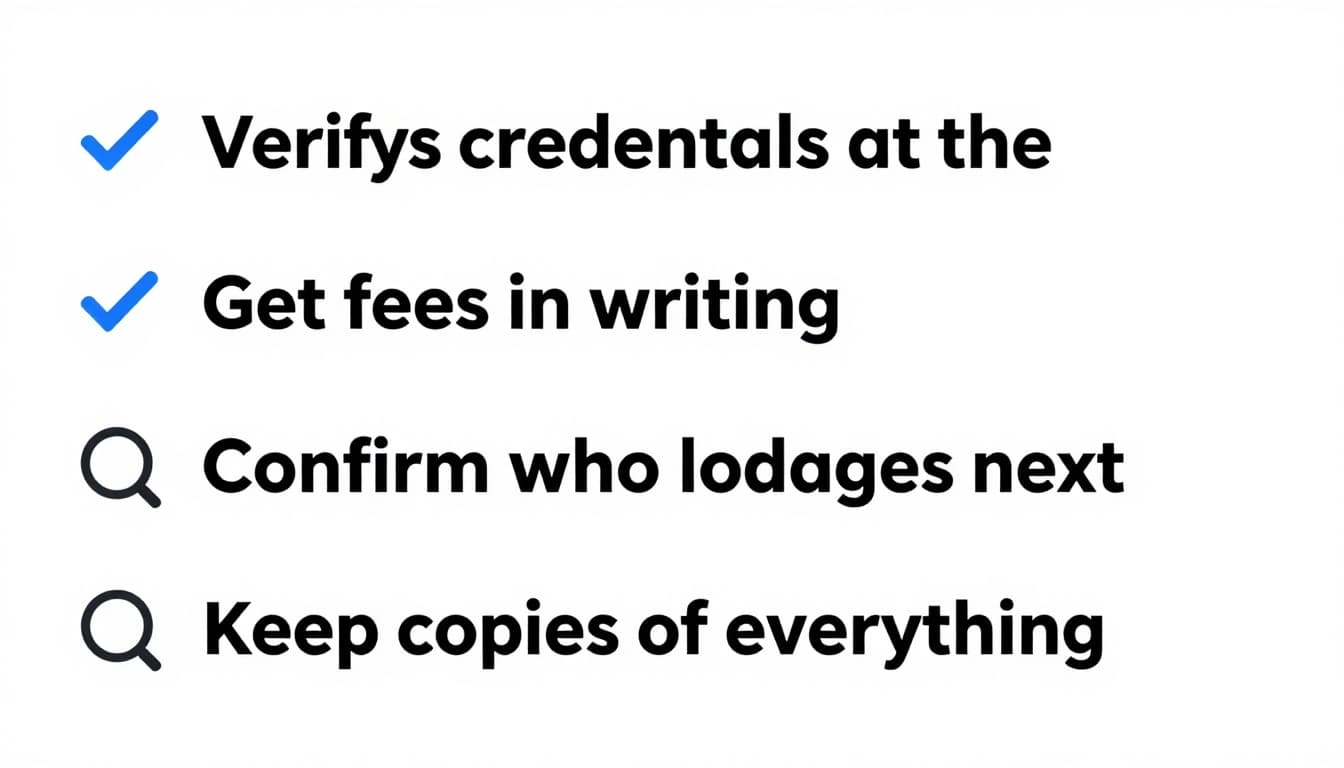
Image suggestion: A simple checklist graphic showing “Verify credentials, Get fees in writing, Confirm who lodges, Keep copies of everything”
FAQs
Do I need a lawyer or an agent for an Australia visa?
Not always. Many standard cases can be handled by a registered migration agent. A lawyer is more common for refusals, cancellations, or legal risk.
Can a consultant guarantee approval?
No. Anyone promising guaranteed approval is a risk. Visa decisions sit with the Department of Home Affairs.
How do I verify someone’s credentials?
Ask if they’re an Australian lawyer or a registered migration agent, then verify using official registers and written details on the agreement.
What documents are usually needed for student, skilled, and partner visas?
It varies, but often includes identity documents, financial evidence, English test results for some visas, work and education records for skilled, and relationship evidence for partner visas.
What happens if I get refused?
You may have review rights, strict deadlines, or limited options depending on the visa and where you applied. This is where a lawyer or experienced agent can matter most.
Should I apply myself?
You can if your case is straightforward and you can follow official guidance carefully. If you’re unsure, a paid consult can still be cheaper than a refusal.
How long does it take?
It varies by visa type and case. Check current processing guidance on the official site before you plan travel or resign from work.
What should a contract include?
Scope of work, total fees, what’s excluded, refund terms, who lodges, and how you’ll receive copies and updates.
Conclusion
Choosing australian immigration lawyers in sri lanka is really about choosing the right level of help. Start with your case complexity, then match it to the right professional, consultant for simple support, registered migration agent for most visa work, and an Australian lawyer for refusals, character issues, or higher-risk cases. Keep fees and refunds in writing, and verify everything against official rules.
The next step is simple and practical: make a shortlist of two to four providers, verify credentials, then book a consult with your top choice. The right first meeting should leave you with a clear plan, clear costs, and fewer unknowns.


 Enu
Enu