 Enu
EnuImagine earning a degree from a world-class university without breaking the bank. Study abroad Germany programs draw students worldwide in 2026 thanks to low or zero tuition at public schools. This guide covers everything from top picks to application steps.
You’ll learn program types, costs, visas, and tips to succeed. Always confirm prices and policies on official sites like DAAD.
Quick Answer (Read This First)
- Public universities charge zero tuition for most bachelor’s and master’s in 2026.
- Expect €11,904 yearly for living costs via blocked account for visas.
- Top fields: engineering, business, computer science, often in English.
- Need IELTS 6.0+ for English programs; German B1-C1 for others.
- Popular unis: TU Munich, Heidelberg, RWTH Aachen.
- Apply 9-12 months early; APS certificate required for some nationalities.
- Work up to 20 hours weekly to offset expenses.
- Short summer programs cost $2,900-$6,200 including housing.
What Are Study Abroad Germany Programs and What Do They Offer?
Study abroad Germany programs let you pursue full degrees, exchanges, or short courses at over 400 universities. Public institutions dominate with no tuition fees, even for internationals. Private options add English-taught classes but higher costs.
These programs shine in STEM, business, and humanities. Many master’s run in English, easing entry for non-German speakers. Platforms like DAAD’s International Programmes list thousands of options for 2025/2026.
Students gain global networks, strong job prospects, and cultural immersion. Graduates often land roles at firms like Siemens or BMW. Short stays build resumes without long commitments.
Key Features of Study Abroad Germany Programs
- Free tuition at public unis covers most bachelor’s/master’s.
- English options in 1,000+ programs, no German needed upfront.
- Semester fees €150-€350 include transit passes.
- Work rights allow 120 full days or 240 half days yearly.
- Scholarships via DAAD cover living stipends up to €934 monthly.
- Central location for EU travel; safe, efficient public transport.
- Research focus with labs rivaling US/UK peers.
Step-by-Step: How to Apply for Study Abroad Germany Programs
- Research programs on DAAD by field and language.
- Check eligibility: high school for bachelor’s, bachelor’s degree for master’s.
- Take tests: IELTS/TOEFL for English, TestDaF for German.
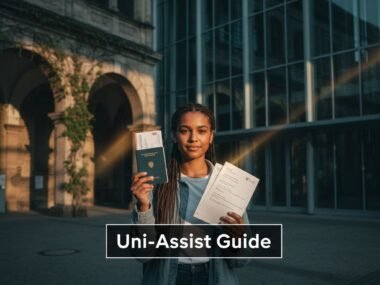
- Apply via Uni-Assist or direct; deadlines winter Oct, summer July.
- Get APS if from India/China (apply early, 2-3 months).
- Secure admission letter.
Before you pay:
- Verify blocked account providers like Deutsche Bank.
- Confirm health insurance covers Germany.
- Budget €11,904+ for first year.
- Read reviews on GoAbroad-like sites.
Pricing, Fees, and What “Cheap” Really Means
Public programs cost little upfront. Semester fees hit €150-€350. Baden-Württemberg adds €1,500/semester for non-EU.
Living runs €850-€1,000 monthly: €400 rent, €250 food, €100 transport. Total first year: €11,904 minimum for visa.
Private schools charge €5,000-€20,000 yearly. Short programs add $3,000-$6,000.
Example: TU Munich master’s. Tuition: €0. Living: €12,000. Flights/visa: €1,500. Total: €13,500.
Pros and Cons
| Pros | Cons |
|---|---|
| Zero tuition at publics | Competitive admissions |
| English programs available | Blocked account hassle |
| Strong job market post-grad | Cold winters, bureaucracy |
| Work allowed part-time | German helps daily life |
| Quality research facilities | High living in big cities |
Common Mistakes (and How to Avoid Them)
- Miss APS deadline: Apply 4 months before uni apps.
- Skip language proof: Book IELTS early, aim 6.5+.
- Underbudget living: Save €1,000/month buffer.
- Ignore deadlines: Winter intake closes July 15.
- Forget insurance: Get coverage before visa.
- Poor SOP: Tailor to program, explain Germany fit.
- No backups: Apply to 3-5 unis.
- Delay blocked account: Takes 2-4 weeks.
Is Study Abroad Germany Programs Legit and Safe?
Yes, Germany hosts 400,000+ internationals yearly via official channels. DAAD oversees credibility. Check uni on Study in Germany portal.
Verify: admission from accredited school, embassy visa process, refund policies on fees. Platforms like GoAbroad verify providers. Students report smooth experiences with proper prep.
Tips to Get Better Deals
- Target publics like LMU Berlin for free tuition.
- Hunt DAAD scholarships early; deadlines February.
- Choose smaller cities like Freiburg for cheap rent.
- Join exchanges via home uni for credit ease.
- Bundle insurance with blocked account.
- Work on-campus gigs via uni job boards.
- Apply off-peak intakes for spots.
- Use student discounts on trains (Semesterticket).
- Network on forums for shared housing.
- Prep SOP strong for merit aid.
FAQs
Do I need German for study abroad Germany programs?
No for English tracks; yes B2+ for German-taught.
How much is tuition in 2026?
Zero at most publics; €1,500/semester in one state.
What’s the visa process?
Admission, blocked account €11,904, embassy appointment.
Can I work?
Yes, 20 hours/week; full-time holidays.
Best unis for engineering?
TU Munich, RWTH Aachen.
Scholarships available?
DAAD, uni-specific; prove finances for visa.
Summer programs cost?
$3,000-$6,000 with housing.
Blocked account providers?
Coracle, Expatrio; transfer upfront.
Health insurance mandatory?
Yes, public or private for visa/enrollment.
Conclusion
Study abroad Germany programs offer unbeatable value in 2026: elite education at low cost. Pick your path, follow steps, and secure funds early.
Start with DAAD search today. Your German adventure awaits.


 Enu
Enu