 Enu
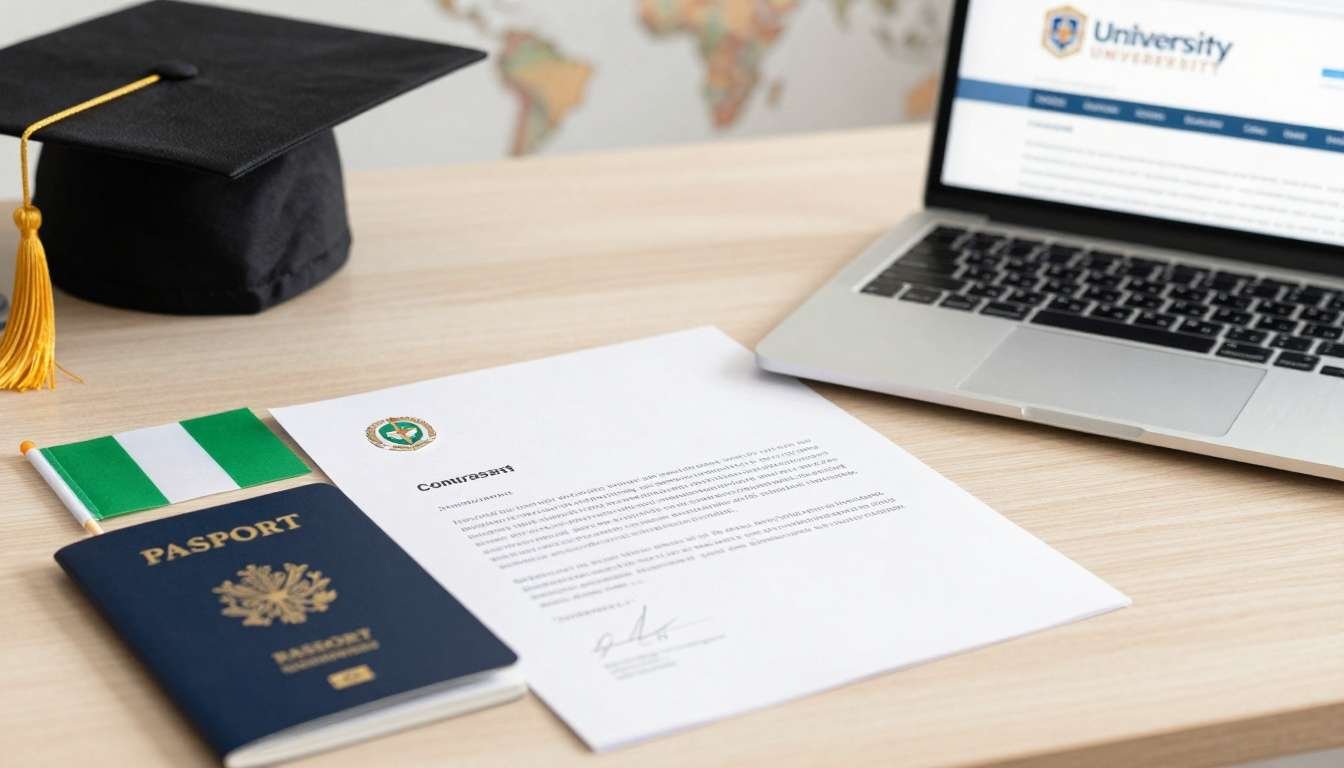
EnuStudy Abroad Sponsorship Letters are one of the clearest ways Nigerians prove who will pay for tuition and living costs while studying overseas. This guide breaks down what the letter is, what to include, who can sponsor, and copy-ready sample formats for common destinations.
Always confirm prices and policies on the official site, and match your letter to the exact embassy and school checklist you’re using.
1) Sponsorship letters overview (what it is and what it’s for)
A Study Abroad Sponsorship Letter is a formal statement from a sponsor confirming they’ll fund part or all of your education costs abroad. It’s usually submitted with financial evidence like bank statements and proof of income.
The goal is simple: show that your funding is real, traceable, and available for the length of your program. Many schools also request a sponsor letter during admission or CAS/I-20 processes, not only at the visa stage.
Sponsorship letter vs. affidavit of support (quick clarity): an affidavit is often a sworn, legal-style declaration (and sometimes a specific form), while a sponsorship letter is a written commitment that can be notarized if required.
Sponsorship letter vs. bank statements (what each proves):
- Sponsorship letter: who is paying, how much, and why they’re committed
- Bank statements: the money exists, where it sits, and whether the balance looks stable
- Together: commitment + proof, not one or the other
For a university-style checklist example, see a formal sponsor letter outline like the University of Dayton sponsor letter sample PDF.
2) Why sponsorship letters matter for Nigerians (visa risk and credibility)
For many Nigerian applicants, a sponsorship letter is a credibility document. It helps explain your funding story in plain terms, so the visa officer doesn’t have to guess who will pay and how.
Weak or vague funding narratives can raise concerns, especially if your documents show sudden deposits, inconsistent income, or unclear relationships. A strong Study Abroad Sponsorship Letter helps reduce that confusion by stating the sponsor’s role, amount, and supporting documents upfront.
It’s also practical because popular destinations (UK, Canada, US, Australia, and many Schengen countries) want clear financial proof alongside an acceptance letter.
3) Legal and practical requirements (notarization, validity, and letterhead)
Most sponsorship letters should be dated recently, and many schools prefer that it’s not older than about 6 months when submitted. If your process drags, you may need to reissue the letter with a new date.
If the sponsor is employed or the sponsor is a company, the letter can be on letterhead. For self-employed sponsors, plain paper is common, but it should reference business registration details and attach business proof.
Notarization isn’t always mandatory, but it can help when a destination, school, or visa process expects sworn declarations. In Nigeria, notarization is commonly handled by a notary public or at High Court registries, and applicants often scan the stamped originals for online uploads.
4) Who can sponsor a Nigerian student (and what makes each sponsor believable)
A sponsor is usually someone with a clear relationship to you and a strong, documentable income. The most accepted sponsors tend to be close family, then employers and institutions.
Common sponsor types:
- Parents or legal guardians
- Spouse (with marriage proof)
- Siblings (with strong income and relationship proof)
- Extended family (uncle, aunt, grandparent)
- Employers (company sponsorship, study leave, scholarship bond)
- Government or institutional sponsors (scholarship boards, foundations)
- Friends (possible, but often harder to justify)
The more distant the relationship, the more you must explain why the sponsor is paying, and prove the connection with documents.
5) Parent sponsorship (most common), plus steps to prepare it properly
Parents are the standard sponsor because the relationship is easy to explain and accepted by most countries. A parent sponsor letter should match the name on the parent’s passport or national ID, and the applicant’s name exactly as on their passport.
Steps to prepare a parent sponsorship (simple and consistent):
- Decide who the primary sponsor is (father, mother, or both).
- Confirm the total costs to be covered (tuition, living, health insurance, flights).
- Choose the supporting financial documents (bank statements, payslips, tax records).
- Write the sponsorship letter with exact figures and duration.
- Attach proof of relationship (birth certificate, family documents).
- Notarize if your checklist or destination expects it.
6) Spouse, sibling, and extended-family sponsorship (what to add)
A spouse sponsor letter usually needs proof of marriage. It also helps to show joint financial planning, shared address, and stable income.
Sibling sponsorship can work well when the sibling has strong earnings and clear financial history. Include relationship proof such as birth certificates showing the same parent(s), plus an explanation of why the sibling is funding you.
Extended family sponsors (uncle, aunt, grandparent) often require extra relationship proof and a clearer “why me” explanation.
Relationship proof documents that often help (examples):
- Birth certificates (linking applicant to parent, and parent to sponsor if needed)
- Sworn family declarations (when civil docs are missing)
- Family photos are usually not official proof, but can support a narrative if requested
- Sponsor’s ID showing family name (not enough alone, but useful context)
7) Employer and institutional sponsors (work bonds, scholarships, and letters that must be on letterhead)
Employer sponsors should use company letterhead and include the sponsor’s position, salary, and reason for sponsoring. If there’s a return-to-work agreement, study leave approval, or a bond, the letter should mention it clearly, with any attached terms.
Government or institutional sponsors (scholarship bodies) should provide an award letter stating what costs are covered and for how long. If only partial funding is covered, the letter should say what the student will cover and show evidence for that part too.
8) Sponsor eligibility checklist (what visa officers tend to look for)
Visa officers and schools typically want sponsors who look financially stable and legally established. The exact threshold depends on destination and program costs, so the letter should never be vague.
Common sponsor eligibility signals:
- Stable income and regular transactions
- Funds that can cover the full program period (or at least the required proof window)
- Clear legal identity (passport, residence status where relevant)
- A believable reason for sponsoring you
- Clean, consistent paperwork (names, dates, addresses match across documents)
If a sponsor is retired, the story can still work, but it should be backed by pension evidence, savings history, and assets that make sense.
9) Documents sponsors should attach (the checklist that makes the letter “work”)
A sponsorship letter without attachments often looks incomplete. Attachments are what turn the promise into proof.
Sponsor document checklist (typical):
- Sponsor’s passport data page (or national ID)
- Bank statements (commonly 3 to 6 months, depending on destination)
- Proof of income (payslips, employment letter, pension slips, business income)
- Tax documents (when available and relevant)
- Business registration documents (for self-employed sponsors)
- Proof of relationship (birth certificate, marriage certificate, sworn declaration)
- Property documents (optional, supports ties and stability)
A clean pack makes the Study Abroad Sponsorship Letter easier to trust and faster to verify.
10) What to include in the sponsorship letter (a fill-in structure Nigerians can follow)
A good letter is short, direct, and specific. It should read like a formal commitment, not a casual note.
Include these blocks:
- Sponsor details: full name, address, phone, email, occupation, employer or business name, passport number or ID number
- Applicant details: full name, passport number, school, course, start date, end date (or duration)
- Relationship: how the sponsor is connected to the student
- Financial commitment: exact amount, currency, and what it covers
- Funding source: salary, savings, business income, pension, assets (brief summary)
- Attached documents list: what you’re submitting with the letter
- Signature and date: handwritten signature is often preferred, plus notarization block if used
Cost categories you can list (example breakdown):
- Tuition fees
- Accommodation and utilities
- Feeding and personal expenses
- Health insurance
- Books and supplies
- Flights and local transport
11) Country-specific notes Nigerians should reflect in the letter (UK, Canada, US, Australia, Schengen)
Different countries care about different wording and supporting proof, so adjust your letter to match the destination.
- UK: Keep figures aligned with tuition plus required living funds, and reference the school and course clearly. If you have a CAS, you can reference it in the letter.
- Canada: If using a GIC or showing tuition payment receipts, mention them in the letter’s attachments list. Keep the sponsor commitment aligned with the student’s total yearly needs.
- US (F-1): The sponsorship letter often supports school financial forms, and US processes may rely on affidavit-style commitments and income proof. Your letter should match the I-20 funding figures.
- Australia: Your letter should match your proof of funds and your study intent narrative. Keep the commitment realistic and documented.
- Schengen: The letter should align with short-term or long-term study requirements and show realistic daily living coverage plus accommodation plans.
For a general format reference (not Nigeria-specific), see a detailed explanation like Careers360’s sponsorship letter guide.
12) Sample formats Nigerians can copy (5 scenarios, written to paste and edit)
These samples are written as templates. Replace brackets with your details, and keep names and passport numbers consistent everywhere.
Sample Format 1: Parent sponsor letter for UK (5-paragraph structure)
[Sponsor Full Name]
[Full Address]
[Phone] | [Email]
[Passport Number or National ID]
[Date]
To Whom It May Concern,
- I, [Sponsor Full Name], am a citizen of [Country] and currently work as [Job Title] at [Employer] in [City, Country]. I write to confirm that I will sponsor my [son/daughter/ward], [Student Full Name as on Passport], for their studies in the United Kingdom.
- [Student Full Name] has been admitted to [University Name] to study [Course Name] starting [Start Month/Year] for [Duration].
- I commit to covering tuition and living costs for the full duration of study. I will provide up to [Amount in GBP] to cover [tuition] and [Amount in GBP] to cover living expenses, including accommodation, feeding, transport, and study materials.
- The funds will be paid from my [salary/savings/business income]. Supporting documents are attached, including [bank statements for X months], [employment letter/payslips], and [tax/pension documents if available].
- I confirm this sponsorship is genuine, and I will remain responsible for the student’s approved education expenses during their stay for study purposes.
Sincerely,
[Handwritten Signature]
[Sponsor Full Name]
Sample Format 2: Sibling sponsor for Canada (with relationship proof line)
[Sponsor Full Name]
[Address]
[Phone] | [Email]
[ID/Passport Number]
[Date]
To the Visa Officer,
I, [Sponsor Full Name], confirm that I will sponsor my [brother/sister], [Student Full Name], for studies in Canada at [School] in [Program] for [Duration].
I will cover [exact amount in CAD] for [tuition] and [exact amount in CAD] for [living expenses], plus health insurance and flights as required. These funds come from my [employment income/business income], supported by attached bank statements and proof of income.
To confirm our relationship, I have attached [birth certificates showing same parent(s)] and [any additional family proof].
Signed,
[Signature]
[Sponsor Full Name]
Sample Format 3: Employer sponsor for US (letterhead style content)
[Company Name on Letterhead]
[Company Address] | [Company Phone]
[Date]
To Whom It May Concern,
This letter confirms that [Company Name] will sponsor [Employee/Scholar Name], passport number [X], to study [Program] at [School Name] in the United States beginning [Date].
The company will fund [amount in USD] toward [tuition] and [amount in USD] toward [living costs/fees] for [duration]. This sponsorship is approved by [Approver Name and Title]. Any employment return obligations (if applicable) are documented in [attached bond/leave approval].
Attached are [company bank statement or sponsorship proof], [approval memo], and [employment confirmation].
Sincerely,
[Signature]
[Name, Title]
[Company Name]
Sample Format 4: Self-employed sponsor for Australia (business proof included)
[Sponsor Full Name]
[Address]
[Phone] | [Email]
[ID/Passport Number]
[Date]
To Whom It May Concern,
I, [Sponsor Full Name], confirm I will sponsor [Student Full Name] for study in Australia at [School] for [Program] from [Start Date] to [End Date].
I will provide [amount in AUD] covering tuition and living expenses, including accommodation, feeding, transport, and health insurance. My sponsorship will be funded through my business, [Business Name], registered under [CAC/registration details].
Attached are [business registration], [bank statements], and [profit evidence or invoices] to support the source of funds.
Signed,
[Signature]
[Sponsor Full Name]
Sample Format 5: Extended family sponsor for Schengen (affidavit-style wording)
[Sponsor Full Name]
[Address]
[Phone] | [Email]
[ID/Passport Number]
[Date]
Declaration of Sponsorship
I, [Sponsor Full Name], declare that I will sponsor [Student Full Name], passport number [X], for [type of study] in [Country] for [duration].
I will cover [amount in EUR] for living costs and [amount in EUR] for school fees (if applicable), plus travel insurance and local transport. Funds are available in my account with [Bank Name], supported by attached bank statements and proof of income.
I confirm my relationship to the student as [uncle/aunt/grandparent], supported by [documents listed].
Signed,
[Signature]
[Sponsor Full Name]
[Notary stamp section if used]
Conclusion
Study Abroad Sponsorship Letters work best when they’re specific, supported by strong documents, and matched to the destination’s financial rules. A clear sponsor story also reduces confusion around large expenses, exchange-rate swings, and who is truly responsible for funding.
If you’re preparing Study Abroad Sponsorship Letters for UK, Canada, US, Australia, or Schengen study routes, use the samples above as a base, keep amounts exact, and keep every name, date, and attachment consistent across the full application pack.


 Enu
Enu