 Enu
EnuThe best time to buy flights for peak holidays in 2026 isn’t about “buy on a Tuesday at 1 a.m.” It’s about picking your real travel window, then using price tools and booking windows that match how airlines actually price seats.
This framework shows how to plan the best time to buy flights for peak holidays across the biggest 2026 travel spikes, using observable patterns and current tools. Always confirm prices and policies on the official site.
Quick Answer (Read This First)
- Peak-holiday airfare usually gets less forgiving as the calendar gets closer to departure, because seats that fit popular times sell out first.
- For domestic trips, a few weeks to a couple of months out is often where reasonable fares appear, but peak windows can push earlier.
- For international trips, planning months ahead is more common, especially for popular routes and school-break periods.
- The best time to buy flights for peak holidays improves fast when you can shift departure or return by 1 day.
- Calendar tools (date grid, price graph) help you spot the cheapest day combinations quickly.
- Price tracking matters most when you’re shopping early and waiting for a drop, or watching multiple airports.
- If you only do one thing, set alerts early and check them consistently, not obsessively.
What Is Google Flights and What Does It Do?
Google Flights is a flight search tool that shows fares across airlines and online sellers in a clean comparison view. It’s built for scanning dates, routes, and price swings without calling an airline.
It’s especially useful for peak periods because you can compare multiple day combinations fast. That helps when the “holiday week” isn’t one price, it’s a staircase.
It also offers price tracking so you can get alerts when fares change for a route or a specific trip, then review everything in one place later.
For flexible travel, the Explore map can show cheaper destinations without committing to a single city upfront, which is practical when holiday pricing gets aggressive.
Key Features of Best Time to Buy Flights for Peak Holidays
- Flexible date search that highlights the lowest-priced date pairs
- Date grid and price graph views to compare nearby departures and returns
- “Explore” style browsing for open-ended destination planning
- Price tracking alerts for specific dates or broader flexibility
- Filters for nonstop flights and price caps (useful for holiday flight deals)
- Price insights that flag when a fare looks high or low versus typical
Step-by-Step: How to Use Google Flights
- Enter your departure city and your destination (or choose an “anywhere” style search if destination is open).
- Open the date selector and compare different trip lengths, not just one set of dates.
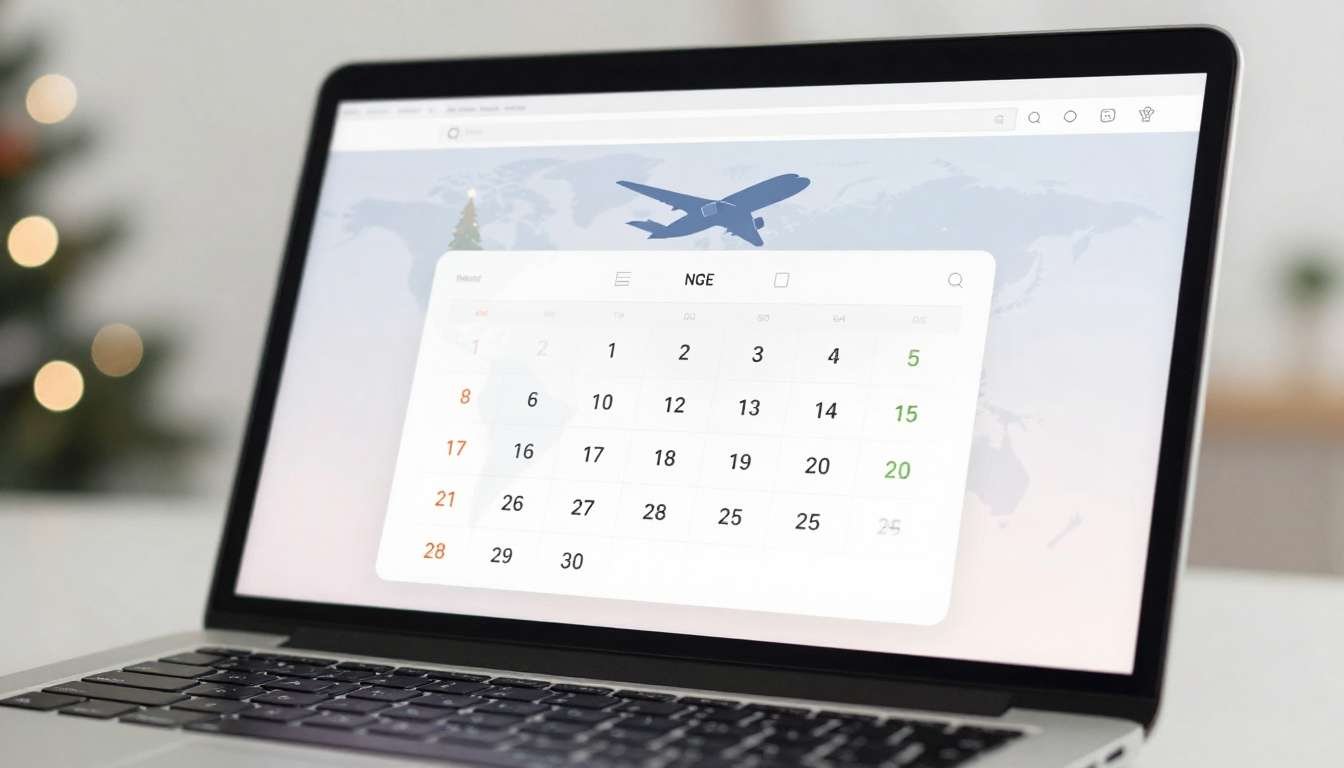
- Use the date grid to scan the cheapest combinations across a week.
- Open the price graph to see how fares shift by day and identify “cliffs” around peak travel days.
- Apply filters (nonstop, bags, times) after you understand the cheapest date pattern.
- Turn on flight price alerts for the exact dates you’d accept, plus one alternative date pair.
- Re-check alerts and availability as seats change, then book when the fare matches your plan.
Before you pay:
- Confirm who issues the ticket (airline vs third-party seller).
- Re-check baggage and seat fees, especially on basic economy.
- Review change and cancellation terms for that fare type.
- Match the flight times to your true holiday commitments.
Pricing, Fees, and What “Cheap” Really Means
During peak travel, “cheap” usually means the best total cost for a workable schedule, not the lowest headline fare. The true total often includes carry-on rules, checked bags, seat selection, and change fees.
Basic economy can look like a deal, then get pricey once you add what most families need. That’s why the best time to buy flights for peak holidays isn’t just timing, it’s comparing like-for-like fare bundles.
Example (illustrative): A $240 round-trip fare plus $70 checked bag, plus $25 seat fee each way becomes $390 total. Peak holidays magnify this gap because add-ons don’t get cheaper when demand rises.
Pros and Cons
| Factor | Pros | Cons |
|---|---|---|
| Early shopping | More flight-time options | Prices can dip later |
| Price tracking | Reduces missed drops | Alerts don’t guarantee seats |
| Flexible dates | Often the biggest savings | Not always possible with work/school |
| One-stop vs nonstop | Can lower fare | Longer travel day and missed-connection risk |
| Booking channels | Direct can simplify changes | Third-party can be cheaper but harder for refunds |
Common Mistakes (and How to Avoid Them)
- Treating the holiday as one day, not a 10 to 16-day demand window, then shopping too narrowly.
- Waiting for a “sale” during the busiest weeks, when airlines don’t need to discount.
- Filtering too early (nonstop only, perfect times only), then missing cheaper day combinations.
- Tracking only one route, instead of nearby airports and a backup return date.
- Comparing fares without counting bags and seat fees.
- Locking in outbound first, then getting stuck with an expensive return.
- Ignoring shoulder days adjacent to peaks (the days just before and after the main rush).
Is best time to buy flights for peak holidays Legit and Safe?
The best time to buy flights for peak holidays is a planning approach, not a guarantee. It’s “legit” when it’s based on transparent price monitoring, clear date ranges, and total-trip cost comparisons.
Safety comes down to the seller and the fare rules. Check the ticket issuer, support channel, and refund or credit policy before purchase, especially if you’re using an online travel agency.
For a mainstream summary of recent Google-based booking guidance, see Google airfare timing recap. For broader timing and day-of-week context, compare with NerdWallet flight booking timing.
Tips to Get Better Deals
- Use flexible dates first, then tighten your filters later.
- Track prices for your ideal dates and a second-best option.
- Check a nearby airport pair when the main hub spikes (holiday pricing can vary a lot).
- Prioritize the return flight during Thanksgiving and New Year’s, where the “coming home” day gets crowded fast.
- Compare one-way pricing only when round-trips look inflated; sometimes it helps, sometimes it doesn’t.
- Watch schedule-release periods (when airlines open far-out dates) because new inventory can reset pricing.
- Treat nonstop as a preference, not a requirement, when holiday flight deals are scarce.
- For cheap international flights, assume you’ll need a longer runway, then use tracking to catch dips.
- When using Google Flights, lean on the date grid and price graph to avoid shopping blind.
- If your plans are uncertain, focus on fares with better change terms, not just the lowest price.
FAQs
What’s the best time to buy flights for peak holidays if my dates are fixed?
It’s the earliest point when you can confirm your exact window and compare total costs across reasonable flight times, then monitor for drops with alerts.
Do flights actually get cheaper right before departure during holidays?
Sometimes, but peak holidays often sell the best flight times first, so last-minute shopping tends to reduce choices even when a rare drop appears.
Is Google Flights price tracking reliable?
It’s useful for change detection and trend awareness. It’s not a promise that the same fare will still be available when you click.
Should I book direct with the airline or through a third-party site?
Direct booking often simplifies changes and customer service. Third-party sellers can price differently, but can add friction for refunds and cancellations.
How do cancellations and refunds work during peak periods?
They follow the fare rules you purchased. Basic economy often has stricter limits, while higher fare families can offer credits or more flexibility.
Do baggage rules affect the “best time” to book?
They affect the true price you’re comparing. During peak weeks, a low fare with high add-ons can lose to a higher fare with fewer fees.
Does the day you buy matter more than the day you fly?
For peak travel, the day you fly often drives the biggest price differences because demand clusters around holiday schedules.
Conclusion
The best time to buy flights for peak holidays in 2026 comes from a repeatable framework: define your real date window, compare nearby day pairs, track prices early, and judge the total trip cost, not just the base fare.
Use Google Flights tools (date grid, price graph, Explore, and price tracking) to keep your plan structured and calm. Always confirm prices and policies on the official site before you book.

 Enu
Enu