Enu
EnuPolice Clearance Certificate in Nigeria for Study Visas is one of those requirements that can slow down your whole application if you treat it like an afterthought. This guide explains what the PCC is, where it comes from, how the process usually works (online plus in-person biometrics), how long it can take, and the most common reasons applications get rejected.
Always confirm prices and policies on the official site.
Quick Answer (Read This First)
- A Police Clearance Certificate (PCC) in Nigeria is issued through the Nigeria Police Force process and used as a “good conduct” document for many study visa files.
- Expect a two-part flow: online request and payment, then an in-person fingerprint capture (biometrics) at a police location.
- Processing time varies by workload and the quality of your submission; delays often come from incomplete uploads or missed biometrics.
- Name and date-of-birth mismatches are one of the fastest ways to trigger a rejection or “pending correction” loop.
- If you’re applying from outside Nigeria, plan for extra time due to fingerprint logistics and courier or proxy handling.
- Keep your receipt, reference number, and confirmation page, they’re used for tracking and collection.
- Many visa offices want a “recent” PCC, so timing matters as much as getting it approved.
1) What a Police Clearance Certificate in Nigeria Actually Proves
A Police Clearance Certificate in Nigeria for Study Visas is a document used to show whether the holder has a recorded criminal history in Nigeria, based on police checks tied to identity and fingerprints. You’ll also see it called a “police character certificate” or “police clearance.”
It’s not the same thing as a court record, and it’s not a visa approval tool by itself. It’s one part of a bigger credibility and background package that many study destinations request.
If you want a plain-language overview of what the certificate is used for, see the government explainer on Nigeria PCC service overview.
2) Why Study Visa Applications Ask for a PCC
Many immigration systems use police certificates to reduce risk and confirm identity history. For study visas, it’s usually about character assessment and confirming you’re not flagged for serious offences.
This is also why accuracy matters. A Police Clearance Certificate in Nigeria for Study Visas can be “correct” in intent but still unusable if it doesn’t match your passport bio-data or if it’s outside the timeframe the visa office accepts.
3) Who Typically Needs a PCC for Study Visas
In practice, Nigerian citizens applying to study abroad are the most common applicants. Some countries also request police certificates from any place you lived for a set period, so non-Nigerians who lived in Nigeria may also need the Nigeria-issued certificate.
Age rules and exemptions depend on the destination’s policy, not just Nigeria’s process. So the “who needs it” decision is usually driven by the visa checklist for your target country and your address history.
4) Where to Apply, and Why the Official Route Matters
The official process is tied to Nigeria Police Force services, and applicants often start online, then complete fingerprinting in person at designated police offices. The biggest practical risk here is using unofficial agents or lookalike sites that promise “instant PCC.”
A good way to stay grounded is to cross-check travel documentation basics on official government portals. The Nigeria Immigration Service homepage is a reliable reference point for general immigration service information, even though it’s not the PCC issuer.
5) Online vs Offline Applications (What Changes in Real Life)
Most applicants prefer online because it reduces guesswork on forms, creates a reference trail, and supports payments and basic tracking. Offline routes still exist through physical police commands, but they can be harder to standardize because you’re relying on local process flow.
The best way to think about it is simple: online gets your request into the system, offline (or in-person) still happens at biometrics time. For Police Clearance Certificate in Nigeria for Study Visas, fingerprint capture is the step people underestimate most.
6) Documents You’ll Usually Need (Plus the Mistakes That Cost Time)
Requirements can change, but PCC applications typically ask for identity proof and supporting details that match your travel documents. Bring originals for in-person steps, and upload clear scans for online submission.
Common required documents
- Valid ID (often international passport, national ID, or driver’s license)
- Passport photo (recent, clear, plain background)
- Birth certificate or age declaration (as required by the process)
- Proof of address (often requested to support identity consistency)
- Printed application confirmation and payment receipt
Supporting documents that may be requested depending on your case
- Sworn affidavit for specific corrections (example: name variation)
- Evidence of name change (example: marriage certificate or gazette)
- Authorization for third-party handling (if you’re outside Nigeria and using a proxy)
For Police Clearance Certificate in Nigeria for Study Visas, document quality matters as much as the document itself. Low-resolution uploads often trigger “re-upload” or silent delays.
7) Step-by-Step Application Flow (From Form to Fingerprints)
Most applicants go through a predictable path: submit details online, pay, then complete fingerprints and photo capture at a police location. The exact screens may change, but the logic stays the same.
- Create an account on the official police service portal used for clearance services.
- Start a new request and choose the reason clearly (example: study visa).
- Enter your personal details exactly as they appear on your passport.
- Upload your documents in the accepted file type and readable resolution.
- Pay the required fee and save the receipt and reference number.
- Print the confirmation page or request letter if provided.
- Attend biometrics (fingerprints and photo) at the assigned office.
- Wait for approval, then collect or receive the certificate based on the option provided.
Before you pay (quick checklist)
- Your name matches your passport, including order and spelling
- Your date of birth matches every document
- Your passport bio-data page scan is readable
- Your email and phone number are active for notifications
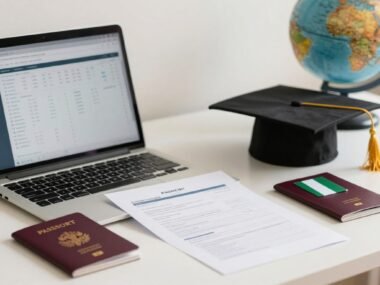
Image suggestion: A simple checklist graphic showing PCC documents, payment receipt, and fingerprint appointment confirmation.
8) Processing Time and What Causes Delays
Processing time for Police Clearance Certificate in Nigeria for Study Visas varies because the “clock” doesn’t start and end in one place. The online submission may complete in minutes, but the real timeline depends on biometrics scheduling, verification workload, and how clean your record and data match are.
Common delay triggers include high application volume, missing documents, payment confirmation issues, and applicants skipping biometrics or arriving without originals. If you’re applying from outside Nigeria, add extra time for fingerprint cards, courier movement, and third-party coordination.
9) Validity Windows: When Your PCC Is “Too Old”
Visa offices usually want a recent police certificate, but “recent” is not universal. Some destinations treat police certificates as valid for a set number of months, others look at whether you’ve lived in the country since the certificate was issued.
This matters for planning. If your Police Clearance Certificate in Nigeria for Study Visas is issued too early and your admission timeline shifts, you may end up paying twice and repeating biometrics.
10) Common Rejections (and What They Usually Mean)
Most rejections aren’t about criminal records. They’re about identity mismatch, incomplete submission, or steps that were started but not finished.
Here are the most common rejection patterns seen with Police Clearance Certificate in Nigeria for Study Visas:
- Incomplete documentation
Missing ID pages, missing proof of address, or no receipt attached can stall verification. - Incorrect personal details
Name spacing, swapped surname order, or a different date format can break the match against your ID. - Unclear uploads
Blurry scans and cropped passport pages often lead to re-upload requests, or the file gets treated as invalid. - Payment issues
Failed payment, wrong amount, or missing receipt confirmation can leave the application in limbo. - Skipped biometrics
Some applicants assume online submission is enough. It usually isn’t because fingerprints are part of how the check is tied to you. - Duplicate applications
Multiple open requests can confuse status and slow down approval if the system flags duplicates. - Criminal record discovered
If a record exists, the certificate outcome can reflect that, and some cases require extra review. - Applying from abroad without proper handling
If fingerprints are submitted incorrectly, or proxy handling isn’t accepted for your situation, the request can be returned for correction.
The cleanest strategy is consistency. Police Clearance Certificate in Nigeria for Study Visas is a paperwork test more than anything else.
FAQs
1) Can I apply for a Police Clearance Certificate in Nigeria for Study Visas from outside Nigeria?
Yes, many applicants start online and handle fingerprinting through the method required for overseas applicants. The timeline is usually longer because fingerprints and delivery add steps.
2) Is the PCC the same as a court clearance?
No. A police clearance certificate is tied to police checks and identity verification. A court record is handled through the judiciary process.
3) Do I need a new PCC for every country?
Some visa applications accept one recent PCC, others may want a certificate issued for a specific purpose or within a strict timeframe. Requirements depend on the destination.
4) What’s the most common reason for rejection?
In many cases, it’s mismatched personal details between the form and your passport or ID, followed by unclear uploads.
5) How long does processing usually take?
It varies. Some cases move within days after biometrics, others take longer depending on workload and document issues. Overseas applications can take weeks due to logistics.
6) Can I track my PCC request?
Most official processes provide a reference number and an account dashboard for status checks. Save your receipt and confirmation details.
7) Will a digital PCC be accepted for study visas?
Some visa offices accept scanned copies uploaded to an application portal, others may request the original. Check the visa checklist for your destination.
8) What if my name changed after my passport was issued?
Expect to provide supporting proof of the change, and keep all entries consistent across documents.
Conclusion
Police Clearance Certificate in Nigeria for Study Visas is a straightforward requirement when you treat it like an identity-matching exercise. The steps are predictable: submit online, pay correctly, complete biometrics, then wait for verification and issuance.
For the best outcome, focus on accuracy, readable uploads, and timing. Always confirm prices and policies on the official site before you apply.


 Enu
Enu