 Enu
EnuVisa renewal Philippines searches usually mean one thing: you want to stay longer, but you don’t want delays, penalties, or surprise requirements. This guide lays out the practical flow, the common documents, and the decision points that matter most, so you can pick the right path for your situation.
Always confirm prices and policies on the official site, because fees and rules can change by year, office, and case.
Quick Answer (Read This First)
- “Visa renewal” often means a visa extension at the Bureau of Immigration (BI), especially for Temporary Visitor (9A) and visa-waiver stays.
- Apply before your stay expires, and don’t treat the last day as a safe deadline.
- Many visitors extend in small increments (often 1 to 2 months), then switch to longer extensions later if eligible.
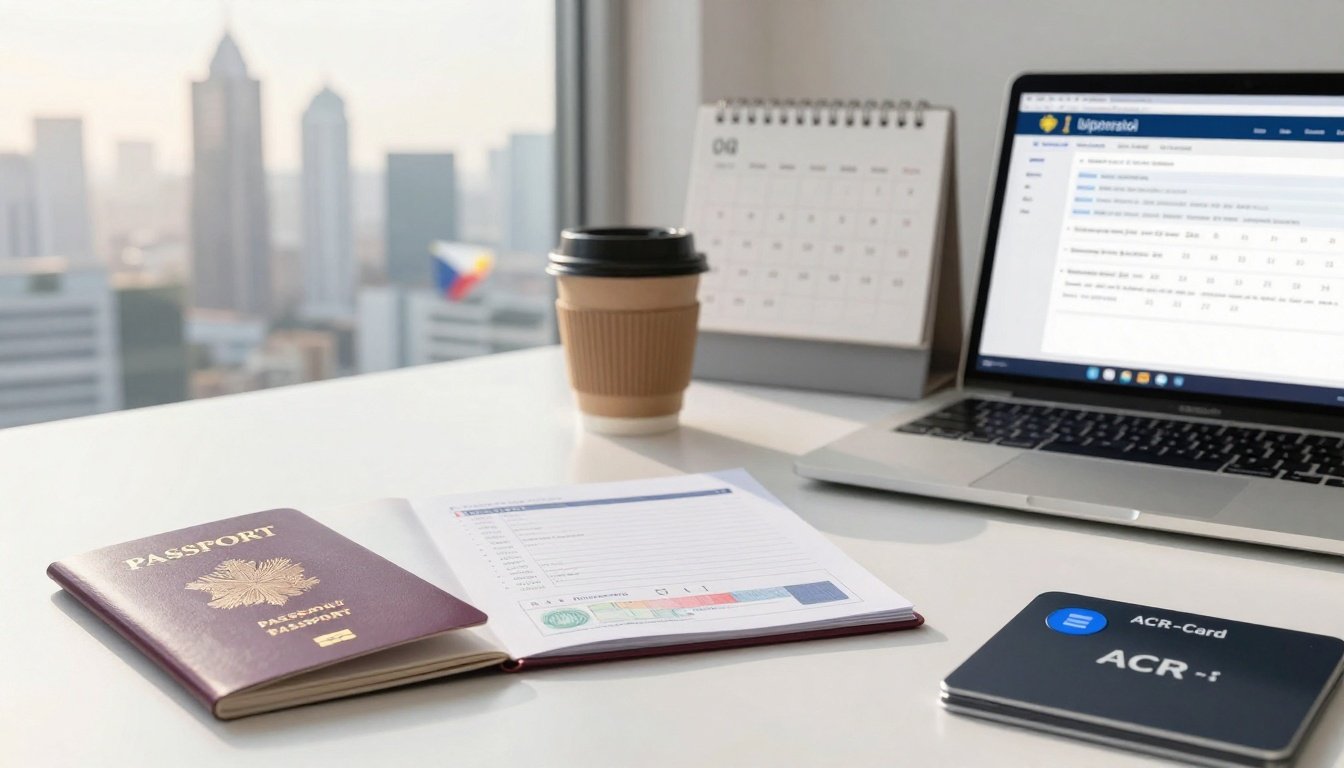
- If your stay goes beyond 59 days, BI commonly requires an ACR I-Card (a biometric ID for many foreign nationals).
- Stays beyond 6 months can trigger extra steps, and in some cases a BI clearance-type requirement may apply.
- Overstays can mean fines and extra processing, even if it’s short.
- Online pre-processing may be available through BI, but not every case fits online-only handling.
- For the most reliable starting point, use the official BI eServices portal.
What Is Bureau of Immigration eServices and What Does It Do?
Bureau of Immigration eServices is BI’s online portal that supports parts of the visa renewal Philippines process, mainly around visitor extensions and related transactions. It’s designed to reduce in-office time by letting you start steps online.
In practice, it works best when your record is clean, your documents are complete, and your request fits the portal’s supported transactions. If your case is complex (overstay, missing stamps, unusual visa category, or a special extension), you may still end up completing steps in person.
It’s also useful as a reference point for official contact and support details, because it’s BI’s own platform, not a third-party site.
Key Features of Visa Renewal Philippines
- Visa type-based handling, because a tourist/9A extension won’t follow the same rules as work, student, or dependent visas.
- Document checklists, often tied to a specific transaction (example: initial waiver extension vs later extension).
- Order of payment workflow, where BI assesses and issues a payment instruction before you settle fees.
- ACR I-Card triggers, especially when your stay passes certain day-count thresholds.
- Branch-dependent processing, because not all offices handle every transaction the same way.
- Status updates and receipts, which matter for tracking and for correcting stamp errors quickly.
1. Determine Your Current Visa Type (Before You “Renew” Anything)
Visa renewal Philippines requests go smoother when you name your exact status first. Many people say “renew” when they really mean “extend.” BI processes extensions based on what you currently hold, not what you plan to do next.
Common categories you’ll hear in the Philippines include:
- Temporary Visitor (9A) (tourism, family visit, limited business meetings)
- Visa-waiver entry that later converts into a 9A-style extension process
- Long-stay visitor extensions for certain cases
- Work-related and long-term visas (these usually have different renewal logic)
You can usually confirm your current status by checking your passport admission stamp, latest extension stamp, and any BI-issued receipts or acknowledgment slips. If you already have an ACR I-Card, it’s another strong clue you’ve crossed a longer-stay threshold and may face additional reporting steps later.
2. Verify Eligibility Criteria Early (So You Don’t Waste a Trip)
Eligibility is less about “Do you want to extend?” and more about “Does your record support it?” BI typically expects that your current stay is valid, your passport is valid, and your purpose matches the visitor category.
A practical eligibility checklist often looks like this:
- Your authorized stay has not expired
- Your passport has enough validity for the requested extension period
- You can show ability to support your stay (bank proof or sponsor support, depending on the office and case)
- You have no unresolved immigration issues (alerts, unpaid penalties, missing reporting)
- Your purpose remains consistent with your status (tourism, family visit, limited business, no local employment)
Certain situations commonly slow things down: overstays, damaged passports, inconsistent entries in forms, and missing copies. If you’re trying to extend after a long continuous stay, be prepared for BI to ask for extra supporting items, especially when you cross major time thresholds.
3. Check Renewal Deadlines and Overstay Risks (Timing Matters)
A lot of visa renewal Philippines problems start with timing. People assume the last day printed on a stamp is still fine for same-day filing, then get caught by office cutoffs, holiday closures, or missing documents.
A simple timeline to follow:
- 7 days before expiration: safe window to start, especially if you need photos, copies, or sponsor documents
- 1 to 3 days before: higher risk of delays if anything is missing
- After expiration: you’re already in overstay territory, and penalties can apply
Overstay handling is usually more expensive and slower than a normal extension. Even when fines look “manageable,” the bigger risk is that you trigger extra steps and more scrutiny.
4. Choose Where You’ll File: BI Main Office vs Regional Offices
Where you apply can change the experience. The BI Main Office in Manila can process many transactions, but it can also be busy. Regional or satellite offices may be more convenient, but not every branch processes every type of extension or special case.
If you’re unsure which office can handle your transaction, start by confirming the official process for your category. For example, BI outlines who can file and where for certain cases like BI revalidation requirements, which is a different scenario than a standard tourist extension but shows how location rules can vary.
When an office only handles basic extensions, special requests can be redirected, and that’s when trips multiply. Picking the correct office first can save days.
5. Understand Online Pre-Application Options (What You Can and Can’t Do)
BI’s online options can help, but it’s not always a full online renewal. Think of it as a way to start, pre-check, or reduce queue time when available.
Typical portal-style features include:
- Account or profile setup
- Transaction selection (example: extension-related services)
- Form completion and basic data validation
- Fee assessment and payment step (depending on the service)
- Confirmation and instructions for next steps
Login issues happen, and they usually come from mismatched personal data across entries, unstable uploads, or browser problems. If you keep your details consistent with your passport and past stamps, you reduce the chance of a portal rejection.
6. Gather Passport and Copy Requirements (Small Details, Big Delays)
Your passport is the anchor document, and BI staff will compare everything against it. If the passport is near expiry, has water damage, torn pages, or unclear biographic data, you can expect extra questions or a pause while you correct it.
Plan to bring:
- The original passport
- Clear photocopies of key pages (bio page, latest entry stamp, latest extension stamp)
- Any past receipts or acknowledgment slips tied to your most recent extension
Some offices accept copies in a specific format or quantity, and the safest approach is to have clean, legible copies ready before you arrive. That’s also helpful if you’re asked to leave a copy set for evaluation.
7. Prepare Core Forms and Photos (Don’t Treat These as Optional)
For visitor extensions, BI commonly uses a general application form (often referenced as CGAF in BI guidance). Form errors are a top reason for slow processing, because staff must reconcile your handwriting, dates, and passport details.
For photos, expect standard passport photo norms: recent photo, plain background, and consistent appearance with your passport image. Even if you think photos are “basic,” they can become a hard stop if the background is wrong or the photo is too old.
8. Proof of Funds, Accommodation, and Itinerary (Why They Ask)
Visitor extensions are meant for temporary stays. That’s why BI may ask for proof that you can support yourself, plus proof you have a place to stay and a plan to leave.
Common supporting documents can include:
- Bank statements (or other financial proof)
- Sponsor letter plus sponsor ID (if someone is supporting you)
- Hotel booking or lease, or a host’s letter/affidavit (where accepted)
- Return ticket or onward travel proof (when requested)
Requirements vary by office and individual case. The point is consistency: the documents should match your stated reason for staying.
9. Step-by-Step: How to Use BI eServices for a Visitor Extension
This is a practical flow for visa renewal Philippines when you’re using BI’s portal as part of the process. The exact screens can change, but the path stays similar.
- Go to the official BI eServices portal and confirm the service you need is listed.
- Create your account or sign in, then keep your profile details identical to your passport.
- Choose the correct transaction type (don’t guess, match it to your current status).
- Fill in your travel and stay details carefully, including your latest authorized stay.
- Upload or prepare any requested documents, keeping file names clear and consistent.
- Review the assessment and instructions, then complete the payment step if it’s offered online.
- Follow the portal’s next-step guidance, which may include an office visit for stamping, biometrics, or validation.
- Save confirmations, receipts, and reference numbers in more than one place.
Before you pay (mini checklist):
- Your name, passport number, and date of birth match your passport exactly
- Your latest admission or extension date is correct
- You’re applying before expiration
- You have clean scans or photos of required pages
- You understand whether an office visit is still required
Pricing, Fees, and What “Cheap” Really Means
Visa renewal Philippines costs are rarely just one fee. The real total is usually the BI fee plus practical add-ons like photocopies, photo services, notarization for sponsor documents, and travel costs to the office.
BI fees can vary by extension type, length, and whether you need an ACR I-Card. Some public references describe ranges for common visitor extensions and ACR I-Card scenarios, but you should treat any number as “subject to BI assessment” and confirm before you pay.
Example calculation (illustration only):
If you extend a tourist stay and you also trigger an ACR I-Card requirement, your total might include the extension fee plus the card-related charges, then add small costs like photos and copies. That’s why two people doing “the same extension” can still pay different totals.
If you want the safest baseline for what BI considers a standard visitor extension flow, start from the official description for visitor extensions like the Temporary Visitor (9A) visa waiver page, then match your case to the correct transaction.
Pros and Cons
| Option | Pros | Cons | Best for |
|---|---|---|---|
| BI eServices + office completion | Less time in line, clearer record trail | Not always fully online | Clean cases, basic extensions |
| BI office walk-in | Direct evaluation | More waiting, more trips if incomplete | People with complete docs, nearby offices |
| Longer extension (when eligible) | Fewer visits | Higher upfront cost, tighter requirements | Stable long stays with clean records |
| Shorter extensions (1 to 2 months) | Lower upfront cost | More frequent renewals | Uncertain travel plans |
Common Mistakes (and How to Avoid Them)
- Applying too late: Start early so you can fix missing documents.
- Using the wrong transaction type: Match your current status, not your goal.
- Inconsistent personal data: Keep spelling, dates, and passport number identical everywhere.
- Missing photocopies: Bring extra copies of stamps and bio pages.
- Assuming every branch does everything: Some transactions are location-limited.
- Ignoring ACR I-Card triggers: If you’re past 59 days, plan for extra steps.
- Losing receipts: Receipts support your record if something gets encoded wrong.
- Unclear purpose of stay: Your documents should support tourism or family visit, not local employment.
Is Visa Renewal Philippines Legit and Safe?
Visa renewal Philippines is legitimate when it’s done through the Bureau of Immigration and official channels. The “safe” part comes from verifying you’re using the correct portal, understanding what fees apply to your transaction, and keeping proof of payment and status.
To stay on the safer side, check:
- The official BI online portal and support channels
- Whether your payment is tied to an official order of payment or assessment
- Your receipt and reference details match your name and passport
- The stamp you receive matches the extension length you paid for
If you’re comparing guidance across sources, it also helps to confirm general visa rules through official government pages, such as the Department of Foreign Affairs overview on DFA visa information pages.
Tips to Get Better Deals
- File on time to avoid overstay penalties.
- Keep a reusable folder with copies of your key passport pages.
- Take compliant photos once, then keep extra prints for future filings.
- Choose an office that can handle your transaction to avoid repeat trips.
- If you’re extending repeatedly, track your total stay so you don’t get surprised by long-stay requirements.
- Use official online services when they reduce visits, not when they add complexity.
- Avoid last-minute courier or rush services by planning your filing day.
- Keep digital backups of receipts and confirmations in cloud storage and offline.
- Watch for holiday schedules, because closures can push you into overstay.
- If your stay is long, plan for required reporting periods tied to your status and ID card.
FAQs
1) Can I renew online completely?
Sometimes you can start online, but some cases still need an in-office step for stamping, biometrics, or validation. The availability depends on the transaction type and your case history.
2) What if my passport expires soon?
Short passport validity can limit how long BI can extend your stay. It can also slow approval if staff need clarity on your travel plans and identity pages.
3) How much is a 6-month extension?
Costs vary by office and eligibility. Treat any figure you see online as a rough guide, and confirm on BI’s official channels before you pay.
4) Are there still health or insurance requirements?
Requirements change over time and can depend on current government rules. When in doubt, verify through official government advisories and BI instructions for your transaction.
5) Can I do visa renewal Philippines outside Manila?
Many extensions can be processed at authorized BI offices outside Manila, but not every office handles every extension type. Confirm first so you don’t waste travel time.
6) What happens if I overstay by one day?
Overstay can trigger fines and added processing. It can also affect how future extensions are assessed.
7) Do children need separate applications?
Minors often have extra documentation requirements and may need parent or guardian consent documents. The exact handling depends on age and the transaction.
8) Are multiple extensions possible?
Many visitors extend multiple times, but BI rules and total stay limits can apply depending on nationality, entry type, and time in country.
Conclusion
Visa renewal Philippines is easiest when you treat it like a controlled process, not a last-minute errand. Know your current visa type, apply before expiry, and prepare for extra steps once your stay gets longer, especially around ACR I-Card requirements.
For next steps, stick to BI’s official channels, keep every receipt, and confirm rules on the official site before paying. That approach keeps your extension clean, predictable, and easier to repeat if you plan to stay longer.


 Enu
Enu