 Enu
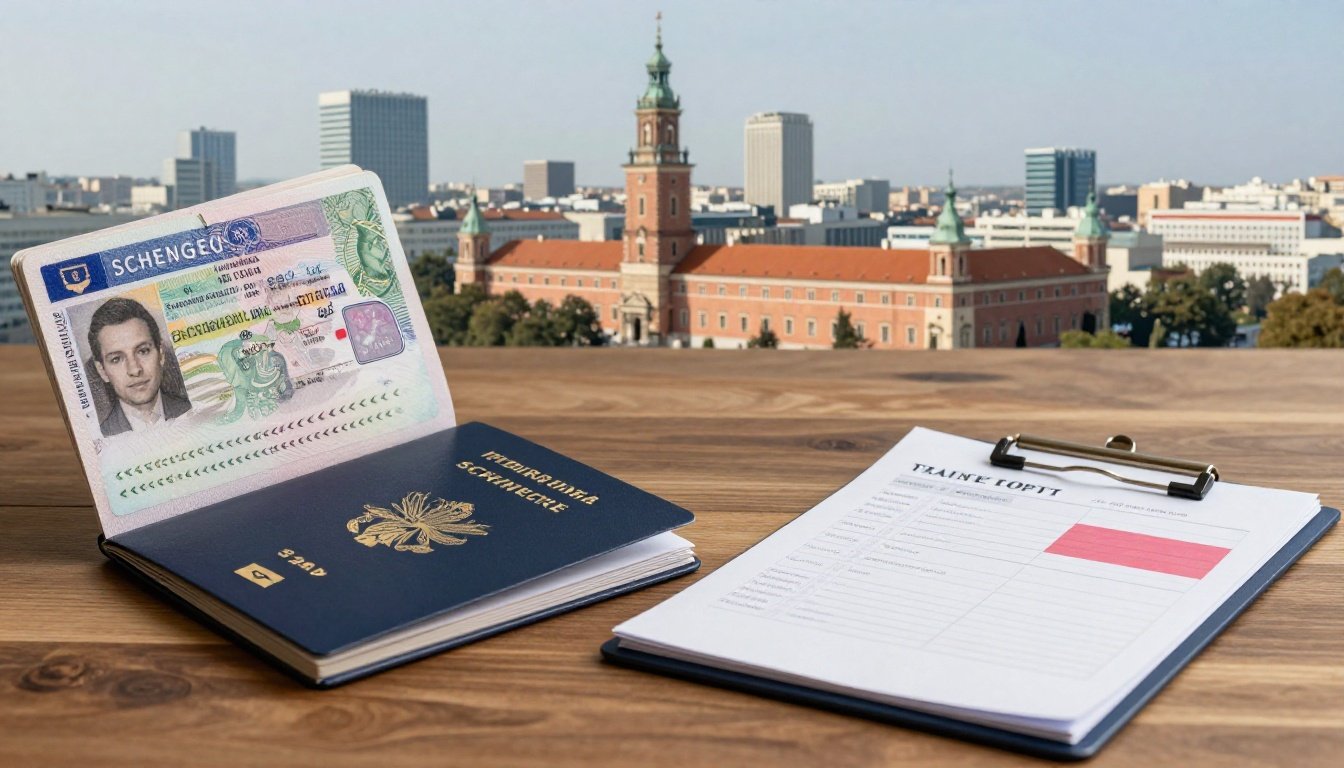
EnuPlanning a trip and trying to figure out the visitor visa Poland rules can feel confusing because Poland follows Schengen rules, not only local ones. This guide breaks it down into plain steps, with the key documents, fees, timing, and common mistakes.
You’ll also see how to check if a third-party visa service is legit, what “cheap” really means in total cost, and how to avoid paying twice. Always confirm prices and policies on the official site.
Quick Answer (Read This First)
- Poland is in the Schengen Area, so a visitor visa Poland is usually a Schengen short-stay visa (Type C) for up to 90 days in any 180-day period across Schengen.
- If you’re visa-exempt (example: U.S., U.K., Canada, Australia), you don’t apply for a visa for short trips, but ETIAS is expected to become mandatory in late 2026 for visa-free travelers.
- Apply in time, standard guidance is no earlier than 6 months and no later than 15 days before travel, but earlier is safer in busy seasons.
- Core must-haves often include a valid passport (issued within the last 10 years), photo, travel medical insurance with at least €30,000 coverage, trip purpose proof, accommodation proof, and proof of funds.
- Biometrics (fingerprints) are common for first-time Schengen applicants, with some exemptions (for example, children under 12).
- Total cost is more than the consular fee if you use a visa center or paid help, add service fees, courier, photos, printing, and possible translation costs.
- “Guaranteed approval” claims aren’t realistic, no one can promise a visitor visa Poland outcome.
- Use official guidance first, start with the Poland MFA visa guidance.
What Is Poland Schengen Visa (Type C) and What Does It Do?
A Poland visitor visa usually means a Schengen short-stay visa (Type C). It lets you visit Poland for tourism, family visits, or business trips, while also allowing travel across other Schengen countries during the same stay.
It’s not a work permit. It’s also not meant for long stays, if you want to stay over 90 days, you’ll typically need a national long-stay visa (Type D) or a residence path.
Poland also has an airport transit visa (Type A) for certain nationalities who only transit through the international zone of a Schengen airport without entering the Schengen Area.
Rules can vary based on nationality and where you apply, so the “right visa” starts with your passport and your travel plan.
Key Features of Visitor Visa Poland
- Short stays up to 90 days in any 180-day period (counts across all Schengen countries).
- Common trip purposes include tourism, visiting family or friends, and business meetings.
- Requires proof of travel medical insurance with minimum €30,000 coverage valid in the Schengen Area.
- Needs clear proof you’ll leave Schengen before the visa expires (strong ties and return plan).
- Often requires biometrics and in-person submission at a consulate or visa center.
- You may receive single-entry, double-entry, or multiple-entry depending on your profile and history.
- Uses Schengen rules, so your “Poland plan” must still fit Schengen-wide limits.
Step-by-Step: How to Use Poland Schengen Visa (Type C)
- Confirm if you need a visa
Check whether your nationality is visa-required for Schengen, or visa-exempt (but still bound by the 90/180 rule). If you’re visa-exempt, watch for ETIAS timing in 2026. - Pick the correct visa type
For most visitors, it’s Type C. If your trip is only airport transit and your nationality requires it, it may be Type A. - Choose where you’ll apply
Apply via the Polish consulate or the official visa application partner in your country, where applicable. - Gather documents and match them to your purpose
Tourism, family visit, and business trips can share core documents, but the “purpose proof” changes. - Book an appointment and prepare for biometrics
Many applicants must submit fingerprints and a photo in person. - Submit, pay, and keep copies
Bring originals and copies, plus any printed forms required at submission. - Track status and wait for a decision
Processing time varies by season and workload. Plan so you’re not stuck rebooking. - Travel with your evidence
Even with a valid visa sticker, border officers may ask for proof of funds, accommodation, and insurance.
Before you pay:
- Confirm the visa category and entry count you need (single vs. multiple).
- Check what fees are refundable (often none, including many service fees).
- Verify the support channel you’ll use if something goes wrong (email, phone, in-person).
- Re-check photo specs and insurance coverage limits to avoid a re-do.
Pricing, Fees, and What “Cheap” Really Means
People search for a “cheap” visitor visa Poland option, but the true cost is usually the total of official fees plus service and prep costs. If you apply through a visa center, you may pay a service fee on top of the consular fee. If you use a third party, you may add consulting fees, document checks, or courier charges.
A low advertised price can still become expensive when you add printing, photos, travel to the appointment, translations, and optional add-ons (SMS updates, premium lounge, courier return).
Example total cost (example only):
- Consular fee: €80
- Visa center service fee: €25 to €40
- Photos and printing: €10 to €25
- Courier return: €10 to €30
Example total: €125 to €175, before travel insurance and transport to the appointment.
Some paid services sell convenience, like error checks, status updates, and support. That can be useful, but it doesn’t change the decision authority.
Pros and Cons
| Factor | Pros | Cons | Best for |
|---|---|---|---|
| Applying directly | Lower extra fees | More admin work | Confident applicants |
| Applying via visa center | Clear process flow | Service fees add up | Busy travelers |
| Using paid visa help | Document checks reduce errors | Not a guarantee | First-time applicants |
| Multiple-entry request | More flexibility | Harder to justify | Frequent Schengen visitors |
| Early application | Less stress | You still need solid docs | Peak season travel |
Common Mistakes (and How to Avoid Them)
- Mistake 1: Mixing up Poland rules with Schengen rules. Fix: Track your total Schengen days, not only Poland days.
- Mistake 2: Weak trip purpose proof. Fix: Provide a tight itinerary and matching bookings or invitation details.
- Mistake 3: Insurance that doesn’t meet Schengen rules. Fix: Confirm at least €30,000 coverage and Schengen-wide validity.
- Mistake 4: Bank statements that don’t “tell a story.” Fix: Show stable income or explain unusual large deposits with proof.
- Mistake 5: Applying too late. Fix: Use the 6-month window when possible and avoid the last 2 to 3 weeks.
- Mistake 6: Wrong photo specs. Fix: Follow the 3.5 x 4.5 cm guidance and use a white background.
- Mistake 7: Missing copies. Fix: Bring copies of passport bio page, visas, and key supporting documents.
- Mistake 8: Overpromising your plan. Fix: Keep your itinerary realistic and consistent with your funds and leave from work.
Is visitor visa Poland Legit and Safe?
A visitor visa Poland is legit when it’s issued by Poland as a Schengen visa through official channels. What people usually mean here is whether a website, agent, or paid visa service is legit and safe to use.
If you use a third party, check three basics: who collects your passport, how you can reach customer service (call center, live chat, email), and what their refund policy says in plain language. Watch out for vague “guaranteed approval” statements.
Some services highlight convenience like online forms, error checks, and status updates, plus privacy and transparency promises such as no hidden fees. Those are helpful claims, but they don’t replace official processing or make approval certain. If you want an official starting point for the rules and visa types, use Poland’s official visa information. For visa center processes in some countries, you may also see details through a partner page such as VFS Poland visa information.
Tips to Get Better Deals
- Apply early so you don’t pay extra for last-minute couriers or rebooked flights.
- Don’t buy non-refundable tickets only to “prove” travel, use bookings that match the visa guidance in your country.
- Keep your itinerary simple, fewer moving parts means fewer document mismatches.
- Use one clean set of documents, consistent names, dates, and addresses.
- Avoid paid add-ons you don’t need (SMS, premium services) if budget matters.
- Choose compliant insurance first, not the cheapest headline price.
- If translations are needed, price them upfront so you don’t get surprised later.
- Don’t pay for “appointment bots” or shady slot sellers, it can backfire.
- Track the 90/180 rule to avoid overstay issues that can lead to refusals later.
- If you’re visa-exempt, plan for ETIAS costs and timing once it goes live in late 2026.
FAQs
1) How long can I stay on a visitor visa Poland?
For a Schengen short-stay visa (Type C), the stay is up to 90 days in any 180-day period across all Schengen countries, not only Poland.
2) Do visa-free travelers need anything for Poland in 2026?
Visa-free travelers still follow the 90/180 rule. ETIAS is expected to become mandatory in late 2026 for visa-exempt nationals, so plan ahead for that extra step.
3) What documents are usually required for a Poland visitor visa?
Common requirements include a valid passport, a completed form, a photo, travel medical insurance with minimum €30,000 coverage, proof of accommodation, proof of funds, and documents showing the trip purpose.
4) Can I get a refund if I cancel my trip?
Usually, visa fees and many service fees are not refundable, even if you cancel. Refunds depend on the specific provider and payment terms you accepted.
5) Is it better to book direct or use a visa service?
Direct is often cheaper but takes more effort. A service can add support and error checking, but it can’t promise approval and may add booking fees.
6) Will I be interviewed for a visitor visa Poland?
Many applicants don’t have a formal interview, but the consulate can request one if they need clarification.
7) How do I avoid a rejection?
Keep your documents complete, consistent, and realistic. Show strong reasons to return home, stable finances, and a clear trip purpose.
8) Can I work remotely on a visitor visa Poland?
A visitor visa is for visiting, not employment. If your plan looks like work, it can cause issues during assessment or at the border.
Conclusion
A visitor visa Poland decision is easiest when you treat it as a Schengen application with a clear story, clear funds, and matching documents. Focus on the basics first: correct visa type, strong purpose proof, insurance, and a realistic itinerary.
If you use any paid help, judge it like a purchase, check service transparency, customer support access, privacy handling, and refund terms. Then confirm details on official pages and submit a clean application.

 Enu
Enu