 Enu
EnuImagine walking through ancient streets lined with red-brick towers, gelato in hand, while earning a degree from one of Europe’s top schools. Italy draws students with its mix of history, food, and Italian universities with English programs that make study abroad simple. Over 60 public universities out of about 90 now offer these options, so you don’t need Italian to join.
From Bologna, the world’s oldest university founded in 1088, to modern hubs like Milan, these schools rank high globally and keep costs low. This post covers why choose them, top picks with specific programs, popular degrees, application steps, fees, scholarships, living costs, and real pros and cons. You’ll get practical tips to start your 2026 intake. Read on to see how Italy fits your goals.
Why Study at Italian Universities with English Programs?
Public universities charge low fees, often under 3,000 euros a year, while delivering world-class education. Cities like Bologna and Rome buzz with student life, from cafes to festivals. No Italian means you focus on studies and travel across Europe easily.
Key benefits include:
- Tuition as low as 1,200 to 2,500 euros yearly for publics.
- Historic campuses that inspire daily.
- Full English instruction in growing fields like engineering and AI.
Job prospects shine too, with EU degrees opening doors. Scholarships help non-EU students cover extras.
Affordable Tuition and High-Quality Education
Public tuition runs 900 to 4,000 euros per year, based on family income. Compare that to UK fees over 20,000 pounds or US privates at 50,000 dollars. Schools like Politecnico di Milano hit QS top 100 globally yet stay cheap. Private options, such as Humanitas University, reach about 23,000 euros but offer specialized training. Regional taxes add little, keeping totals manageable.
No Italian Required for These Degrees
Fully English programs span business, engineering, and medicine. Sapienza University of Rome lists over 50, from physics to classics. Politecnico di Milano has 60 master’s in design and tech. You learn in class without language barriers, though basic Italian aids daily chats.
Top Italian Universities Offering English Programs
Italy’s leaders blend tradition and innovation. Bologna tops national rankings, while Milan excels in tech. Here’s a look at standout choices for 2026, focusing on bachelor’s and master’s for internationals.
University of Bologna: The World’s Oldest University
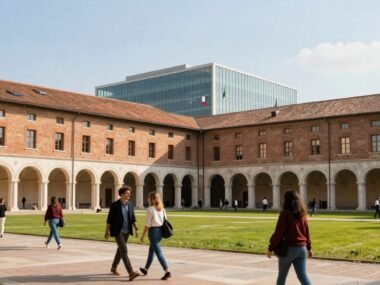
Founded in 1088, it leads Italy in THE 2026 rankings. English options include economics, AI, and genomics engineering at bachelor and master levels. Bologna’s vibrant food scene and porticoed streets make student life lively. Check Unibo’s programs for details.
Sapienza University of Rome: Engineering and More
Europe’s largest university offers 50-plus English programs, strong in engineering, physics, and AI. Non-EU scholarships ease costs. Rome’s history surrounds you.
University of Naples Federico II and Others
Naples Federico II charges 1,200 to 2,500 euros for engineering and medicine in English. Tuscany’s University of Siena runs 17 programs in business and sustainability. Vita-Salute San Raffaele in Milan focuses on medicine at 20,000 euros. Humanitas near Milan emphasizes practical med training at 23,000 euros. Tor Vergata near Rome shines in MBA and economics. University of Padua adds biomedical and global studies. Politecnico di Milano dominates with 60 English master’s in architecture and design.
Popular English-Taught Degrees in Italy
Fields like business and STEM draw crowds. Bachelor’s often need high school diplomas; master’s require relevant degrees.
Standouts:
- Business and economics at Bologna or Siena.
- Engineering at Politecnico di Milano or Padua.
- Medicine at Humanitas or Naples Federico II.
- AI and innovation at Sapienza.
These prepare you for global jobs.
Bachelor’s Programs in English
Options include international studies at Bologna or business management at Siena and Messina. Entry asks for IELTS 6.0-plus and transcripts. Programs last three years.
Master’s and PhD Options
Tor Vergata’s MBA, Bologna’s genomics, or Humanitas medicine lead. Padua offers cognitive neuroscience PhDs. Many include industry ties.
How to Apply to Italian Universities with English Programs
Start early for fall 2026; deadlines hit April to July.
- Pick programs on university sites.
- Verify requirements: diploma, IELTS/TOEFL (6.0-6.5), sometimes exams.
- Apply online via school portals.
- Get pre-evaluation or offer.
- Non-EU: pre-enroll on Universitaly portal, then visa.
- Gather funds proof, insurance, housing plan.
- Arrive, enroll, get residence permit.
Tuition, Scholarships, and Living Costs
Publics: 2,000-3,500 euros yearly, income-adjusted. Privates higher.
Scholarships: DSU regional (income-based), uni ones like Unibo Action (waivers plus stipends), MAECI government aid.
Living: 700-1,200 euros monthly.
| Category | Monthly Cost (Euros) | Notes |
|---|---|---|
| Rent (shared) | 400-700 | Higher in Milan/Rome |
| Food | 200-300 | Groceries + eating out |
| Transport | 25-40 | Student pass |
| Total | 800-1,200 | Smaller cities cheaper |
Pros and Cons of Studying in Italy
| Pros | Cons |
|---|---|
| Low tuition, high rankings | Bureaucracy slows processes |
| Rich culture, food, travel | Housing tight in big cities |
| English programs growing | Theoretical teaching style |
| EU degree boosts careers | Italian needed for jobs/life |
Conclusion
Top picks like Bologna, Sapienza, and Politecnico di Milano make Italian universities with English programs a smart choice for 2026. Low costs, quality rankings, and no language barrier offer real value. Verify details on official sites and apply soon.
Ready to study amid Italy’s wonders? Pick your program, check scholarships, and start your application today. Your adventure awaits.

 Enu
Enu