 Enu
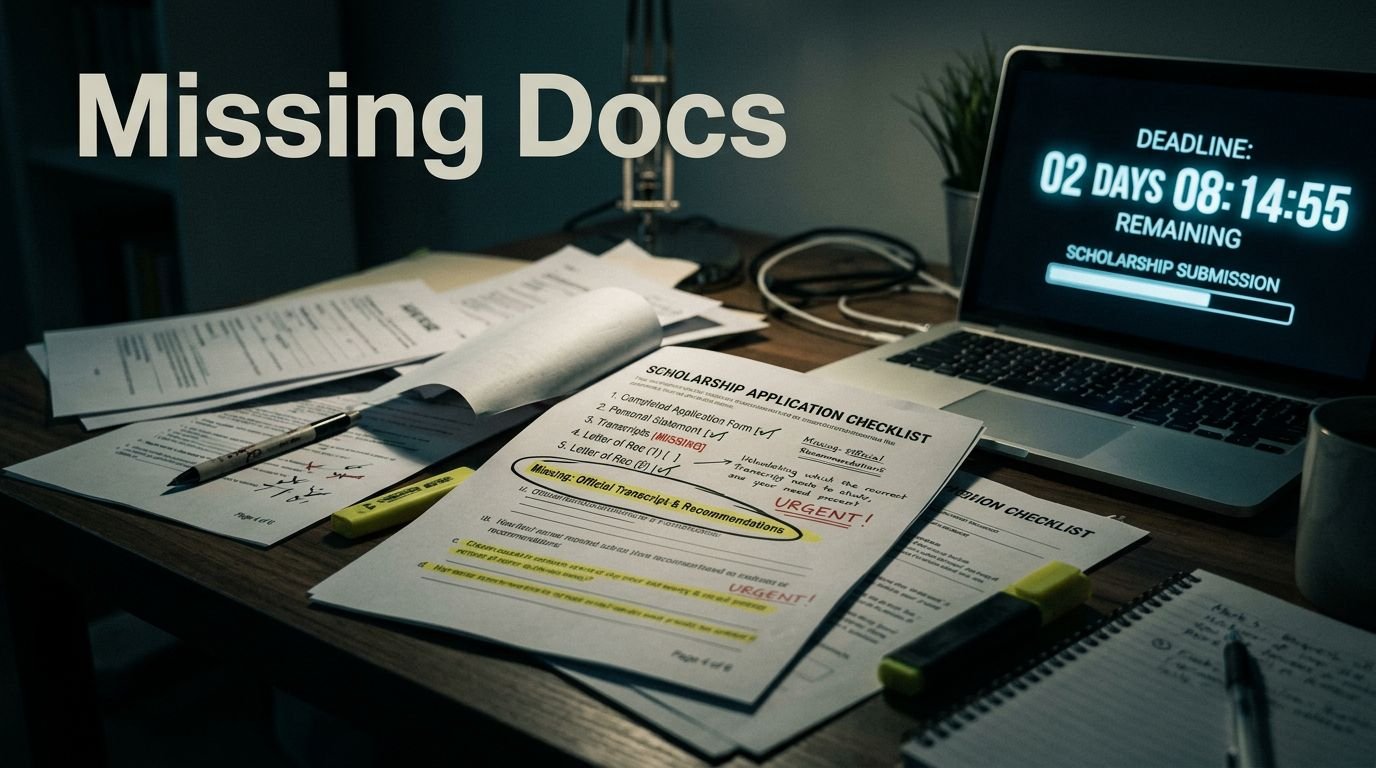
EnuA strong scholarship essay can still lose to one missing page. That is the part nobody likes to hear, but it happens all the time, especially when the scholarship documents are buried in a long checklist and the deadline is close.
We usually remember the big pieces, like grades and personal statements. The problems start with the small forms, the extra copies, and the files that look optional until they are not. If we are also sorting out overseas funding, our how to get funding for international studies guide helps us line up the right awards before we begin uploading anything.
The paperwork you often overlook
Most scholarship applications look simple on the surface. Then we open the instructions and find a second layer of requests hiding in plain sight.
That is why the safest habit is to read the full application twice. Citizens Bank’s overview of common scholarship information requirements shows how often basic details and supporting files go together. The essay might get the attention, but the paperwork gets checked first.

Some scholarships ask for a passport copy. Others want proof of residency, household income, or a signed consent page. Transfer students may need school records from two institutions. International applicants may also need translated copies or certified versions of their files.
The trick is that each provider writes its own rules. A document that feels minor to us can be the one thing that holds up review. When we treat every upload like a required piece, the application starts to look less like a pile of papers and more like a complete package.
If a form is listed anywhere in the instructions, we submit it as if it were mandatory.
Scholarship documents we see forgotten most often
Many applicants stop after the main essay and transcript. That is where the trouble begins. A useful second pass comes from this guide to scholarship supporting documents, which shows how much weight the small extras can carry.
Here is a quick side-by-side look at the files that get missed most often.
| Document | Why it gets missed | What we do |
|---|---|---|
| Passport or national ID | It feels obvious, so nobody saves a clean copy | We scan both sides and check the expiration date |
| Official transcript | A screenshot looks easier than an official file | We request the school-issued version early |
| Proof of enrollment or admission | Students assume their status is already known | We upload the latest letter or registration proof |
| Income or tax documents | Families do not expect financial proof for every award | We gather the current year’s form before the deadline |
| Recommendation letter form | The recommender has the letter, but not the correct form | We send the exact template and follow up |
| Translation or certification | Non-English documents often need extra stamps | We check whether a certified translation is required |
| Test score report | Uploading a score sheet is not the same as an official report | We send the official score through the test provider when needed |
| Signature or consent page | These pages look like a final step, so they get skipped | We sign every page before the upload run |
| Portfolio or work sample | Arts and design applicants think it is optional | We test every file and link before submitting |
The main lesson is simple. The document that feels routine is often the one that slips away. If we are applying for a study abroad award, it also helps to keep the bigger process in view with the complete study abroad application process, since document rules usually connect to admissions, housing, and visa steps too.
A quick checklist before we hit submit
Before we press the final button, we use the same checklist every time. It saves us from the classic panic of finding out, ten minutes later, that one file never uploaded.
Scholarship providers do not all ask for the same package. We always follow the official application instructions line by line.
Before submission, we check:
- Our name matches across the application, transcript, and ID.
- Every required file is in the right format, usually PDF.
- The transcript is official if the scholarship asks for one.
- Recommendation letters are sent the way the provider wants.
- Any income, tax, or FAFSA-related form is the current version.
- Translation pages are attached when the original document is not in English.
- File names are clear, not random strings of numbers.
- Portfolios, videos, or links open correctly on another device.
- Signatures and initials appear on every required page.
- The confirmation screen or email is saved after submission.
Parents can help here too. A second set of eyes catches missing signatures, expired IDs, and dated forms faster than we do after midnight.
The best version of this checklist is the one tied to the actual scholarship. If the provider says “official transcript,” we do not send a student copy. If the portal asks for a separate upload for financial documents, we do not tuck them into a single file and hope for the best.
Last-minute mistakes that cost applicants points
The biggest mistakes rarely come from bad grades or weak essays. They come from rushed uploads. A blurry photo of a birth certificate, a transcript saved as the wrong file type, or a recommender who sent a letter to the wrong inbox can all break the flow.
Timing matters too. Some scholarships close at midnight local time, not ours. That detail can wreck an otherwise ready application. We also need a buffer for school offices, since transcript requests and recommendation letters often move slower than expected.
A few small habits help a lot. We save everything in one folder, open each file before uploading, and keep a backup copy in cloud storage. We also submit early enough to handle one surprise. A portal error at 11:58 is not the kind of drama we need.
One more mistake shows up all the time. We assume “optional” means “unnecessary.” Sometimes it does. Sometimes it means “optional if you want your file to look complete.” That is why the instructions matter more than guesswork.
Conclusion
The missing piece in a scholarship application is often not the essay. It is the passport copy, the official transcript, the signed form, or the income document that nobody expected to matter.
When we slow down and check the scholarship documents one by one, the whole process gets cleaner. We save time, we cut the stress, and we stop losing awards to paperwork we could have caught early.
The simplest rule still wins. Read the official instructions, compare them with our checklist, and submit every required file before the deadline starts breathing down our neck.
This post may contain affiliate links. If you make a purchase through these links, I may earn a small commission at no extra cost to you.


 Enu
Enu