 Enu
EnuTrying to study medicine abroad can feel like picking a route in fog. Admissions rules change by country, tuition can swing from “manageable” to “impossible,” and the biggest risk is ending up with a degree that doesn’t help you practice where you want to live.
This guide gives you a simple framework for 2025: how MBBS and MD paths differ, what to verify before you apply, how to estimate full costs, and how to avoid the mistakes that cost people a year (or a lot more).
Always confirm prices and policies on the official site.
Quick Answer (Read This First)
- MBBS vs MD: MBBS is usually an undergraduate medical degree (often 5 to 6 years after high school), MD is often graduate-entry (commonly 4 years after a bachelor’s).
- Recognition comes first: before you apply, check whether your target country accepts the degree for licensing and residency.
- Expect an entrance test: examples include UCAT/BMAT (common for UK-style tracks), IMAT (Italy), and MCAT (US/Canada style graduate-entry).
- Costs vary a lot (broad estimates): US/UK/Australia often higher, parts of Europe, Turkey, China, and Georgia can be lower (tuition and living costs both matter).
- Language can decide your clinical years: many “English-taught” programs still need local language in hospitals.
- Plan your return path early: in the US, you may face a foreign graduate pathway plus major exams after graduation.
- Best for: budget-focused students often prioritize lower-cost countries with clear clinical placement plans, research-focused students often choose systems with strong academic hospitals and structured pathways.
What it really means to study medicine abroad (MBBS vs MD, and where you can practice later)
When people say they want to study medicine abroad, they usually mean one of two systems.
An MBBS-style program typically starts right after high school. It’s often longer, because it includes pre-clinical years plus clinical training built in. Many countries use MBBS (or equivalent naming) as the primary medical degree.
A graduate-entry MD-style path usually expects you to finish a bachelor’s degree first, then apply. The medical program is often shorter, but you spent time and tuition on undergrad.
Here’s the part many applicants learn late: the toughest hurdle is often not admission, it’s licensing where you want to work after graduation. If your goal is to practice in the US, your checklist looks different than if you plan to practice in the UK, Ireland, Australia, or the EU.
Also, “English-taught” doesn’t always mean “English in the hospital.” You may take lectures in English, then still need local language skills for patient interviews, charts, and ward rounds in clinical rotations.
Fast checklist: questions to answer before you pick a country
- Where do I want to practice after graduation?
- Does my target regulator accept this international medical degree?
- What exam(s) will I need after graduation (and when can I take them)?
- Is an internship year included, guaranteed, and recognized?
- What language is required for hospital placements in clinical years?
- What are the student visa rules about work and clinical placement?
- Are rotations arranged by the school, or do I find them myself?
Key Features of study medicine abroad
Strong options to study medicine abroad usually share a few traits:
- Recognized curriculum that matches international standards for core sciences and clinical skills
- Real hospital-based clinical training, not just classroom teaching
- A clear internship path (and clarity on whether it counts for licensing later)
- Transparent fees and a written breakdown of what’s included
- Student support for housing, onboarding, and clinical placement logistics
- Language support when local language is needed for patient care
- A fit for your goals (specialty interest, research, budget, location)
Step-by-Step: How to plan and apply to study medicine abroad
- Start with your end point: choose where you want to practice, then work backward.
- Compare degree types (MBBS abroad vs graduate-entry MD) and timeline.
- Confirm entry requirements: science grades, prerequisites, and required coursework.
- Line up tests: IELTS/TOEFL for English, plus entrance exams (UCAT/BMAT/IMAT/MCAT depending on country).
- Prepare your application set: transcripts, personal statement, recommendations, and proof of funds.
- Practice interviews: many schools use MMI-style stations or a panel interview.
- Apply early and track deadlines, some intakes fill faster than you expect.
- After acceptance, plan logistics: visa, insurance, housing deposit, flights, and arrival dates.
Before you pay: a mini checklist to avoid expensive mistakes
- Confirm total costs in writing (tuition, deposits, housing, insurance, exam fees).
- Confirm what tuition includes (lab fees, clinical placement fees, student services).
- Confirm refund rules and deadlines for deposits and tuition.
- Confirm if clinical years require local language (and what level).
- Confirm the degree’s recognition for your target country before paying.
Pricing, fees, and what “affordable” really means when you study medicine abroad
“Affordable” can be misleading when you study medicine abroad, because tuition is only one slice. Your real total usually includes tuition, rent, food, transport, visa costs, health insurance, flights, school supplies, and sometimes separate fees for labs or clinical placement.
Broad estimates for 2025: programs in the US, UK, and Australia often sit in higher total-cost bands, while parts of Europe and destinations such as Turkey, China, and Georgia can be lower on tuition (but you still need to price housing and travel). Caribbean medical school abroad options can look straightforward on admissions, but you should budget carefully for travel and exam steps.
Image suggestion: A simple comparison chart showing tuition, living costs, and extra fees for 4 study destinations.)
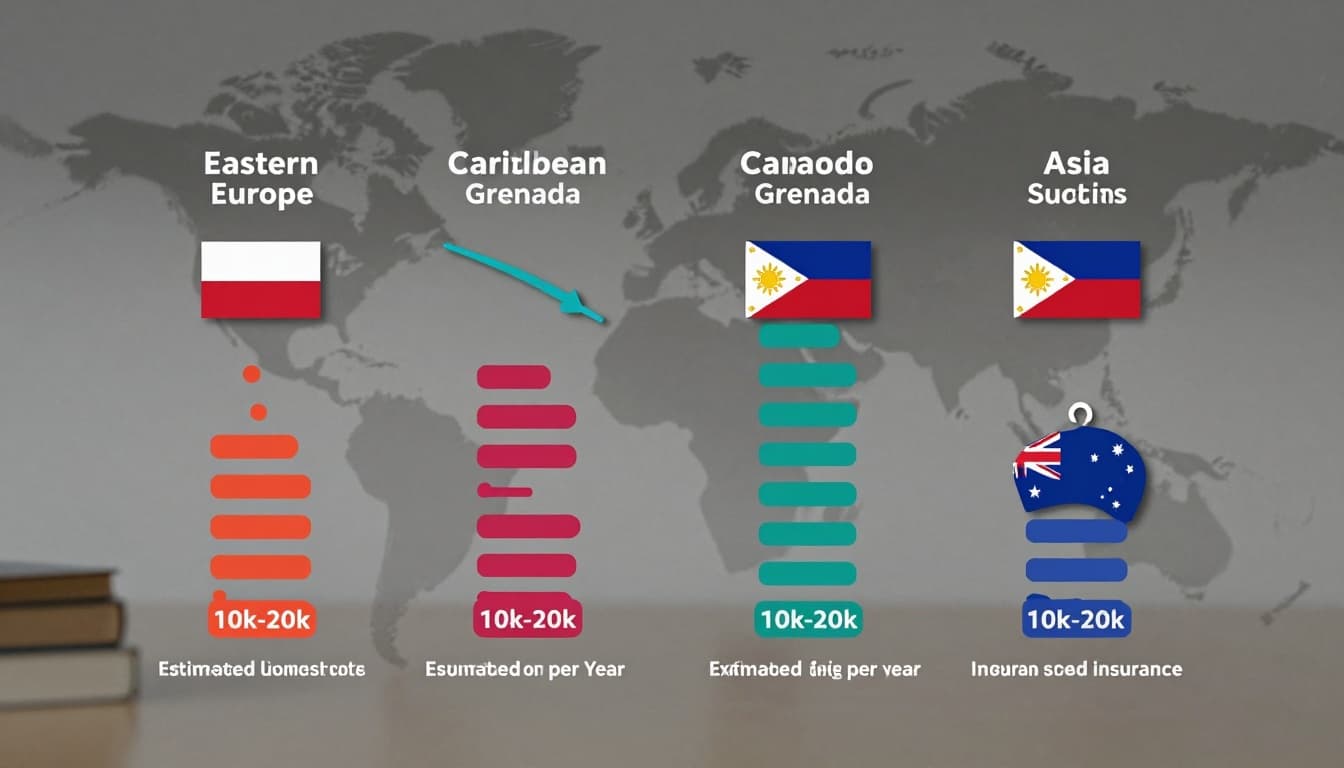
Example (simple math, not a quote): tuition $18,000 per year + living costs $12,000 per year + exams/insurance/travel $4,000 per year. Your rough annual total is $34,000, and a 5-year program could land around $170,000 before any unexpected costs.
Pros and Cons of studying medicine abroad
| Area | Pros | Cons |
|---|---|---|
| Cost | Some countries offer lower tuition and living costs | “Cheap” can disappear once travel, exams, and repeats add up |
| Admissions | Some routes have more seats and flexible entry | Entry tests and interviews can still be demanding |
| Language and culture | You build real cross-cultural skills | Local language may be required for clinical rotations |
| Clinical exposure | Different health systems can sharpen your skills | Clinical quality varies, you must verify placement support |
| Licensing/recognition | Can open doors globally if planned well | Returning home can be complex without early planning |
Common mistakes (and how to avoid them) when you study medicine abroad
- Choosing based on low tuition only: price the full 5 to 6-year total before committing.
- Not checking recognition: verify acceptance with your target regulator first.
- Ignoring language requirements: confirm hospital language needs for clinical years.
- Missing deadlines: build a calendar for tests, documents, and visa steps.
- Underestimating living costs: budget rent and deposits, not just groceries.
- Assuming transfers are easy: treat transfers as rare, ask for written policies.
- Not planning licensing exams early: map exam timing and eligibility from year one.
- Paying through unofficial channels: only use the university’s stated payment method.
Is it legit and safe to study medicine abroad? What to check before you commit
Yes, it can be legitimate and safe, but only if you verify the basics yourself. Start with official accreditation and the school’s authority to award a medical degree. Then confirm the program has real clinical training with named hospitals or formal placement agreements.
Check who issued your acceptance letter (and from what email domain), and make sure tuition payments go to an official university account. If anything feels unclear, pause and verify before you send money.
For extra confidence, cross-check the university on the country’s education ministry site or a national regulator where possible, and compare the program’s stated pathway with your target licensing rules.
Tips to get better value and better outcomes abroad (not just a lower price)
- Apply early, popular intakes fill quickly.
- Shortlist by recognition first, then compare schools.
- Compare total cost, not just tuition.
- Ask where clinical rotations happen and who arranges them.
- Plan language learning before clinical years start.
- Budget for exams, travel, and document fees each year.
- Ask about tutoring and academic support for tough pre-clinical subjects.
- Look for scholarships, but read the renewal rules.
- Talk to current students or alumni about workload and placements.
- Keep your return-home plan updated every year.
FAQs about how to study medicine abroad
MBBS vs MD, what’s the real difference?
MBBS is often undergraduate-entry, MD is often graduate-entry. Both can lead to practice, but licensing rules decide the real outcome.
Do I need the local language?
Often yes for clinical years, even in English-taught programs. Confirm hospital requirements in writing.
Can I transfer schools later?
Sometimes, but it’s not common. Credits may not match, and licensing bodies may care where core clinical training happened.
How long does it take?
Commonly 5 to 6 years for MBBS-style tracks, around 4 years for MD after a bachelor’s.
What exams might I face after graduation?
It depends on your target country. Plan for licensing exams and possible additional steps for foreign graduates.
How do I verify recognition?
Check your target country’s regulator and the school’s official accreditation and program approval.
Agent or direct application, which is better?
Direct gives you control. If you use an agent, still verify everything on the university site and demand all terms in writing.
Conclusion
The simplest way to study medicine abroad without regret is to decide where you want to practice first, then match the degree type (MBBS vs MD), then confirm language needs and full costs, then apply.
If you’re serious about 2025 intake timing, your next step is practical: make a shortlist, then verify each program on official university and regulator pages before paying any fees. That’s how you protect both your money and your future medical license.


 Enu
Enu