 Enu
EnuImagine studying in a country famous for bikes, clean air, and companies like Lego and Novo Nordisk. Denmark offers world-class education with a focus on innovation and work-life balance. Danish universities for international students draw talent from everywhere thanks to high QS World University Rankings 2026 spots, like University of Copenhagen at #101 and DTU at #107.
These schools provide many English-taught programs, especially at Master’s level. Non-EU students face tuition but find scholarships and part-time jobs. This guide covers top picks, application steps, costs, visas, pros and cons, and tips. You’ll get facts from official rankings and real-time data to decide if Denmark fits your goals.
Quick Answer: Top Danish Universities for International Students
Busy? Here’s the essentials on leading options:
- University of Copenhagen (KU): QS #101, strong in life sciences and health; 50+ English Master’s; tuition ~€10k-15k/year for non-EU.
- Technical University of Denmark (DTU): QS #107, engineering and tech leader; most Master’s in English; ~€15k/year.
- Aarhus University: QS #131, 50+ English programs in business, health, CS; €8k-15k/year.
- University of Southern Denmark (SDU): QS #303, business and health focus; English options; ~€10k-17k/year.
- Aalborg University (AAU): QS #306, project-based engineering; English Master’s; similar fees.
- Copenhagen Business School (CBS): Top for business (no overall QS rank but excels in subjects); English MBA programs; ~€15k-18k/year.
- All offer scholarships; non-EU tuition €6k-21k/year; living ~€1k/month.
These stand out for quality and employability.
What Makes Danish Universities Stand Out for International Students?
Denmark ranks high globally for education quality. Schools like KU and DTU score well in QS 2026 for research and teaching. Students learn through projects and teamwork, not just lectures. This builds real skills employers want.
English is common, especially in Master’s programs. Over 50 at KU and Aarhus alone. Non-EU students from Asia, Africa, and the Americas choose Denmark for safe cities and green focus. Copenhagen and Aarhus feel welcoming with bike paths and cafes.
Compared to neighbors, Denmark stresses sustainability and innovation. Classes mix theory with practice, like industry projects at DTU. Graduates land jobs fast in tech or pharma. It’s practical, not just book-smart.
Key Features of the Best Danish Universities
- Plenty of English-taught Master’s (50+ at KU, Aarhus; most at DTU).
- Project-based learning at AAU prepares for real work.
- Business excellence at CBS with global networks.
- Engineering and tech strength at DTU with internships.
- University scholarships cover partial tuition for top non-EU applicants.
- Part-time work up to 20 hours/week allowed on student visa.
- High employability rates; many stay post-graduation.
University of Copenhagen (KU)
KU tops QS 2026 at #101. It shines in life sciences, health, and humanities. Over 50 English Master’s like biomedicine draw internationals.
Non-EU tuition runs €10k-15k/year. Entry needs IELTS 6.5+ or TOEFL 83+, plus a relevant Bachelor’s (GPA equivalent to Danish 7/12). Scholarships for high achievers cut costs.
Visit KU studies page for programs.
Technical University of Denmark (DTU)
DTU sits at QS #107, Denmark’s engineering powerhouse. English Master’s dominate in IT and renewables.
Tuition ~€15k/year (€7.5k/semester). Admissions require strong STEM background, English proof. Projects link to firms like Maersk.
Aarhus University
Aarhus ranks #131 in QS 2026. It offers 50+ English Bachelor/Master’s in business, health, computer science.
Fees €8k-15k/year for non-EU. Needs high school diploma or Bachelor’s, IELTS 6.5. Vibrant campus in student city Aarhus.
Other Strong Options: SDU, AAU, and CBS
SDU (#303 QS) excels in business, health; English programs; €10.8k humanities, €17.3k engineering/year.
AAU (#306) uses problem-based learning for engineering; English Master’s.
CBS leads business; English MBAs; fees ~€15k-18k. Great for finance careers.
Step-by-Step: How to Apply to Danish Universities as an International Student
- Pick program and school: Use uni sites; match your field (e.g., DTU for engineering).
- Check requirements: Bachelor’s for Master’s (Danish GPA 7+ equivalent); IELTS 6.5/TOEFL 83+.
- Gather docs: Transcripts, CV, motivation letter, passport copy.
- Apply online: Via uni portal by March 1 for September start (some January deadlines).
- Pay application fee: ~€150 at Aarhus.
- Get decision: 2-6 weeks; pay deposit if accepted.
- Apply for visa: After letter.
- Enroll: Register on arrival.
Before applying checklist:
- Confirm English-taught.
- Note deadlines (early for scholarships).
- Prove funds for visa (~€12k/year living).
Tuition Fees, Scholarships, and Living Costs in Denmark
Non-EU pay €6k-21k/year; Bachelor’s/Master’s €8k-18k, engineering/business higher (DTU €15k, SDU €17k science). EU free.
Scholarships: Uni-specific (KU talent grants), government via unis. Apply with admission; cover partial/full tuition.
Living: €1k-1.4k/month (€15k-30k/year). Copenhagen €1.4k (rent €700, food €300); smaller cities cheaper. Example: €12k tuition + €15k living = €27k/year total.
Budget food, transport; student discounts help.
Pros and Cons of Studying at Danish Universities
| Pros | Cons |
|---|---|
| Top QS rankings (KU #101) | High tuition (€6k-21k non-EU) |
| Many English programs | Expensive living (€1k+/month) |
| Safe, high-quality life | Cold winters |
| Project learning, internships | Competitive entry |
| Work rights (20 hrs/week) | Danish needed for some jobs |
| Strong employability | Fewer Bachelor English options |
Balanced choice for ambitious students.
Danish Student Visa Process for Non-EU International Students
Get admission letter first. Pay first tuition semester.
Apply online via SIRI (Danish Immigration). Submit: passport, acceptance, funds proof (€12k/year bank statement), health insurance.
Book biometrics at VFS/embassy. Processing 1-3 months; fee ~€300.
On arrival: Register for CPR number (ID/healthcare). Pitfalls: Weak funds proof delays; apply early.
Common Mistakes When Applying to Danish Universities and How to Avoid Them
- Miss deadlines: Apply by March 1; set calendar reminders.
- Low English scores: Prep IELTS early; aim 7.0.
- No funds proof: Save €12k+ statements for visa.
- Ignore costs: Calc tuition + living upfront.
- Generic motivation letter: Tailor to program/uni.
- Wrong qualifications: Check Danish GPA equivalent.
- Skip scholarships: Apply same time as admission.
- Forget app fee: Budget €150.
Plan ahead.
Tips for Success and Better Opportunities in Denmark
- Learn basic Danish via free uni apps.
- Hunt scholarships early; check QS or uni sites.
- Network at career fairs; DTU has industry links.
- Grab part-time jobs (cafes, tech).
- Pick sustainability fields; Denmark leads.
- Use career services for CV help.
- Budget: Cook, bike, share housing.
- Attend webinars/open days.
- Join student groups for friends.
- Plan post-study work visa.
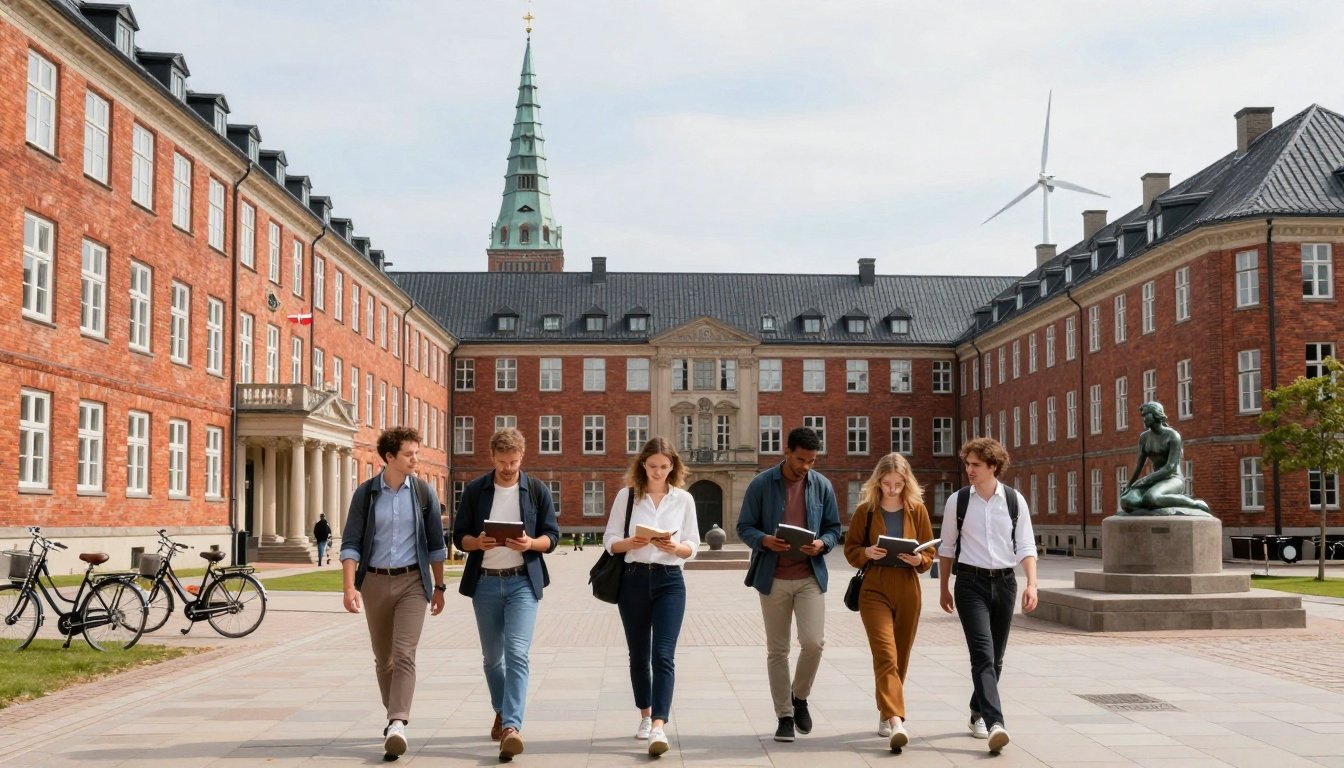
Students like those at Aarhus thrive this way.
FAQs About Danish Universities for International Students
Are there English programs? Yes, 50+ Master’s at KU/Aarhus; most DTU.
What are tuition fees? €6k-21k/year non-EU; varies by program.
Visa requirements? Admission letter, funds €12k/year, insurance via SIRI.
Scholarships available? Uni grants; apply with app.
Popular courses? Engineering (DTU), business (CBS), health (KU).
Can I work? 20 hours/week; full summer.
Application deadlines? March 1 autumn; check unis.
Living costs? €1k-1.4k/month.
Conclusion
Danish universities for international students offer top rankings, English programs, and career boosts in safe settings. Match your field: KU for sciences, DTU engineering, Aarhus broad options.
Weigh costs against quality. Start by visiting uni sites like KU, apply early, seek counseling. Your Denmark adventure awaits; verify details officially.


 Enu
Enu