 Enu
EnuStudy Abroad Packing and Arrival Checklist for Nigerians is the quickest way to avoid the usual first-week stress: missing documents, roaming charges, cash problems, and a messy housing move-in. This listicle lays out what to pack, what to keep in your carry-on, what happens at the airport, how SIM and banking usually work, how to set up housing fast, and how to plan a realistic first-week budget (with a Luxembourg focus).
Always confirm prices and policies on the official site, especially visa rules, airline baggage limits, and health entry requirements, because they change often.
1) Documents and “No-stress” paperwork pack (carry-on first)
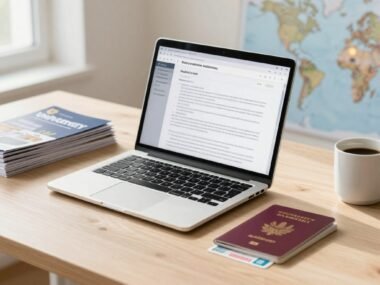
This Study Abroad Packing and Arrival Checklist for Nigerians starts with paperwork because it’s the one thing you can’t replace quickly. The safest approach is a “3-layer” system: originals in a slim folder, photocopies in a second sleeve, and digital scans stored in two places (phone plus cloud).
Include passport, entry visa (if required), admission letter, proof of enrolment, housing letter, insurance proof, and scholarship or sponsorship letters. A simple one-page sheet with emergency contacts helps when your phone is dead or your SIM isn’t active yet.
Health paperwork matters more than people expect. Nigerians often carry a Yellow Card (yellow fever certificate) for international travel; where it’s required depends on current health rules and routing, so it’s treated like a standard travel document in many Nigerian student folders.
2) Money, proof of funds, and payment backups (cash, cards, and access)
This Study Abroad Packing and Arrival Checklist for Nigerians works best when money is split across at least three access methods. A common setup is (1) a bank card for ATM withdrawals abroad, (2) a second card kept separate, (3) a small amount of cash in the destination currency for day-one transport and food.
For Luxembourg, official student guidance highlights that arrivals often face several upfront payments close together (registration related costs, first rent, deposit/guarantee, insurance, and food). Some university guidance even lists a “starting budget” figure, which is useful as a planning anchor even if personal costs differ. See the University of Luxembourg’s page on student cost-of-living budgeting for an example of how institutions break down first-arrival costs.
Also include printed or offline-access versions of key financial proofs that may be requested in admin processes: sponsor letters, scholarship award letters, and recent statements. Even when nobody asks, having them reduces back-and-forth in the first week.
3) Packing essentials overview (must-haves, nice-to-haves, avoid)
This Study Abroad Packing and Arrival Checklist for Nigerians gets easier when packing decisions are grouped. The point isn’t to pack everything; it’s to pack what’s hard to replace quickly in a new country, then leave room for local buying.
| Category | What it covers | Examples |
|---|---|---|
| 🔴 Must-haves | Items that protect travel, health, and study access | Documents folder, laptop, chargers, prescription meds, warm layers (for cold destinations), basic toiletries for 48 hours |
| 🟢 Nice-to-haves | Comfort and productivity boosters | Noise-cancelling headphones, extra laptop sleeve, small extension cord, snack pack |
| ⚪ Avoid/limit | Heavy items that are cheaper or easier to buy on arrival | Full kitchen sets, bulky bedding, multiple big shoe pairs, heavy textbooks |
For many Nigerian students, a well-planned packing list is tied to the application timeline. People who start early often do better: they build documents in stages (statement, CV, recommendations), then finalize with corrections, then pack with a clear plan and fewer last-minute purchases.
4) Clothing strategy for weather, culture, and campus life
This Study Abroad Packing and Arrival Checklist for Nigerians treats clothes as a system, not random outfits. For Luxembourg and much of Europe, temperature changes can be quick across the year, so layering usually beats single heavy pieces.
A balanced set includes a warm jacket, a light waterproof layer, a few long-sleeve tops, and comfortable trousers. Add one “formal enough” outfit for orientation, presentations, or a part-time job interview, since those can happen early.
Footwear is a big deal in walkable student cities. One comfortable walking pair and one weather-ready pair covers most weeks. Overpacking shoes is a common luggage regret because they’re heavy and take space.
5) Electronics, adapters, and secure backups (study-ready on day one)
This Study Abroad Packing and Arrival Checklist for Nigerians is incomplete without a power plan. Pack a universal adapter (the right plug type depends on destination), at least two charging cables, and a power bank that meets airline limits. Keep all of it in your carry-on because checked bags can go missing.
A simple backup routine keeps you calm when something breaks. Store scans of documents, academic files, and key passwords in a secure cloud folder, and keep an offline copy on your phone. Add a laptop lock if you’ll study in shared spaces.
Also include a plan for phone security: PIN, biometric lock, and “find my device” features set up before flying. The first week includes crowded transport, new housing keys, and lots of movement.
6) Toiletries, health kit, and “Nigeria-specific” basics
This Study Abroad Packing and Arrival Checklist for Nigerians treats health items as high priority because replacing them abroad can take time, especially prescription meds. A practical bundle often includes a 1 to 3-month supply of prescription medication with a doctor’s note, plus basic first-aid items (plasters, antiseptic wipes, pain relief, allergy medication).
Many Nigerian travellers add familiar over-the-counter items that they already know how to use. The key is keeping quantities travel-friendly and packed properly for airport screening.
Cold weather can also affect skin and breathing more than expected. Simple items like lip balm, moisturizer, and a small pack of tissues often become daily essentials.
7) Airport steps in Nigeria (before departure, check-in, and security flow)
This Study Abroad Packing and Arrival Checklist for Nigerians includes a clear airport flow because it saves time and reduces missed flights. The usual process includes online check-in (when available), baggage drop, immigration exit checks, security screening, and gate boarding.
Baggage rules vary by airline and route. Most long-haul tickets include a standard checked allowance, but weight limits and extra bag fees differ. A home luggage scale helps avoid repacking on the airport floor.
Security screening typically requires liquids in small containers, and electronics sometimes need to be placed separately for scanning. Keep documents and a pen accessible for forms, and keep a small snack and water plan for long queues.
8) Arrival airport steps (immigration, customs, baggage, and first transport)
This Study Abroad Packing and Arrival Checklist for Nigerians covers arrival in a practical order: follow signs to immigration, present passport and supporting documents, complete biometrics if required, then collect baggage and pass customs.
Immigration questions often focus on purpose of travel, accommodation address, and how long the stay will be. Keeping your accommodation confirmation and university letter in your carry-on folder reduces fumbling at the desk.
After customs, transport is the first real expense decision. Many students choose either a pre-arranged pick-up (more predictable) or public transport (usually cheaper). For Luxembourg specifically, students often rely heavily on public transport once settled, since it’s widely known for being free nationwide for most standard routes, which changes the weekly transport budget shape compared to many other countries.
9) SIM setup (eSIM vs physical SIM, activation, and avoiding roaming shocks)
This Study Abroad Packing and Arrival Checklist for Nigerians treats SIM as a day-one tool, not a “later” task. The first week involves calls with landlords, school admin, delivery drivers, and bank appointments. Without local data, every small task takes longer.
A simple structure is: choose between eSIM and physical SIM, confirm ID requirements (passport is commonly used), buy a starter plan, then test calls and data immediately. Many students turn off international roaming on the Nigerian line before landing to avoid surprise charges, then use WiFi until the local SIM is active.
If Luxembourg is the destination, plan for cross-border signal reality. Luxembourg is small and close to other countries, so phone settings can sometimes hop networks. Knowing where your provider’s fair-use or roaming rules apply helps keep costs predictable in the first month.
10) Bank account opening (what’s usually needed, timelines, and transfers)
This Study Abroad Packing and Arrival Checklist for Nigerians includes banking because it affects rent deposits, salary payments from student jobs, and smoother transfers from home. Banks often ask for identity, proof of address, and sometimes proof of student status.
Proof of address can be tricky during the first days if you’re in temporary accommodation. That’s why many students time their bank visit after they have a signed housing contract or official housing letter.
For Luxembourg settling-in tasks, the government’s official guide explains the early practical steps people typically handle after arriving, including admin formalities that connect to banking and local life. Keep it bookmarked as a reference point: Luxembourg settling-in practical guide.
11) Housing setup (temporary stay, long-term lease, and move-in essentials)
This Study Abroad Packing and Arrival Checklist for Nigerians treats housing as a two-stage process: secure a safe first night, then stabilize long-term. The first night might be a university residence check-in, a short-stay booking, or a friend’s place, depending on what’s confirmed before travel.
Long-term housing has its own checklist: signed contract, deposit rules, what utilities are included, and what furniture is provided. Many students lose money or time by assuming “furnished” means fully equipped. Even in furnished rooms, basics like bedding, hangers, a bin, and simple cookware are often needed quickly.
Move-in day essentials fit into a small shopping list that’s easy to complete in 60 to 90 minutes: bedsheet set, towel, basic cleaning spray, sponge, laundry detergent, and a few food staples. This approach keeps luggage lighter and reduces airline fees.
12) First-week budget (what to expect, one-time costs, and a simple example)
This Study Abroad Packing and Arrival Checklist for Nigerians ends with budgeting because the first week usually costs more than a normal week. Costs stack up fast: SIM purchase, initial groceries, transport from the airport, small household items, and housing payments like deposit and first rent.
A clean way to view it is two buckets:
- One-time or arrival costs: airport transport, SIM and activation, deposit, first rent payment, basic bedding and home setup items.
- Week-to-week costs: groceries, occasional eating out, toiletries top-ups, school printing, and local transport (if not free).
Example only (not a quote, not a fixed rule): a first-week “starter plan” might include a single large grocery run plus two small top-ups, one SIM plan purchase, and a home setup run for bedding and cleaning supplies. The exact total depends on housing type and what’s already included in your room.
For Luxembourg, some university guidance frames a starting arrival amount that can be close to four figures because deposits and first rent can be due quickly. That doesn’t mean everyone spends the same, but it shows why planning cash flow matters more than guessing monthly costs.
Conclusion
Study Abroad Packing and Arrival Checklist for Nigerians works best when it’s treated as a system: documents first, money access second, then packing, then arrival actions (SIM, banking, housing), then a first-week budget that matches real upfront costs. This structure keeps the first seven days focused on settling in, not emergency problem-solving.
Always confirm prices and policies on the official site, and keep your personal checklist updated as your school, airline, and destination rules change. Study Abroad Packing and Arrival Checklist for Nigerians is most useful when it’s printed, saved offline, and checked in the final 48 hours before your flight.


 Enu
Enu